How to Say Goodnight in German: Gute Nacht and More
By LangPodTools Team, Language Learning Content Specialist

You've made it through the day in German. Now it's time to say goodnight — and in German, there's more than one way to do it beautifully.
The standard phrase is Gute Nacht, but depending on who you're talking to, you might use something warmer, more casual, or more formal. This guide covers everything you need: pronunciation, grammar, casual phrases, professional farewell etiquette, bedtime language for children, and a full reference table.
Gute Nacht — The Standard Goodnight
Gute Nacht (pronounced: GOO-teh NAKHT) is the go-to phrase for "goodnight" in German. It's warm, natural, and understood everywhere in the German-speaking world — Germany, Austria, Switzerland, and beyond.
Breaking it down:
- Gute — the feminine accusative form of gut (good)
- Nacht — night
Pronunciation guide:
| Word | Phonetic | Tips |
|---|---|---|
| Gute | GOO-teh | The final E is spoken — not silent like in English |
| Nacht | NAKHT | The CH is the soft German "ach" sound, not a K |
| Full phrase | GOO-teh NAKHT | Both words get roughly equal stress |
The trickiest part for English speakers is the CH in Nacht. It's the same sound as in Bach or the Scottish loch — a gentle rasp at the back of the throat. Practice it a few times and it clicks quickly.
Want to hear it from native speakers? The Deutsche Welle German pronunciation course has free audio exercises including nighttime vocabulary.
Study Tip: Say Gute Nacht out loud every night before bed — even if you're just saying it to yourself. Repeating a phrase in its natural context (bedtime) is one of the fastest ways to wire it into long-term memory.
Why "Gute" and Not "Guten"?
If you've already read our Guten Tag guide, you noticed that daytime greetings use Guten — with an N. So why does goodnight drop the N?
The answer is German grammar cases.
- Tag (day) is masculine. The accusative form of the masculine indefinite article adds an N — guten.
- Nacht (night) is feminine. The accusative form of the feminine indefinite article does not add an N — gute.
In full, Gute Nacht is short for Ich wünsche Ihnen eine gute Nacht — "I wish you a good night." The adjective gut follows the noun's gender into the accusative case.
You don't need to memorize case tables to say goodnight correctly. Just treat Gute Nacht as a fixed phrase — the grammar takes care of itself.
Study Tip: If you find German gender and cases fascinating (or confusing), our German cases explained guide walks through nominative, accusative, dative, and genitive with simple, memorable examples.
Guten Abend vs. Gute Nacht — What's the Difference?
This is one of the most common mix-ups for beginners. Here's the rule:
| Phrase | Meaning | When to Use |
|---|---|---|
| Guten Abend | Good evening | A greeting used when arriving or starting a conversation after ~6 p.m. |
| Gute Nacht | Good night | A farewell used when someone is going to bed |
Guten Abend is an opening. If you're calling someone at 9 p.m. or walking into a dinner party, you say Guten Abend — the same way you'd say "good evening" in English.
Gute Nacht is a closing. It means the conversation is over and someone is heading to sleep. Using it as an opening greeting ("Gute Nacht, come in!") would confuse a native speaker.
Think of it this way: Guten Abend says "the evening is beginning," Gute Nacht says "the night is ending."
Casual and Intimate Goodnight Phrases
With close friends, partners, or family, Germans often reach for something warmer and more personal than the standard Gute Nacht. Here are the most common casual goodnight phrases:
Schlaf gut (SHLAF GOOT) — "Sleep well" The most natural, everyday goodnight between friends and family. Short, warm, effortless. You can also say Schlaf schön (SHLAF SHERN) — "Sleep beautifully" — which has a slightly softer, more affectionate feel.
Träum süß (TROYM ZOOS) — "Sweet dreams" Literally "dream sweetly." This is the German equivalent of "sweet dreams" and is used in the same way — with children, partners, or close friends. It's a gentle, loving sendoff.
Nacht! — Just "Night!" Exactly what it sounds like. Friends often drop the Gute entirely and just say Nacht! the same way English speakers say "Night!" when hanging up the phone. Completely natural and very common in casual text messages too.
Bis morgen (BIS MOR-gen) — "See you tomorrow" Not technically a goodnight phrase, but it's often added after Gute Nacht or Schlaf gut when you'll see the person the next day — in a shared house, at work, with family.
Study Tip: Texting is one of the best ways to practice casual German phrases in real life. Native speakers frequently shorten goodnight phrases to just Nacht, Schlaf gut, or Träum süß in messages. If you have a language exchange partner, try ending your chats with these phrases.
Formal Goodnight — Professional and Polite Contexts
In a professional or formal setting — a business dinner, hotel, workplace, or talking to someone you address with Sie — the casual phrases above would sound out of place. Here's what to use instead:
Ich wünsche Ihnen eine gute Nacht (ikh VOON-sheh EE-nen EYE-neh GOO-teh NAKHT) "I wish you a good night."
This is the full, formal version. It's the complete sentence that Gute Nacht is short for, and using it in a formal context sounds polished and considerate. A hotel receptionist bidding a guest farewell might say exactly this.
Eine angenehme Nacht (EYE-neh AHN-geh-neh-meh NAKHT) "A pleasant night."
Slightly more formal and sophisticated. You might hear this in customer service or hospitality contexts — a step above Gute Nacht in register.
Gute Nacht, auf Wiedersehen (GOO-teh NAKHT, owf VEE-der-zayn) "Good night, goodbye."
Combining the farewell with auf Wiedersehen ("until we see each other again") reinforces the formal register. Common when leaving a formal event or wrapping up a late business meeting.
Bedtime Phrases with Children
If you're a parent, teacher, or au pair speaking German with children, these phrases are essential:
Schlaf gut, mein Schatz (SHLAF GOOT, mine SHAHTS) — "Sleep well, my treasure" The single most commonly used bedtime phrase for children in German households. Schatz (treasure, darling) is a widespread German term of endearment for children and partners alike.
Träum süß, mein Liebling (TROYM ZOOS, mine LEEB-ling) — "Sweet dreams, my darling" Liebling means darling or favorite one — another very natural German endearment.
Gute Nacht, schlaf schön — "Good night, sleep beautifully" A soft, slightly lyrical combination that sounds very natural coming from a parent or grandparent.
Die Nacht ist still (dee NAKHT ist SHTIL) — "The night is still" Not a goodbye phrase, but a calming bedtime sentence you might read in a German children's book or say as part of a nighttime routine. Great vocabulary for kids' bedtime stories.
Learning German with children — yours or others — is one of the most effective methods. The Goethe-Institut's resources for German with children include songs, rhymes, and stories that make bedtime vocabulary stick naturally.
Regional Variations
Just as with daytime greetings (which vary significantly across Germany — see our Guten Tag guide), goodnight phrases also have regional flavors:
Bavaria and Austria: Gute Nacht + Pfiat di In Bavaria and Austria, you might hear Pfiat di (PFYAT dee) — a dialectal goodbye phrase derived from Behüte dich Gott ("May God protect you"). It's not exclusively a goodnight phrase, but it's common as a warm farewell in the evening.
Northern Germany: more direct Northern Germans tend to be more straightforward — Gute Nacht or Schlaf gut without the elaborate endearments. The same directness you see in northern German greetings (the single-syllable Moin) carries into nighttime farewells.
Switzerland: Guet Nacht Swiss German (Schweizerdeutsch) has its own spelling and pronunciation conventions. Guet Nacht is the Swiss spelling, reflecting the Swiss dialect's different vowel sounds. The meaning is identical.
Austria: also Gute Nacht, often with Baba In Austria, especially among younger speakers, you might hear Baba (a casual farewell similar to bye-bye) combined with or replacing Gute Nacht in informal contexts.
Complete Goodnight Phrases Reference Table
Here is every phrase covered in this guide, organized by formality and context:
| Phrase | Pronunciation | Meaning | Formality | Context |
|---|---|---|---|---|
| Gute Nacht | GOO-teh NAKHT | Good night | Neutral | Universal bedtime farewell |
| Schlaf gut | SHLAF GOOT | Sleep well | Informal | Friends, family |
| Schlaf schön | SHLAF SHERN | Sleep beautifully | Informal | Friends, family, children |
| Träum süß | TROYM ZOOS | Sweet dreams | Informal | Partners, children |
| Nacht! | NAKHT | Night! | Very casual | Close friends, texts |
| Schlaf gut, mein Schatz | SHLAF GOOT, mine SHAHTS | Sleep well, my treasure | Intimate | Children, partners |
| Bis morgen | BIS MOR-gen | See you tomorrow | Informal | Any, when seeing person next day |
| Ich wünsche Ihnen eine gute Nacht | ikh VOON-sheh EE-nen EYE-neh GOO-teh NAKHT | I wish you a good night | Formal | Professional, polite |
| Eine angenehme Nacht | EYE-neh AHN-geh-neh-meh NAKHT | A pleasant night | Formal | Hospitality, customer service |
| Gute Nacht, auf Wiedersehen | GOO-teh NAKHT, owf VEE-der-zayn | Good night, goodbye | Formal | Business, formal events |
Related Evening and Night Vocabulary
Expanding your vocabulary around nighttime and sleep will help you understand German podcasts, films, and conversations far more naturally. Here are the most useful words:
| German | Pronunciation | English |
|---|---|---|
| der Abend | AH-bent | evening |
| die Nacht | dee NAKHT | night |
| das Schlafzimmer | SHLAF-tsim-mer | bedroom |
| das Bett | BET | bed |
| der Traum | TROWM | dream |
| träumen | TROY-men | to dream |
| schlafen | SHLAH-fen | to sleep |
| müde | MEW-deh | tired |
| schläfrig | SHLEF-rikh | sleepy |
| die Ruhe | ROO-heh | quiet, rest |
| Guten Abend | GOO-ten AH-bent | Good evening |
| dunkel | DUNK-el | dark |
| der Mond | MOHNT | moon |
| die Sterne | SHTER-neh | stars |
These words come up constantly in German children's books, folk songs, and everyday conversation. Once you recognize them in context, your listening comprehension takes a noticeable jump.
How to Practice These Phrases Until They Stick
Knowing phrases on a list is one thing. Having them ready when you need them at 10 p.m., half-asleep, is another. Here's what actually works:
Podcast immersion is the fastest route. When you listen to German regularly, you hear native speakers say Gute Nacht, Schlaf gut, and Träum süß in natural conversation — not just drills. Check our learn German with podcasts guide for the best shows for every level, and browse the German episodes hub to start listening today.
Flashcard drilling helps lock in the formality distinctions. Use our German flashcard tool to quiz yourself on casual vs. formal goodnight phrases until the right one surfaces automatically.
Free tools like DW Learn German and Anki decks make it easy to add these phrases to a spaced repetition system. See our best free tools to learn German guide for the full list.
Use them in real life. Even if you live nowhere near a German speaker, end every day with Gute Nacht or Schlaf gut — said aloud, to yourself, your pet, or in a text to a language exchange partner.
Recommended Books for German Vocabulary
If you want a structured reference to keep alongside your podcast learning:
- German Phrasebook for Travelers and Beginners — compact, practical, organized by situation (greetings, travel, emergencies). Great for phrases you want on hand.
- German: A Complete Course for Beginners — Living Language — a full beginner course with audio CDs and workbook. Covers greetings through full conversation.
Wrapping Up
Gute Nacht is your foundation. It works everywhere, for everyone, at any level of formality. Once that's locked in, add Schlaf gut for friends and family, Träum süß for those you love, and Ich wünsche Ihnen eine gute Nacht when the situation calls for polish.
Remember the key distinction: Guten Abend opens an evening conversation, Gute Nacht closes it. Never confuse the two and you'll always sound natural.
For more German vocabulary essentials, don't miss our Guten Tag guide for daytime greetings, our how to say no in German guide for another high-frequency phrase, or our happy birthday in German guide for celebrations.
And if you want to hear all of this in action — native speakers, natural pace, real context — start with our German episodes hub. Gute Nacht!
Frequently Asked Questions
How do you say goodnight in German?▾
What is the difference between Guten Abend and Gute Nacht?▾
Why is it Gute Nacht and not Guten Nacht?▾
How do you say sweet dreams in German?▾
What is a formal way to say goodnight in German?▾
Recommended Study Material
The Complete German Grammar Cheat Sheet
A1–B2 Reference PDF
27 pages of color-coded tables, mnemonics, and shortcuts — every rule you need from Cases to Subjunctive.
Recommended German Books

Short Stories in German for Beginners
Olly Richards
Learn German with 8 captivating stories. Perfect for A2-B1 learners who want to build vocabulary naturally.
Check Price on Amazon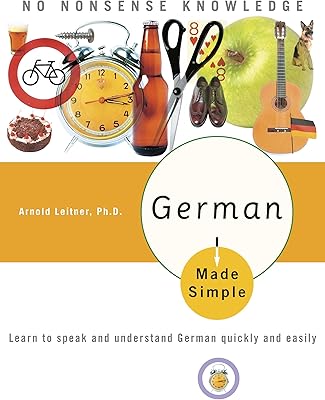
German Made Simple
Eugene Jackson
A complete beginner's guide covering grammar, vocabulary, and conversation essentials.
Check Price on Amazon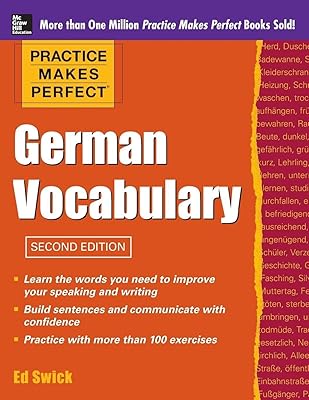
Practice Makes Perfect: German Vocabulary
Ed Swick
Targeted exercises and drills for mastering essential German words and phrases.
Check Price on AmazonAs an Amazon Associate, we earn from qualifying purchases.