How to Say Happy Birthday in German (Plus Traditions You Should Know)
By LangPodTools Team, Language Learning Content Specialist

Birthdays are a big deal — and knowing exactly what to say in German can turn an awkward moment into a warm, memorable connection. Whether you're texting a German friend, writing a card, or singing along at a party, this guide has you covered.
The Two Essential Phrases
There are two phrases every German learner needs to know. Both mean roughly the same thing, but one feels more formal and the other is simply the most common phrase you'll hear in everyday life.
Herzlichen Glückwunsch zum Geburtstag
Herzlichen Glückwunsch zum Geburtstag (pronounced: HERTS-lih-khen GLUEK-voonsh tsoom geh-BOORTZ-tahk) is the full, formal version. A word-for-word translation would be "heartfelt congratulations on your birthday."
You'll hear this in professional settings, from older relatives, or in written birthday cards. It's warm, respectful, and impossible to get wrong.
Alles Gute zum Geburtstag
Alles Gute zum Geburtstag (AH-les GOO-teh tsoom geh-BOORTZ-tahk) is the most commonly used phrase. It means "all the best on your birthday" — think of it as the German equivalent of the everyday English "Happy Birthday."
This is the phrase you want for texts, casual conversation, and birthday posts on social media. It's friendly, versatile, and understood everywhere German is spoken.
Study Tip: You can shorten Alles Gute zum Geburtstag to just Alles Gute! in a text message and it reads perfectly naturally — like saying "All the best!" in English.
The Casual Option: Just Say "Happy Birthday!"
Here's something that surprises many learners: German speakers frequently use the English phrase "Happy Birthday!" directly — especially younger people and in digital communication.
You'll see it in text messages, WhatsApp groups, and on Instagram posts all the time. Using the English phrase is completely acceptable and sounds natural in informal settings. Germany has a strong culture of adopting English phrases in casual speech, particularly around celebrations and pop culture.
Birthday Wishes by Formality Level
Not every situation calls for the same phrase. Use this table to pick the right wish for the right moment.
| Formality | German Phrase | Best Used For |
|---|---|---|
| Very formal | Herzlichen Glückwunsch zum Geburtstag | Cards, colleagues, elders |
| Standard | Alles Gute zum Geburtstag | Friends, family, general use |
| Casual | Alles Gute! | Texts, social media |
| Playful/borrowed | Happy Birthday! | Close friends, digital messages |
| Warm extension | Ich wünsche dir alles Gute | "I wish you all the best" |
Birthday-Related Vocabulary
Knowing the core birthday vocabulary helps you follow conversations, understand songs, and write more natural messages. Here are the words you'll encounter most often.
| German | English |
|---|---|
| der Geburtstag | birthday |
| der Geburtstagskuchen | birthday cake |
| die Kerzen | candles |
| das Geschenk | gift / present |
| die Geburtstagsfeier | birthday party |
| die Torte | (fancy) cake / gateau |
| der Geburtstagswunsch | birthday wish |
| das Lied | song |
| die Überraschung | surprise |
| feiern | to celebrate |
Study Tip: Geburtstag literally means "birth day" — Geburt (birth) + Tag (day). Once you learn that pattern, compound words like Geburtstagskuchen (birthday-cake) become easy to decode. German compounds like these follow predictable rules worth learning early.
The German Birthday Song: Zum Geburtstag viel Glück
"Zum Geburtstag viel Glück" is sung to the same melody as the English "Happy Birthday to You" — so the tune is already in your head.
Here are the full lyrics:
Zum Geburtstag viel Glück, Zum Geburtstag viel Glück, Zum Geburtstag, liebe [Name], Zum Geburtstag viel Glück!
The translation: "For your birthday, much happiness" — repeated with the person's name in the third line. Replace [Name] with the actual name of the birthday person.
Just like in English, the melody carries the celebration. Even a beginner can join in after reading the lines once or twice.
Study Tip: Listening to native speakers sing birthday songs is a great ear-training exercise. Browse our German episodes hub for conversational German audio, or use the flashcard tool to drill birthday vocabulary before the next party.
Writing Birthday Messages and Cards in German
Writing a birthday card in German is easier than it looks. Here are some ready-to-use phrases you can mix and match.
Opening lines:
- Herzlichen Glückwunsch zu deinem Geburtstag! — Heartfelt congratulations on your birthday!
- Alles Gute zu deinem besonderen Tag! — All the best on your special day!
- Ich wünsche dir einen wunderschönen Geburtstag. — I wish you a wonderful birthday.
Adding warmth:
- Bleib gesund und glücklich! — Stay healthy and happy!
- Ich hoffe, du feierst schön! — I hope you celebrate well!
- Möge all deine Wünsche in Erfüllung gehen. — May all your wishes come true.
For formal cards (colleagues, professional contacts):
- Zu Ihrem Geburtstag wünsche ich Ihnen alles Gute. — On your birthday, I wish you all the best. (formal Sie form)
- Herzlichen Glückwunsch und weiterhin viel Erfolg. — Congratulations and continued success.
Notice the switch between du (informal) and Sie (formal). If you're unsure which to use with someone, Sie is always the safer choice for written messages to people you don't know well. You can explore this distinction further in the Guten Tag guide, which covers formal vs. informal greetings in depth.
The Most Important German Birthday Superstition
This is crucial — and many learners get it wrong the first time.
In Germany, you must NEVER wish someone a happy birthday before the actual day. Not the day before. Not even an hour before midnight.
This superstition is taken seriously across Germany, Austria, and Switzerland. Wishing someone a premature happy birthday is considered bad luck — it's believed to invite misfortune for the year ahead. Germans have a phrase for this: "Man soll den Tag nicht vor dem Abend loben" — don't praise the day before the evening comes.
If a birthday falls on a Monday and you see the person on Sunday, say nothing about the birthday. Wait until Monday. This applies to text messages too — don't send that midnight message before 00:00.
According to Goethe-Institut's cultural notes on German customs, this tradition is widely observed and valued as a mark of respect. The DW German language portal also notes that birthday customs vary by region but this superstition holds broadly across German-speaking countries.
More German Birthday Traditions
Beyond the superstition, German birthday culture has a few other quirks worth knowing.
The birthday person often brings the cake. Unlike the Anglo-American tradition where friends and family surprise you with a cake, in many German workplaces and friend groups, the birthday person is expected to bring Kuchen or Torte to share. It's an act of generosity, not the other way around.
"Runder Geburtstag" — a "round birthday" — refers to milestone birthdays ending in 0 (30, 40, 50, 60...). These are celebrated much more elaborately than regular birthdays. Expect bigger parties, speeches, and sometimes even public announcements.
Geburtstagskind — the birthday child — is what Germans call the birthday person regardless of age. Even a 60-year-old is called the Geburtstagskind on their birthday. It's a charming word that captures the spirit of the day.
For deeper context on German culture and communication style, Babbel's German culture guide offers some useful additional reading on regional variations.
Recommended Resources
If you want to absorb German vocabulary naturally rather than memorizing lists, listening is the fastest path. Here are two resources worth exploring.
For structured grammar support alongside your listening practice, a solid reference book makes a real difference. Hammer's German Grammar and Usage is the standard reference for intermediate learners — comprehensive, well-organized, and built to answer the exact questions that come up when you start forming your own sentences.
If you prefer something lighter and more portable for everyday vocabulary, German Frequency Dictionary — Essential Vocabulary gives you the 2,500 most commonly used German words with example sentences — an efficient way to build the vocabulary you'll actually need in real conversations.
For free options, don't overlook the best free tools for learning German — many of which pair well with podcast-based learning.
Putting It All Together
Here's a quick cheat sheet to keep in mind:
- Most common phrase: Alles Gute zum Geburtstag
- Formal phrase: Herzlichen Glückwunsch zum Geburtstag
- The birthday song: Zum Geburtstag viel Glück (same tune as English)
- Key rule: Never wish someone a happy birthday before the actual day
- The birthday person often brings the cake in German workplaces
Practice saying these phrases out loud — pronunciation is everything with German. Check out how to learn German with podcasts for a method that builds your ear for natural rhythm and pronunciation at the same time.
Frequently Asked Questions
What is the most common way to say Happy Birthday in German?▾
How do you pronounce Herzlichen Glückwunsch zum Geburtstag?▾
What is the German birthday song?▾
Is it bad luck to say Happy Birthday early in Germany?▾
Do Germans use the English phrase 'Happy Birthday'?▾
Recommended Study Material
The Complete German Grammar Cheat Sheet
A1–B2 Reference PDF
27 pages of color-coded tables, mnemonics, and shortcuts — every rule you need from Cases to Subjunctive.
Recommended German Books
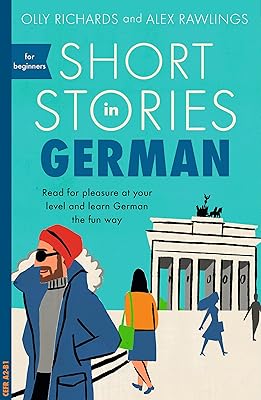
Short Stories in German for Beginners
Olly Richards
Learn German with 8 captivating stories. Perfect for A2-B1 learners who want to build vocabulary naturally.
Check Price on Amazon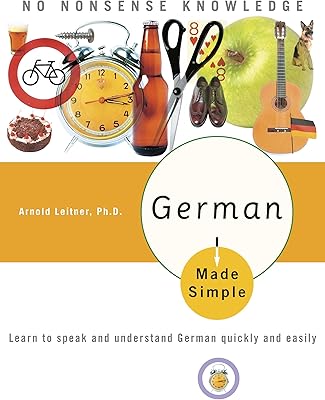
German Made Simple
Eugene Jackson
A complete beginner's guide covering grammar, vocabulary, and conversation essentials.
Check Price on Amazon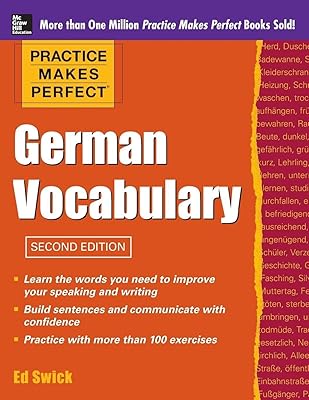
Practice Makes Perfect: German Vocabulary
Ed Swick
Targeted exercises and drills for mastering essential German words and phrases.
Check Price on AmazonAs an Amazon Associate, we earn from qualifying purchases.