9 Free Tools to Learn German Online (That Actually Work)
By LangPodTools Team, Language Learning Content Specialist

You don't need an expensive course to learn German. Between free apps, podcasts, and browser tools, you can build solid A1–B2 skills without paying a single euro.
The trick is using the right combination of tools — not just downloading every app and hoping for the best. This guide breaks things down by skill so you know exactly where to spend your time.
Vocabulary: Build Your Word Bank Fast
Vocabulary is the foundation. Without words, grammar rules are useless. These tools make it stick.
LangPodTools Flashcards (Free)
LangPodTools Flashcards uses spaced repetition — the same system top polyglots swear by. Words you struggle with come back sooner; words you know fade into the background. It's built specifically for language learners, not a generic quiz app.
Start with the 1,000 most common German words. You'll cover roughly 85% of everyday conversation from that list alone.
LangPodTools Word Frequency Analyzer (Free)
Got a German text — a song, a news article, a podcast transcript? Paste it into Word Frequency and instantly see which words appear most often.
This is a smart way to prioritize vocab. Instead of learning random words from a textbook, you learn the words that actually show up in the content you care about.
Study Tip: Copy a Deutsche Welle (DW) article into the Word Frequency tool. Any word appearing 3+ times is worth adding to your flashcard deck.
Anki (Free)
Anki is the gold standard for self-study flashcards. It's less polished than other apps but incredibly powerful — especially because of its massive library of community decks. Search for "German A2" or "German B1 Goethe" in the shared deck library.
Anki's algorithm is battle-tested by medical students and language learners worldwide. The desktop version is free; the iOS app costs a one-time fee.
Grammar: Rules Without the Boredom
German grammar has a reputation for being brutal. Good tools make the patterns click faster than any textbook.
LangPodTools Verb Conjugation Practice (Free)
Verbs are where learners lose confidence fast. Conjugation Practice drills you on the full paradigm — present, past, subjunctive — across regular and irregular German verbs.
The key feature: instant feedback with the correct form shown. You don't just get "wrong" — you see exactly what it should be.
LangPodTools Fill-in-the-Blank Exercises (Free)
Fill-in-the-Blank gives you real German sentences with gaps. You choose the correct article, verb ending, or preposition. It's low-pressure, fast, and surprisingly addictive.
This format mirrors the writing section of the Goethe-Institut exams, making it great exam prep too.
LangPodTools Sentence Scramble (Free)
German word order trips up learners for months. Sentence Scramble gives you the words in random order and asks you to build the correct sentence.
- Verb-second rule (V2)
- Subordinate clause word order
- Separable verbs
All three problem areas get covered in a format that feels more like a puzzle than a grammar lesson.
Study Tip: After completing a sentence scramble, say the sentence out loud three times. The combination of visual + motor + audio memory makes it stick much longer.
DW Learn German — Free Interactive Grammar (Free)
DW Learn German (Deutsche Welle) offers full A1–C1 courses completely free. Their grammar explanations are clear, and every unit includes exercises, audio, and video.
DW is funded by the German government, so the content is professionally produced and consistently updated. It's one of the most underrated free resources online.
Listening: Train Your Ear for Real German
Reading German and hearing German are two completely different skills. These tools close the gap.
LangPodTools Speed Player (Free)
Native German speakers talk fast. Speed Player lets you slow down podcast audio without distorting pitch, so you can catch every syllable.
Start at 0.75x speed for dense content. As your ear adjusts, nudge it up to 0.85x, then 1.0x. Most learners reach natural-speed comprehension within 4–6 weeks of consistent practice.
LangPodTools Transcript Reader (Free)
Transcript Reader lets you follow along with podcast transcripts while listening. You can click any line to jump to that moment in the audio.
This is dual-channel input — your brain processes the same content visually and auditorily at the same time. Comprehension improves dramatically compared to listening alone.
Our German episodes hub has episodes organized by topic and level. Pair Speed Player + Transcript Reader for the highest-impact listening sessions.
Study Tip: Listen to a podcast episode once without the transcript. Then listen again with the Transcript Reader. Note which sentences you missed — those are your weak spots to drill.
Duolingo German (Free Tier)
Duolingo is the most downloaded language app for good reason — it makes showing up every day feel effortless. Its gamified streaks and bite-sized lessons lower the activation energy for daily practice.
Duolingo's weakness is depth. It's excellent for A1–A2, but supplement it with other tools once you hit B1. Use it for habit maintenance, not as your only resource.
Reading & Text Analysis: Understand Written German
Reading authentic German content accelerates vocabulary and grammar pickup faster than any textbook.
LangPodTools CEFR Analyzer (Free)
Not sure if a German text is too hard or too easy for you? CEFR Analyzer analyzes any text and tells you its difficulty level — A1 through C2.
This solves the "i+1" problem popularized by linguist Stephen Krashen: you want input that's slightly above your current level, not frustratingly far beyond it. Paste any article, book excerpt, or news story and get an instant readability rating.
dict.cc — German Dictionary (Free)
dict.cc is the best free German–English dictionary online. Unlike Google Translate, it shows you example sentences, grammatical gender (der/die/das), and community-verified translations.
The offline app is invaluable for reading German books or newspapers without internet access. The community corrections mean the quality improves constantly.
Pronunciation & Speaking: Sound Like a German
You can have perfect grammar and still be misunderstood if your pronunciation is off. These tools target the sounds that trip up English speakers.
LangPodTools Minimal Pairs (Free)
German has sounds that English doesn't — the "ü", "ö", "ch" (as in "ich" vs "ach"), and the rolled or uvular "r". Minimal Pairs trains you to hear the difference between similar-sounding words.
Example pairs: bieten vs bitten, können vs kennen, hören vs Höhle. Getting these right removes one of the biggest markers of a foreign accent.
Forvo German Pronunciation (Free)
Forvo is a crowd-sourced pronunciation dictionary. Real native speakers record themselves saying individual words — from Hamburg, Berlin, Munich, and beyond.
This is especially useful for regional pronunciation differences. Hochdeutsch (standard German) is what you want for formal contexts; Forvo lets you hear how the same word sounds across different regions.
A Suggested Weekly Study Routine
Here's how to combine these tools into a realistic schedule for A1–B2 learners:
| Day | Focus | Tool(s) |
|---|---|---|
| Mon | Vocabulary | Flashcards (20 new words) |
| Tue | Grammar | Fill-Blanks + Conjugation (15 min) |
| Wed | Listening | Speed Player + Transcript Reader (1 episode) |
| Thu | Grammar | Sentence Scramble (10 sentences) |
| Fri | Vocabulary | Word Frequency (analyze 1 article) |
| Sat | Listening | Podcast episode at natural speed |
| Sun | Review | CEFR Analyzer (test a new text) |
Total: 45–60 minutes per day. Consistent over 6 months, this schedule gets most learners from A1 to solid B1.
Quick Reference: Free German Learning Tools
- Flashcards — Spaced repetition vocabulary
- Conjugation Practice — German verb drills
- Fill-in-the-Blank — Grammar exercises
- CEFR Analyzer — Text difficulty checker
- Minimal Pairs — Pronunciation training
- Sentence Scramble — Word order practice
- Speed Player — Adjustable podcast playback
- Transcript Reader — Read along with audio
- Word Frequency — Analyze any German text
- DW Learn German — Full free curriculum A1–C1
- Anki — Advanced flashcard system
- Duolingo — Daily habit builder
- dict.cc — German dictionary
- Forvo — Native pronunciation recordings
The Bottom Line
The best free German learning setup combines three layers: a listening tool (Speed Player + Transcript Reader), a vocabulary system (Flashcards or Anki), and a grammar reinforcer (Fill-Blanks + Conjugation).
Start with our German episodes page to find podcast content at your level. Then add vocabulary drilling with the Flashcard tool. That two-tool combo alone will carry most A1 learners to A2 in about eight weeks.
Check out our German vocabulary resource page for curated word lists that pair perfectly with the tools above.
Free doesn't mean slow. With the right tools and a consistent routine, you can reach conversational German without spending anything.
Frequently Asked Questions
Can I learn German for free?▾
What is the best free app to learn German?▾
How long does it take to learn German with free tools?▾
Are free German learning tools as good as paid courses?▾
Recommended Study Material
The Complete German Grammar Cheat Sheet
A1–B2 Reference PDF
27 pages of color-coded tables, mnemonics, and shortcuts — every rule you need from Cases to Subjunctive.
Recommended German Books
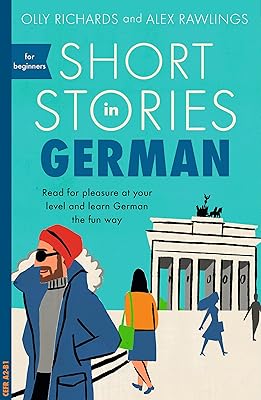
Short Stories in German for Beginners
Olly Richards
Learn German with 8 captivating stories. Perfect for A2-B1 learners who want to build vocabulary naturally.
Check Price on Amazon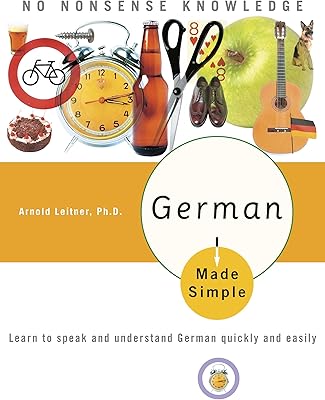
German Made Simple
Eugene Jackson
A complete beginner's guide covering grammar, vocabulary, and conversation essentials.
Check Price on Amazon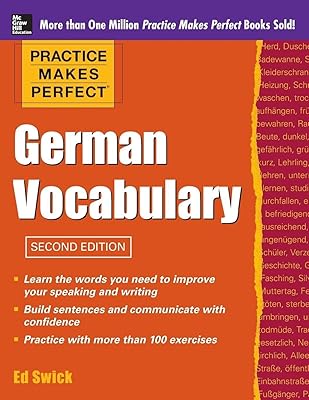
Practice Makes Perfect: German Vocabulary
Ed Swick
Targeted exercises and drills for mastering essential German words and phrases.
Check Price on AmazonAs an Amazon Associate, we earn from qualifying purchases.