Rammstein "Sonne" Lyrics in English: Translation, Vocabulary & Grammar Breakdown
By LangPodTools Team, Language Learning Content Specialist

If you've ever listened to Rammstein and thought I wish I knew what they were actually saying, you're in the right place. "Sonne" ("Sun") from the 2001 album Mutter is one of the band's most iconic tracks — and it's secretly a brilliant German lesson hiding inside a hard-rock masterpiece.
This guide breaks down the key vocabulary, grammar patterns, and meaning of "Sonne" in plain English, so you can understand the lyrics, learn real German, and appreciate why the song is so much more than just powerful riffs.
About "Sonne": The Song's Origin and Context
"Sonne" was released in 2001 as the lead single from Rammstein's third studio album, Mutter ("Mother"). It reached #1 on the German charts and introduced millions of non-German-speaking listeners to the raw intensity of the German language.
The song was originally written for a promotional video for German boxer Henry Maske, which explains the counting theme in the opening — "Eins, zwei, drei, vier, fünf, sechs, sieben, acht, neun, aus" (one through nine, then "out"). The video famously reimagines the Snow White fairy tale, with the band as the seven dwarves and vocalist Till Lindemann as Snow White — a darkly poetic reversal that became one of Rammstein's most celebrated images.
For German learners, the song is a goldmine: repetitive phrases, clear pronunciation, strong imagery, and core vocabulary that appears constantly in everyday German.
Study Tip: Songs with repetition are ideal for language learning. Each chorus of "Sonne" reinforces the same core words, building memory through pure repetition — the same principle behind spaced repetition flashcard systems. Try our German flashcard tool to drill the vocabulary from this article.
What Does "Sonne" Mean? The Song's Interpretation
On the surface, Sonne simply means "sun" in German. But the song operates on multiple layers.
The most direct reading is a counting/boxing poem — reflecting the Maske commission. But the album context adds depth: Mutter is a concept album about creation, abandonment, and longing. The sun in this track is both a symbol of warmth and beauty and a force of dominance and destruction.
The Snow White video layer adds another meaning: the sun as Snow White herself — radiant, worshipped, ultimately unreachable. The dwarves (the band) dig for gold to offer her, yet she sleeps and remains untouchable.
This poetic layering is typical of Rammstein's lyrical style. Vocalist Till Lindemann studied poetry and word sounds carefully — his German is precise, deliberate, and full of compound nouns and strong verbs that reward close study.
Key Vocabulary from "Sonne"
The following words appear in or are directly related to the lyrics, imagery, and themes of "Sonne." Mastering this list means learning high-frequency German words that appear far beyond this one song.
| German Word | English Translation | Part of Speech | Notes |
|---|---|---|---|
| die Sonne | the sun | noun (f) | Appears in dozens of common German phrases |
| das Herz | the heart | noun (n) | Very common in emotional and everyday German |
| der Schein | the shine / glow / appearance | noun (m) | Also means "bill" or "illusion" — context-dependent |
| schein! | shine! | verb (imperative) | From scheinen — to shine or to seem |
| brennen | to burn | verb | High-frequency; used literally and figuratively |
| das Gold | the gold | noun (n) | Cognate with English |
| das Licht | the light | noun (n) | Fundamental vocabulary; countless contexts |
| die Erde | the earth / ground | noun (f) | Both planet Earth and soil |
| fallen | to fall | verb | Very common strong verb |
| aufgehen | to rise (sun) / to open | verb (separable) | auf + gehen — the sun "goes up" |
| das Meer | the sea / ocean | noun (n) | Different from mehr (more) |
| aus | out / over / finished | adverb | In counting context: "out" = knockout |
| die Nacht | the night | noun (f) | In greetings like Gute Nacht |
| strahlen | to beam / radiate | verb | Related to der Strahl (ray of light) |
| die Kraft | the strength / power | noun (f) | In compounds like kraftvoll (powerful) |
Notice how many of these are concrete, physical words — sun, heart, fire, earth, sea, light. Rammstein's language is visceral and image-driven, which makes it easier to attach to mental pictures than abstract grammar rules.
Study Tip: Use our Word Frequency tool to check how often words from this list appear in standard German text. You'll find that Herz, Licht, Erde, and fallen rank in the top 3,000 most-used German words — so learning them here means learning real German, not just song lyrics.
Grammar Lessons Hidden in the Lyrics
1. The Imperative Mood: Giving Commands
One of "Sonne"'s most repeated elements is a command form — an instruction shouted at the sun. In German, this is called the Imperativ (imperative mood), and it's formed differently depending on who you're addressing.
For the familiar du form (informal singular), you typically drop the -en ending and use the stem:
- scheinen (to shine) → Schein! (Shine!)
- kommen (to come) → Komm! (Come!)
- gehen (to go) → Geh! (Go!)
This is exactly the structure you hear in powerful, emotionally direct German speech — commands, slogans, song choruses. Learning the imperative from Rammstein gives you an intuitive feel for the form that grammar tables alone can't deliver.
For a complete breakdown of how German commands work alongside word order, see our German word order rules guide.
2. Separable Verbs in Action
German loves separable verbs — verbs that split apart in a sentence, with the prefix jumping to the end. Aufgehen (to rise) is a classic example:
- Die Sonne geht auf. — The sun rises. (Literally: "The sun goes up.")
The verb aufgehen splits: geht stays near the subject, while auf flies to the end of the clause. This surprises English speakers every time — but hearing it in songs trains your ear to anticipate the delayed prefix.
Other common separable verbs with similar structure: anfangen (to begin), aufmachen (to open), herausgehen (to go out).
3. Poetic Word Order
Rammstein's lyrics sometimes invert standard German word order for rhythmic and dramatic effect. Standard German often places the verb in the second position, but poetry and song push verbs and subjects around freely.
This is actually a feature of German — it's a more flexible language than English when it comes to word order, because cases (nominative, accusative, dative) mark the grammatical role of nouns rather than their position doing that work. Our German cases explained guide covers this in full.
4. Compound Nouns
German is famous for building long compound nouns by smashing words together. Even in a three-minute rock song, you encounter this pattern. Sonnenschein (sunshine) = Sonne + Schein — two words fused into one. Mondschein (moonlight), Tageslicht (daylight), Nachtleben (nightlife) all follow the same logic.
For a deeper dive into how German compounds work (and why they can grow to enormous length), see our longest German words guide.
Why Learning German Through Music Actually Works
Language researchers have found that music enhances vocabulary retention in several measurable ways — and Rammstein hits several of them at once.
Emotional memory — Words learned alongside powerful, emotionally intense music encode more deeply than words on a vocabulary list. Repetition without boredom — a chorus repeats 3-4 times per song; you hear Sonne, Schein, brennen dozens of times per listen without any extra effort. Pronunciation modeling — Till Lindemann's German is Hochdeutsch (standard High German) with unusually clear articulation, making him an unintentionally excellent pronunciation model. Context anchoring — das Herz isn't an isolated word here; it's attached to an image, a feeling, a musical moment.
The Deutsche Welle's German course confirms what learners experience intuitively: songs are one of the most efficient vocabulary tools available.
Study Tip: Follow the four-step music method: Listen (for pure enjoyment, no pressure) → Read (follow along with the official lyrics at rammstein.com) → Translate (word by word, using the vocabulary table above) → Sing along (even quietly — physical production locks in pronunciation). One pass through this cycle per song is worth an hour of textbook drilling.
Other Rammstein Songs Worth Studying
Once you've worked through "Sonne," these three tracks are particularly good for German learners:
Du Hast ("You Have" / "You Hate" — a deliberate double meaning) — Built around the question-and-answer structure of German wedding vows. Short sentences, repetition, and a grammar twist that's impossible to forget once you understand it. Teaches du hast vs. du hasst.
Engel ("Angel") — Slower tempo, clearer pronunciation, more lyrical imagery. Great for learners at an intermediate level who want to work with abstract vocabulary (Flügel = wings, Himmel = heaven/sky, Teufel = devil).
Ich Will ("I Want") — Teaches the core verb wollen (to want) in its first-person conjugation, plus direct object structures. The simple, aggressive sentence structure makes the grammar very easy to isolate and study.
All three are on Rammstein's official platforms and at rammstein.com, where you can find the original German lyrics.
How to Use Music as a German Study Tool
Here's the four-step cycle that works for any German song:
- Listen — Play the song without reading anything. Let your brain pick out sound patterns naturally.
- Read — Follow the official lyrics at rammstein.com while listening. Don't translate yet — just match sounds to text.
- Translate — Pick 10-15 words you don't know. Look them up, then add them to our flashcard tool for spaced repetition drilling.
- Sing along — Even approximate pronunciation helps. Physical production of sounds locks vocabulary into memory faster than reading alone.
One grammar point per song is enough. Pick one structure — an imperative, a separable verb, a case ending — and look it up. For audio-first learning, our learn German with podcasts guide and best free tools roundup show you what to listen to next.
The Goethe-Institut's free listening exercises also pair well with the music approach.
Building on This Vocabulary
The words from "Sonne" connect directly to essential German words used across all contexts. Herz, Licht, Erde, fallen, brennen — these appear in news articles, conversations, and everyday speech constantly.
Head to our German episodes hub to hear native speakers use similar high-frequency vocabulary in natural conversation. Multiple contexts turn passive recognition into active use.
Recommended German Learning Resources
If you want a structured companion to your music-based learning, these resources pair well with the song-analysis approach:
- German Through Music: Songs for Language Learners — curated collections built specifically for learners, with lyrics, translations, and exercises
- Hammer's German Grammar and Usage — the definitive English-language reference for German grammar, covering every pattern you'll encounter in Rammstein lyrics and beyond
Wrapping Up
"Sonne" is more than a rock song — it's a compact, emotionally charged German vocabulary lesson. The counting structure, the imperative commands, the compound nouns, the Sun and Snow White imagery: every element rewards closer inspection once you have the linguistic tools to look.
Start with the vocabulary table in this article. Drill it in our flashcard tool. Then play the song, follow along at rammstein.com, and let the repetition do what repetition does best — make the words yours.
Deutsch lernen war noch nie so laut. (Learning German has never been this loud.)
Frequently Asked Questions
What does "Sonne" mean in English?▾
What album is Rammstein's "Sonne" from?▾
What German grammar points appear in "Sonne"?▾
Is it legal to use Rammstein lyrics for German study?▾
What other Rammstein songs are good for learning German?▾
Recommended Study Material
The Complete German Grammar Cheat Sheet
A1–B2 Reference PDF
27 pages of color-coded tables, mnemonics, and shortcuts — every rule you need from Cases to Subjunctive.
Recommended German Books
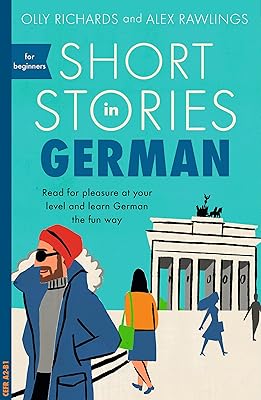
Short Stories in German for Beginners
Olly Richards
Learn German with 8 captivating stories. Perfect for A2-B1 learners who want to build vocabulary naturally.
Check Price on Amazon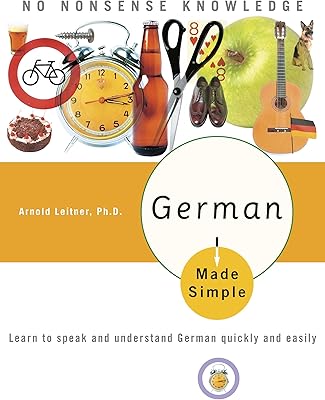
German Made Simple
Eugene Jackson
A complete beginner's guide covering grammar, vocabulary, and conversation essentials.
Check Price on Amazon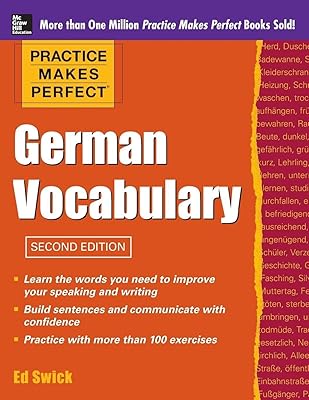
Practice Makes Perfect: German Vocabulary
Ed Swick
Targeted exercises and drills for mastering essential German words and phrases.
Check Price on AmazonAs an Amazon Associate, we earn from qualifying purchases.