The Longest German Words (And Why German Loves Sticking Words Together)
By LangPodTools Team, Language Learning Content Specialist

If you've ever seen a German word and thought someone accidentally sat on the keyboard, you're not alone. German has a legendary habit of gluing words together until they stretch across the entire page — and native speakers type them without blinking.
The good news? Once you understand how German compound nouns work, those terrifying word-walls transform from obstacles into puzzles. Fun ones, actually.
The Longest German Word Ever (Officially)
Let's start at the top. The undisputed champion of German word length is:
Rindfleischetikettierungsüberwachungsaufgabenübertragungsgesetz
That is 63 letters. Read it out loud. Take a breath.
Breaking it down, it means: "Law for the delegation of duties for the supervision of cattle marking and beef labeling." It was a real piece of legislation — a German-EU food safety law passed in 1999 in the state of Mecklenburg-Vorpommern in response to the BSE (mad cow disease) crisis.
Then, in 2013, the law was repealed. The beef labeling requirements were absorbed into federal EU law. The word was officially retired. Even the longest German word couldn't outlast bureaucratic reorganization.
But don't worry — there's no shortage of contenders waiting to fill its very, very long shoes.
Study Tip: You don't need to pronounce Rindfleisch... all at once. Break it at each component: Rind-fleisch | etikettierung | überwachungs | aufgaben | übertragungs | gesetz. Now it's six manageable chunks, not one impossible wall.
How German Compound Nouns Work
Here's the secret that changes everything: German compound nouns are just two (or more) words fused together, with no space and no glue required.
English does this too — notebook, sunflower, toothpaste — but English stops after two words and usually keeps a hyphen or a space for anything longer. German has no such inhibitions.
The structure is always: [Modifier 1] + [Modifier 2] + ... + [Head noun]
The last word in the compound determines the meaning and the grammatical gender. Everything before it just describes or narrows it down.
So Kühlschrank = kühl (cool) + Schrank (cupboard) = a cool cupboard = refrigerator. The Schrank part tells you it's masculine (der Schrank → der Kühlschrank) and that it's fundamentally a type of cupboard — a cold one.
German does this because it allows extremely precise, one-word expressions for concepts that English needs a whole phrase to describe. It's not chaos — it's efficiency.
15 German Compound Words Broken Down
Let's crack open some of the most interesting compound words in the language, from the everyday to the absurd.
Everyday Compound Words You Already Need
| German Word | Components | Literal Translation | Actual Meaning |
|---|---|---|---|
| Handschuh | Hand + Schuh | hand + shoe | glove |
| Kühlschrank | kühl + Schrank | cool + cupboard | refrigerator |
| Glühbirne | glühen + Birne | to glow + pear | lightbulb |
| Staubsauger | Staub + saugen | dust + to suck | vacuum cleaner |
| Schildkröte | Schild + Kröte | shield + toad | turtle |
| Handtuch | Hand + Tuch | hand + cloth | towel |
| Fernseher | fern + sehen | far + to see | television |
| Zahnarzt | Zahn + Arzt | tooth + doctor | dentist |
Handschuh is a fan favorite. Why is a glove a "hand shoe"? Because you put it on your hand like a shoe on your foot. Once you see it, you can never unsee it.
And Schildkröte — a turtle is a "shield toad." Because it has a hard shell (shield) and is basically a toad wearing armor. Accurate, honestly.
Study Tip: When you learn a new compound noun, always split it into components and ask yourself: does the literal translation make sense? Often it does, and that connection turns a random word into a memorable one. Use our German flashcard tool to store the breakdown alongside the word.
Medium-Length Compounds: Useful and Fun
Geschwindigkeitsbegrenzung — Geschwindigkeit (speed) + Begrenzung (limitation) = speed limit. You'll see this on every German road sign.
Streichholzschächtelchen — Streichholz (matchstick, literally "stroke wood") + Schächtelchen (little box, diminutive of Schachtel) = a little matchbox. The diminutive -chen suffix makes things cute and small. Germans do this constantly.
Rechtsschutzversicherungsgesellschaft — Rechtsschutz (legal protection) + Versicherung (insurance) + Gesellschaft (company) = legal protection insurance company. A perfectly sensible word for a perfectly real thing.
The Glorious Long Ones
Donaudampfschifffahrtsgesellschaftskapitän — This 42-letter classic means captain of the Danube Steamship Company. Break it down: Donau (Danube) + Dampf (steam) + Schifffahrt (shipping, note the triple-f!) + Gesellschaft (company) + Kapitän (captain).
Notice the triple f in Schifffahrt. That's not a typo — German spelling rules say when two words merge and both contribute an f, all three letters stay. It used to be written Schiffahrt with two f's (the old rule dropped one), but since the 1996 spelling reform, triple letters are back.
Rindfleischetikettierungsüberwachungsaufgabenübertragungsgesetz — Our reigning champion. Rind (cattle) + Fleisch (meat/flesh) + Etikettierung (labeling) + Überwachung (monitoring/supervision) + Aufgaben (duties/tasks) + Übertragung (delegation/transfer) + Gesetz (law). Seven components. One word. One very specific beef-labeling law.
Why Compound Words Actually Make German Easier
Here's the counterintuitive truth that most learners miss: German compound nouns are a memory shortcut, not a burden.
Once you know a few hundred root words, you can decode thousands of compounds you've never seen before. You don't need to separately memorize that Handtuch means towel — if you know Hand and Tuch (cloth), you can figure it out on the spot.
Compare this to English, where you have to memorize that refrigerator means a cold box — there's no component that gives it away. In German, Kühlschrank (cool cupboard) tells you exactly what it is.
According to research cited by the Goethe-Institut, this morphological transparency is one of the reasons German vocabulary acquisition accelerates sharply once learners pass the intermediate threshold. The patterns compound (pun intended).
The Duden — the official German dictionary authority tracks and approves new compound words constantly, which means the language can coin precise new vocabulary instantly without borrowing from other languages. Germans find English loan words increasingly unnecessary when they can just build a new compound.
Study Tip: Build your vocabulary in word families, not isolated words. Learn Schrank (cupboard) → Kleiderschrank (wardrobe), Kühlschrank (refrigerator), Aktenschrank (filing cabinet). One root, three new words — almost free. Our word frequency tool shows you which German roots appear most often, so you know which ones to prioritize learning.
Pronunciation Guide: How to Tackle Long Compounds
The single most effective pronunciation strategy for long German words: find the component boundaries, then pronounce each piece separately.
German pronunciation is remarkably consistent once you know the rules. Every letter is pronounced, there are no silent letters (mostly), and the stress pattern of each component stays the same when it's fused into a compound.
Step-by-step example — Geschwindigkeitsbegrenzung:
- Split: Geschwindigkeit | Begrenzung
- Geschwindigkeit: geh-SHVIN-dig-kite
- Begrenzung: beh-GREN-tsoong
- Full word: geh-SHVIN-dig-kite-beh-GREN-tsoong
- Primary stress lands on the first component: GEH-shvin-dig-kite...
Key German pronunciation rules that help with compounds:
- sch always = "sh" (like English "ship")
- sp and st at the start of a word/component = "shp" and "sht"
- ü = round your lips for "oo" but say "ee"
- ö = round your lips for "oo" but say "eh"
- ei = always "eye" (like English "eye")
- ie = always "ee" (like English "see")
- eu / äu = "oy" (like English "boy")
- Final -g in standard German = hard K sound (not a soft English G)
The Deutsche Welle German pronunciation course has free audio drills for every sound — highly recommended for getting compounds to sound natural.
For more on how German sentence structure handles these long nouns once you've said them, see our German word order guide.
Build Your Own German Compound Word
This is the best part. German compound word formation has almost no limits — if the meaning is clear, the word is valid. Germans coin new compounds in conversation all the time.
Try building these:
Starter components to mix:
- Buch (book) + Regal (shelf) = Bücherregal (bookshelf)
- Haus (house) + Aufgabe (task) = Hausaufgabe (homework — literally "house task")
- Schlaf (sleep) + Zimmer (room) = Schlafzimmer (bedroom)
- Ess (eat) + Zimmer (room) = Esszimmer (dining room)
- Bade (bathe) + Zimmer (room) = Badezimmer (bathroom)
Now try stacking further:
- Küche (kitchen) + Messer (knife) = Küchenmesser (kitchen knife)
- Add Schubladen (drawers) → Küchenmesserschubladen (kitchen knife drawers)
See how that works? You're not just learning words — you're learning to generate them. That's a superpower.
If you want to deepen how you study and retain these vocabulary patterns, our guide on learning German with podcasts explains why audio immersion is one of the fastest ways to internalize compound word patterns without grinding through grammar charts.
And once you've got your compound vocabulary building, make sure your fundamentals are solid too — German cases explained covers why nouns change form depending on their role in a sentence, which affects how compounds behave.
Table: 20 Everyday German Compounds Worth Memorizing
| German | Components | Literal | English |
|---|---|---|---|
| Krankenhaus | krank + Haus | sick + house | hospital |
| Flugzeug | fliegen + Zeug | to fly + stuff/thing | airplane |
| Fahrzeug | fahren + Zeug | to drive + stuff | vehicle |
| Spielzeug | spielen + Zeug | to play + stuff | toy |
| Werkzeug | Werk + Zeug | work + stuff | tool |
| Handschuh | Hand + Schuh | hand + shoe | glove |
| Jahrestag | Jahr + Tag | year + day | anniversary |
| Geburtstag | Geburt + Tag | birth + day | birthday |
| Sonnenbrille | Sonne + Brille | sun + glasses | sunglasses |
| Wolkenkratzer | Wolke + kratzen | cloud + to scratch | skyscraper |
| Handtasche | Hand + Tasche | hand + pocket/bag | handbag |
| Briefkasten | Brief + Kasten | letter + box | mailbox |
| Reisepass | Reise + Pass | journey + pass | passport |
| Bahnhof | Bahn + Hof | track/rail + yard | train station |
| Rathaus | Rat + Haus | council + house | town hall |
| Treibhaus | treiben + Haus | to drive/push + house | greenhouse |
| Schreibtisch | schreiben + Tisch | to write + table | desk |
| Kühlschrank | kühl + Schrank | cool + cupboard | refrigerator |
| Staubsauger | Staub + saugen | dust + to suck | vacuum cleaner |
| Glühbirne | glühen + Birne | to glow + pear | lightbulb |
Notice how many contain Zeug (stuff/things)? Germans use it constantly as a catch-all for objects: Flugzeug, Fahrzeug, Spielzeug, Werkzeug. Learn Zeug once, and four major vocabulary words become obvious.
Wrapping Up: Embrace the Monster Words
German's long words are not a bug — they're a feature. The compound noun system is a creative, logical, and surprisingly efficient way to express complex concepts with precision.
Yes, Rindfleischetikettierungsüberwachungsaufgabenübertragungsgesetz is absurd. But it's absurd in a systematic way. Every single syllable earns its place.
The learner who understands German compound structure doesn't see a 40-letter word and panic. They see four or five familiar roots and decode it in seconds — often faster than a native English speaker could explain the equivalent English phrase.
Start with the everyday compounds in the table above. Learn the common roots (Haus, Tag, Schrank, Zeug, Tisch, Zimmer). Use our German flashcard tool to drill the component breakdowns, not just the final words. And browse our collection of German episodes to hear these words in natural speech — that's where the patterns really click.
For a broader vocabulary foundation before you go compound-crazy, check out our guide on essential German words — and our best free tools to learn German roundup for the apps and sites that make drilling all of this genuinely painless.
Recommended Resources
If you want a solid reference book to keep alongside your audio learning, these two are consistently recommended:
- German Vocabulary Builder for Beginners and Beyond — structured vocabulary building that covers compound word patterns with example sentences
- Der Duden: German-English Dictionary — the authoritative German dictionary, invaluable for understanding how compounds are officially structured
Frequently Asked Questions
What is the longest German word?▾
Why are German words so long?▾
How do you pronounce long German compound words?▾
Are German compound words hard to learn?▾
Can you make up your own German compound words?▾
Recommended Study Material
The Complete German Grammar Cheat Sheet
A1–B2 Reference PDF
27 pages of color-coded tables, mnemonics, and shortcuts — every rule you need from Cases to Subjunctive.
Recommended German Books
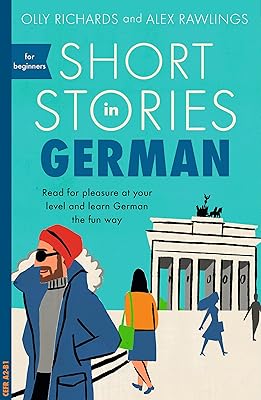
Short Stories in German for Beginners
Olly Richards
Learn German with 8 captivating stories. Perfect for A2-B1 learners who want to build vocabulary naturally.
Check Price on Amazon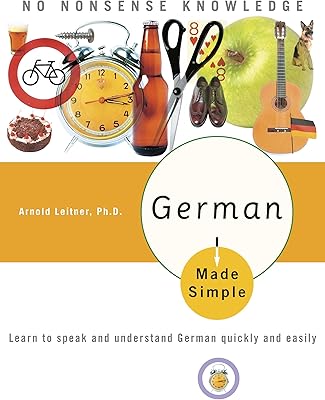
German Made Simple
Eugene Jackson
A complete beginner's guide covering grammar, vocabulary, and conversation essentials.
Check Price on Amazon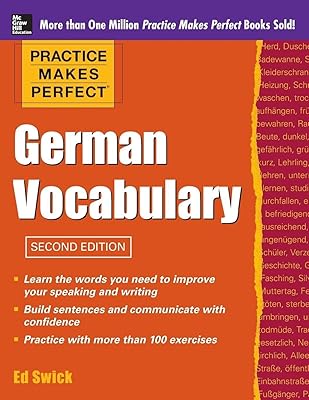
Practice Makes Perfect: German Vocabulary
Ed Swick
Targeted exercises and drills for mastering essential German words and phrases.
Check Price on AmazonAs an Amazon Associate, we earn from qualifying purchases.