How to Ask Questions in German: W-Words, Word Order, and Examples
By LangPodTools Team, Language Learning Content Specialist

Asking questions is the engine of every conversation. In German, once you understand the two core question types and a handful of Fragewörter (question words), you can unlock real dialogues faster than you think.
This guide walks you through everything — from basic yes/no questions to tricky indirect questions — with examples, tables, and shortcuts a study buddy would actually share.
The Two Types of German Questions
German questions fall into two clean categories:
- W-Fragen (W-questions) — start with a question word, expect a specific answer
- Ja/Nein-Fragen (Yes/No questions) — start with a verb, answered with ja or nein
Mastering word order is the key difference between sounding confident and sounding confused. Let's tackle each type.
W-Questions: The 10 Essential Fragewörter
German has ten core Fragewörter (question words). Learn these and you can ask almost anything.
| German | English | Example Question |
|---|---|---|
| Wer | Who | Wer ist das? (Who is that?) |
| Was | What | Was machst du? (What are you doing?) |
| Wo | Where | Wo wohnst du? (Where do you live?) |
| Wann | When | Wann kommt der Zug? (When does the train come?) |
| Warum | Why | Warum lernst du Deutsch? (Why are you learning German?) |
| Wie | How | Wie heißt du? (What is your name?) |
| Welcher | Which | Welches Buch liest du? (Which book are you reading?) |
| Wohin | Where to | Wohin gehst du? (Where are you going?) |
| Woher | Where from | Woher kommst du? (Where are you from?) |
| Wessen | Whose | Wessen Tasche ist das? (Whose bag is that?) |
Study Tip: Notice that wo, wohin, and woher all deal with place — but they're not interchangeable. Wo = static location, wohin = movement toward, woher = origin. Think: Wo bist du? (Where are you?) vs. Wohin gehst du? (Where are you going?).
Word Order in W-Questions
This is where many learners stumble. The formula for a W-question is:
W-word → Conjugated Verb → Subject → Rest of Sentence
Let's break it down with examples:
- Was isst du zum Frühstück? — What do you eat for breakfast?
- Wann beginnt der Kurs? — When does the course begin?
- Wie heißt dein Hund? — What is your dog's name?
- Warum lernt sie Spanisch? — Why is she learning Spanish?
The verb always takes the second position — that's the golden rule of German word order. The W-word pushes the verb into slot two, and the subject follows immediately after.
For a deeper dive into German sentence structure, check out our guide on German word order rules.
Yes/No Questions: Verb-First Word Order
For yes/no questions, the verb jumps to the first position:
Conjugated Verb → Subject → Rest of Sentence
Examples:
- Sprichst du Deutsch? — Do you speak German?
- Wohnst du in Berlin? — Do you live in Berlin?
- Hat er einen Hund? — Does he have a dog?
- Ist das richtig? — Is that correct?
In English we add "do/does" as a helper verb. German skips that entirely — the conjugated verb just moves to the front. Simple and efficient.
Study Tip: A quick self-check: if your sentence doesn't start with a W-word or a verb, it's probably not a question. German questions almost never start with the subject.
Welcher, Welche, Welches — Choosing the Right Form
Welcher (which) changes its ending depending on the noun's gender and case — just like adjectives in German.
| Gender | Nominative | Example |
|---|---|---|
| Masculine | Welcher | Welcher Mann? (Which man?) |
| Feminine | Welche | Welche Frau? (Which woman?) |
| Neuter | Welches | Welches Kind? (Which child?) |
| Plural | Welche | Welche Bücher? (Which books?) |
This is closely tied to understanding German cases — nominative, accusative, dative, and genitive all affect welcher endings. Don't let it overwhelm you at first; the nominative forms above cover most everyday questions.
Common Question Phrases for Daily Life
Here are the questions you'll actually use in real-life German situations:
Getting around:
- Wo ist der Bahnhof? — Where is the train station?
- Wie komme ich zum Stadtzentrum? — How do I get to the city center?
- Wie viel kostet eine Fahrkarte? — How much does a ticket cost?
Shopping and restaurants:
- Was empfehlen Sie? — What do you recommend?
- Haben Sie das in Größe M? — Do you have that in size M?
- Die Rechnung, bitte — aber darf ich fragen, ist das inklusive Service? — The bill please — but may I ask, is service included?
Social situations:
- Wie lange lernst du schon Deutsch? — How long have you been learning German?
- Was machst du beruflich? — What do you do for work?
- Woher kennst du Berlin? — How do you know Berlin?
For more everyday vocabulary, our essential German words guide pairs perfectly with this one.
Polite vs. Casual Questioning
German has a formal pronoun (Sie) and informal pronouns (du for one person, ihr for a group). Your question changes depending on who you're talking to.
| Situation | Polite (Sie) | Casual (du) |
|---|---|---|
| Asking for help | Können Sie mir helfen? | Kannst du mir helfen? |
| Asking someone's name | Wie heißen Sie? | Wie heißt du? |
| Asking the time | Wissen Sie, wie spät es ist? | Weißt du, wie spät es ist? |
| Ordering food | Was würden Sie empfehlen? | Was würdest du empfehlen? |
Rule of thumb: Use Sie with strangers, older people, and in professional settings. Switch to du with friends, classmates, and people who invite you to use it ("Wir können uns duzen").
For greeting context, see our article on how to say hello in German.
Study Tip: When in doubt, default to Sie. Germans generally appreciate the formality and will offer the switch to du themselves when they feel comfortable.
Indirect Questions: When the Verb Goes to the End
Indirect questions are embedded inside another sentence. They're softer and more polite than direct questions — perfect for formal situations.
The big difference: the verb moves to the END of the clause.
Direct question: Wo ist der Bahnhof? Indirect question: Können Sie mir sagen, wo der Bahnhof ist?
More examples:
- Ich weiß nicht, warum er gegangen ist. — I don't know why he left.
- Können Sie mir erklären, wie das funktioniert? — Can you explain to me how that works?
- Darf ich fragen, wann der Kurs beginnt? — May I ask when the course begins?
For yes/no indirect questions, use ob (whether) instead of a W-word:
- Ich weiß nicht, ob er kommt. — I don't know whether he's coming.
- Können Sie mir sagen, ob das richtig ist? — Can you tell me whether that's correct?
The ob/dass clause rule is one of those patterns that clicks once and sticks forever.
Question Tags and Confirmation Patterns
German uses short phrases at the end of statements to invite agreement — similar to English "right?" or "isn't it?"
The most common:
- oder? — Das ist schön, oder? (That's nice, right?)
- nicht wahr? — Du sprichst Deutsch, nicht wahr? (You speak German, don't you?)
- stimmt's? — Wir treffen uns um acht, stimmt's? (We're meeting at eight, right?)
- gell? / ne? — regional/casual variants of "right?"
These are great for keeping conversations flowing and checking understanding without forming a full question.
Common Mistakes to Avoid
Here are the errors that trip up learners most often:
- Forgetting verb-second rule — Saying "Wann du kommst?" instead of "Wann kommst du?"
- Confusing wo / wohin / woher — "Wo gehst du?" should be "Wohin gehst du?" because there's movement
- Using direct word order in indirect questions — "Ich weiß nicht, wann beginnt der Kurs" — wrong. The verb must go last: "...wann der Kurs beginnt"
- Mixing up wer (who) and wen (whom) — Wer is nominative (subject), wen is accusative (direct object): "Wen siehst du?" (Whom do you see?)
- Skipping the gender check on welcher — Always match to the noun's gender and case
If you're struggling with when to say no or express disagreement in German, our article on how to say no in German covers that territory.
Practice Table: Questions and Answers
| Question | Answer |
|---|---|
| Wie heißt du? | Ich heiße Maria. |
| Woher kommst du? | Ich komme aus Spanien. |
| Wo wohnst du jetzt? | Ich wohne in München. |
| Warum lernst du Deutsch? | Weil ich in Deutschland arbeiten möchte. |
| Wann hast du angefangen? | Vor sechs Monaten. |
| Wie lange lernst du schon? | Seit einem Jahr. |
| Sprichst du auch Englisch? | Ja, natürlich. |
| Hast du ein Wörterbuch? | Nein, aber ich benutze eine App. |
Practice these out loud. Say the question, pause, give the answer. Then flip roles. This back-and-forth is exactly what German podcasts are great for — you hear questions in natural speech and can shadow native speakers.
Tools to Practice German Questions
Reading about grammar is only the first step. To really internalize question word order, you need repetition with feedback.
- Flashcard Tool — Build a custom deck with all 10 Fragewörter + example sentences. Test yourself in both directions.
- Conjugation Tool — Questions depend on correct verb conjugation. Lock in the verb forms for sein, haben, kommen, machen, and gehen first.
- Explore all German resources — Our full German learning hub with guides sorted by level.
Study Tip: Create a "questions only" flashcard deck. Write the English prompt on one side, the German question (with correct word order) on the other. Review it daily for two weeks and you'll internalize the verb-second rule without even thinking about it.
Conclusion
German questions are built on two simple patterns: W-word + verb second, or verb first for yes/no. Master those two patterns and you can ask anything. Add indirect questions when you're ready for more nuance, and use question tags to keep conversations natural.
The fastest path to confidence: build a flashcard deck with the 10 Fragewörter, practice the question-answer pairs in this guide out loud, and listen for questions in every German podcast episode. Within two weeks, the word order will feel automatic.
For your next grammar step, dive into German prepositions or revisit German cases explained — both build directly on what you learned here.
Frequently Asked Questions
What is the word order for W-questions in German?▾
How do yes/no questions work in German?▾
What is the difference between wo, wohin, and woher?▾
How do indirect questions work in German?▾
Recommended Study Material
The Complete German Grammar Cheat Sheet
A1–B2 Reference PDF
27 pages of color-coded tables, mnemonics, and shortcuts — every rule you need from Cases to Subjunctive.
Recommended German Books
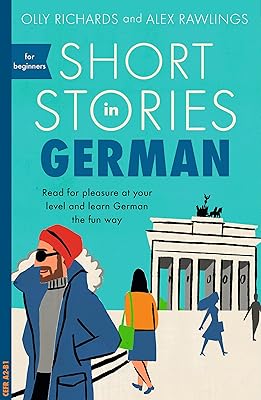
Short Stories in German for Beginners
Olly Richards
Learn German with 8 captivating stories. Perfect for A2-B1 learners who want to build vocabulary naturally.
Check Price on Amazon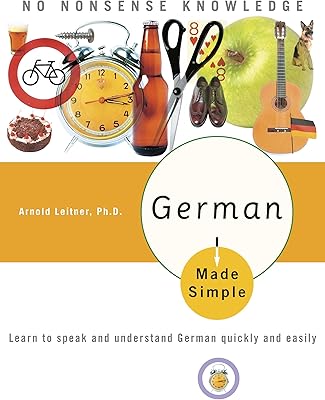
German Made Simple
Eugene Jackson
A complete beginner's guide covering grammar, vocabulary, and conversation essentials.
Check Price on Amazon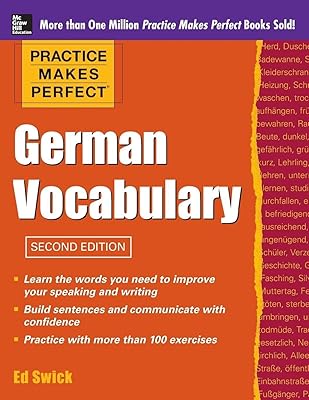
Practice Makes Perfect: German Vocabulary
Ed Swick
Targeted exercises and drills for mastering essential German words and phrases.
Check Price on AmazonAs an Amazon Associate, we earn from qualifying purchases.