Days of the Week in German: Pronunciation, Etymology & Useful Phrases
By LangPodTools Team, Language Learning Content Specialist

Days of the week show up in every German conversation. Making plans, booking appointments, reading train schedules, understanding store hours — you need these seven words constantly. The good news: once you learn them, they never change form and they follow a clear pattern rooted in Germanic mythology.
This guide covers all seven days with pronunciation, their fascinating origins in Norse and Germanic gods, the full set of German months and seasons, essential grammar rules, and the phrases you need to actually use them in conversation.
The 7 Days of the Week in German
Here are all seven days with their pronunciation and English equivalents. Every day ends in -tag (day), which makes them easy to recognize in text.
| German | Pronunciation | English | Abbreviation |
|---|---|---|---|
| Montag | MOHN-tahk | Monday | Mo |
| Dienstag | DEENS-tahk | Tuesday | Di |
| Mittwoch | MIT-vokh | Wednesday | Mi |
| Donnerstag | DON-ers-tahk | Thursday | Do |
| Freitag | FRY-tahk | Friday | Fr |
| Samstag | ZAHMS-tahk | Saturday | Sa |
| Sonntag | ZON-tahk | Sunday | So |
The abbreviations Mo, Di, Mi, Do, Fr, Sa, So appear everywhere in Germany — on bus schedules, store-hour signs, calendar apps, and TV listings. You will see them daily.
Notice that Mittwoch is the only day that does not end in -tag. It literally means "mid-week" (Mitte = middle, Woche = week), marking the halfway point. Every other day keeps the -tag suffix.
Study Tip: Say all seven days out loud as a sequence every morning for one week. The rhythm locks in fast: Montag, Dienstag, Mittwoch, Donnerstag, Freitag, Samstag, Sonntag. Treat it like a chant.
Etymology: Norse Gods and Germanic Origins
German days of the week are not random labels. They trace directly back to Norse and Germanic gods — the same gods that gave English its weekday names. Understanding the origins makes the words far easier to remember.
| Day | Named after | Connection |
|---|---|---|
| Montag | Mond (Moon) | Moon's day — same root as English "Monday" |
| Dienstag | Tiu / Ziu (god of war) | Tiu's day — parallel to English "Tuesday" (from Norse Tyr) |
| Mittwoch | Mitte der Woche (midweek) | Replaced the original Woden's day; English kept "Wednesday" |
| Donnerstag | Donar / Thor (god of thunder) | Thunder's day — same as English "Thursday" (Thor's day) |
| Freitag | Freya / Frigg (goddess of love) | Freya's day — same as English "Friday" |
| Samstag | Sabbat (Sabbath, via Latin) | From the Hebrew Sabbath through Latin sabbatum |
| Sonntag | Sonne (Sun) | Sun's day — same root as English "Sunday" |
Dienstag comes from the Germanic war god Tiu (also spelled Ziu), the equivalent of Norse Tyr. English took the Norse path (Tyr's day = Tuesday), while German kept the older Germanic form (Tiu's day = Dienstag).
Donnerstag directly translates to "Thunder's day." Donar is the Germanic name for the Norse god Thor. Both languages honored the same thunder god — German just used the Germanic name.
Freitag honors Freya (or Frigg), the Norse goddess of love, beauty, and fertility. English "Friday" comes from the same goddess. The connection is straightforward once you see it.
The biggest divergence is Mittwoch. English preserved "Wednesday" from Woden (Odin). German replaced the pagan reference with the neutral "midweek" — likely due to Christian influence in the early medieval period.
Samstag vs. Sonnabend: The Regional Split
Germany has two words for Saturday, and which one you hear depends on where you are.
- Samstag — used in southern Germany, Austria, and Switzerland
- Sonnabend — used in northern and eastern Germany
Samstag derives from the Latin Sabbatum (Sabbath) and is the more widely recognized form. It appears on most official calendars and in standard written German. Sonnabend literally means "Sunday eve" (the evening before Sunday) and has older Germanic roots.
Both are correct. Both are understood everywhere. If you are learning German, Samstag is the safer default because it has broader usage and appears in most textbooks. But do not be surprised when someone in Hamburg or Berlin says Sonnabend — it means exactly the same thing.
Grammar: How to Use Days of the Week
German days follow a few specific grammar rules that differ from English. Get these right and your sentences will sound natural.
All Days Are Masculine
Every day of the week takes the masculine article der.
- der Montag, der Dienstag, der Mittwoch, der Donnerstag, der Freitag, der Samstag, der Sonntag
This never changes. No exceptions.
Use "am" for "on" a Specific Day
In English you say "on Monday." In German, use the contraction am (= an + dem, dative case).
- am Montag — on Monday
- am Freitag — on Friday
- am Wochenende — on the weekend
Do not say auf Montag or in Montag — those are wrong. The preposition is always an (contracted to am with the dative article).
Days Without Articles for Recurring Events
When talking about something that happens every week on that day, you can drop the article entirely.
- Montag habe ich frei. — I am off on Mondays. (habitual)
- Am Montag habe ich frei. — I am off on Monday. (this specific Monday)
Expressing "Every" and "Next"
| German | English | Example |
|---|---|---|
| jeden Montag | every Monday | Jeden Montag gehe ich schwimmen. |
| nächsten Dienstag | next Tuesday | Nächsten Dienstag habe ich einen Termin. |
| letzten Freitag | last Friday | Letzten Freitag war ich in Berlin. |
| diesen Mittwoch | this Wednesday | Diesen Mittwoch treffen wir uns. |
Notice that jeden, nächsten, letzten, and diesen all take accusative endings — the -en ending because the days are masculine.
Useful Phrases with Days of the Week
These are the phrases you will actually use in daily German conversation.
| German | English |
|---|---|
| Welcher Tag ist heute? | What day is today? |
| Heute ist Montag. | Today is Monday. |
| Was machst du am Samstag? | What are you doing on Saturday? |
| Ich arbeite von Montag bis Freitag. | I work from Monday to Friday. |
| Jeden Montag habe ich Deutschkurs. | I have German class every Monday. |
| Wir sehen uns am Donnerstag. | We will see each other on Thursday. |
| Am Wochenende schlafe ich aus. | On the weekend I sleep in. |
| Bis Freitag! | See you Friday! |
Das Wochenende (the weekend) covers Samstag and Sonntag. The plural die Wochentage means "weekdays" (Monday through Friday). You will hear unter der Woche to mean "during the week" (on weekdays).
Study Tip: Pick one phrase from this table and use it every day for a week. Start with Welcher Tag ist heute? Heute ist... and answer it every morning. Small daily repetitions beat long study sessions.
German Months: Januar through Dezember
The twelve months in German are close to their English equivalents — most are immediately recognizable. All months are masculine (der).
| German | Pronunciation | English |
|---|---|---|
| Januar | YAH-noo-ar | January |
| Februar | FEH-broo-ar | February |
| März | merts | March |
| April | ah-PRIL | April |
| Mai | my | May |
| Juni | YOO-nee | June |
| Juli | YOO-lee | July |
| August | ow-GOOST | August |
| September | zep-TEM-ber | September |
| Oktober | ok-TOH-ber | October |
| November | no-VEM-ber | November |
| Dezember | deh-TSEM-ber | December |
The biggest spelling differences from English: Januar (no -y), Februar (no -y), März (not March), Mai (not May), Juni (not June), Juli (not July), Dezember (z instead of c).
For months, use the preposition im (= in + dem): im Januar (in January), im März (in March), im Dezember (in December).
German Seasons: Frühling, Sommer, Herbst, Winter
The four seasons are easy to learn. Three of the four are close to English.
| German | Pronunciation | English |
|---|---|---|
| der Frühling | FRUE-ling | Spring |
| der Sommer | ZOM-er | Summer |
| der Herbst | herpst | Autumn / Fall |
| der Winter | VIN-ter | Winter |
Frühling is the one that looks unfamiliar. It comes from früh (early) — literally "the early time." You may also hear the older form das Frühjahr (early year), which means the same thing.
Herbst is a false friend alert for English speakers. It looks like it might be related to "herbs," but it actually shares a root with English "harvest." Both words trace back to the same Proto-Germanic word for the gathering season.
Seasons also use im: im Frühling (in spring), im Sommer (in summer), im Herbst (in autumn), im Winter (in winter).
| German | English |
|---|---|
| Im Frühling blühen die Blumen. | In spring the flowers bloom. |
| Im Sommer fahren wir ans Meer. | In summer we go to the sea. |
| Im Herbst fallen die Blätter. | In autumn the leaves fall. |
| Im Winter schneit es oft. | In winter it often snows. |
Putting It Together: Days, Months, and Dates
German dates follow the order day – month – year, not the American month-first format.
- Montag, der 3. März 2026 — Monday, March 3, 2026
- Am Freitag, dem 15. August — On Friday, August 15
The day of the month uses an ordinal number with a period: 3. (dritte), 15. (fünfzehnte). See our German numbers guide for the full ordinal system.
To say a date out loud: Heute ist Montag, der dritte März (Today is Monday, the third of March). The ordinal takes nominative case after ist and dative case after am.
Common Mistakes to Avoid
1. Wrong preposition. It is am Montag, not auf Montag or in Montag. The preposition for days is always an (contracted to am).
2. Forgetting the gender. All days are der (masculine). All months are der. All seasons are der (except you might occasionally hear das Frühjahr for spring). Consistent masculine gender actually makes this easier.
3. Capitalizing abbreviations incorrectly. The standard abbreviations are two letters, capitalized: Mo, Di, Mi, Do, Fr, Sa, So. Not MO, DI, MI or mo, di, mi.
4. Confusing Samstag and Sonnabend. Both mean Saturday. Samstag is more universal. Use it unless you are specifically in northern Germany and want to match local usage.
5. Literal translation of "on the weekend." It is am Wochenende, not auf dem Wochenende or in dem Wochenende. Same am preposition as individual days.
Study Tip: Write your weekly schedule in German. Label each day with its German name and list your activities using am + day. Hang it where you see it daily. Passive exposure during routine moments is surprisingly effective.
How to Practice
Label your calendar. Switch your phone or computer calendar language to German. You will see Mo, Di, Mi, Do, Fr, Sa, So and the German month names every time you check your schedule — zero extra effort required.
Narrate your week. Each morning, say out loud: Heute ist [day]. Morgen ist [day]. Gestern war [day]. (Today is... Tomorrow is... Yesterday was...) Three sentences, ten seconds, daily reinforcement.
Listen for days in context. German podcast episodes mention days constantly — scheduling, storytelling, news. Browse the German episodes hub and listen for weekday references. The Learn German with Podcasts guide shows how to structure listening practice.
Drill with flashcards. Use the Flashcard Tool to build a deck with days, months, and seasons. Include phrases like am Montag, im Januar, im Frühling so you drill the prepositions together with the vocabulary.
For more foundational vocabulary, see our common German phrases guide and the German travel phrases collection — both use days and time references heavily.
Recommended Resources
- German Vocabulary Workbook for Beginners — Covers days, months, seasons, and time expressions with fill-in exercises and pronunciation guides. Ideal for A1-A2 learners building core vocabulary.
- German Grammar and Practice for Beginners — Includes sections on temporal prepositions (am, im, um), cases with time expressions, and everyday scheduling vocabulary.
- German-English Visual Dictionary — Visual reference for calendar vocabulary, seasons, weather, and daily routines. Helpful for learners who remember images better than word lists.
Conclusion
The seven days of the week are among the first words every German learner needs. They are masculine, they use am for "on," and six of the seven end in -tag. Add the twelve months (use im), the four seasons (also im), and you can handle nearly every scheduling conversation in German.
Start with the daily chant: Montag, Dienstag, Mittwoch, Donnerstag, Freitag, Samstag, Sonntag. Then build outward — add months, add seasons, practice the phrases. For number vocabulary that pairs naturally with dates, see our German numbers guide and telling time in German. Browse real conversations in the German episodes hub to hear these words in action.
Frequently Asked Questions
What are the days of the week in German?▾
Why is Wednesday called Mittwoch in German instead of a god's name?▾
What is the difference between Samstag and Sonnabend?▾
Are German days of the week masculine or feminine?▾
How do you say 'on Monday' in German?▾
Recommended Study Material
The Complete German Grammar Cheat Sheet
A1–B2 Reference PDF
27 pages of color-coded tables, mnemonics, and shortcuts — every rule you need from Cases to Subjunctive.
Recommended German Books
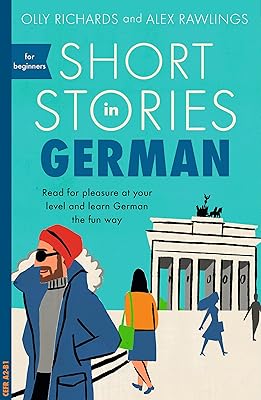
Short Stories in German for Beginners
Olly Richards
Learn German with 8 captivating stories. Perfect for A2-B1 learners who want to build vocabulary naturally.
Check Price on Amazon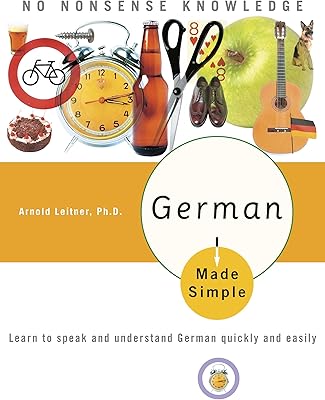
German Made Simple
Eugene Jackson
A complete beginner's guide covering grammar, vocabulary, and conversation essentials.
Check Price on Amazon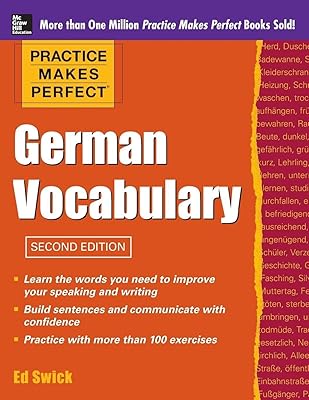
Practice Makes Perfect: German Vocabulary
Ed Swick
Targeted exercises and drills for mastering essential German words and phrases.
Check Price on AmazonAs an Amazon Associate, we earn from qualifying purchases.