German Numbers 1 to 1000+: The Complete Guide with Pronunciation
By LangPodTools Team, Language Learning Content Specialist

Numbers are everywhere in German — prices at the Markt, bus timetables, phone numbers, apartment door codes. The good news: German numbers follow strict, predictable rules. Learn the first 20, understand two patterns, and you can produce any number you need.
This guide walks you from zero to one million, covers pronunciation, ordinals, common real-world uses, and the one reversal rule that trips up nearly every English speaker.
Numbers 0–20: The Core Set
These 21 words are the foundation of the entire number system. Every larger number is built from them.
| Number | German | Pronunciation guide |
|---|---|---|
| 0 | null | nool |
| 1 | eins | eye-ns |
| 2 | zwei | tsvye |
| 3 | drei | dry |
| 4 | vier | feer |
| 5 | fünf | fuenf |
| 6 | sechs | zeks |
| 7 | sieben | ZEE-ben |
| 8 | acht | akht |
| 9 | neun | noyn |
| 10 | zehn | tsayn |
| 11 | elf | elf |
| 12 | zwölf | tsvuelf |
| 13 | dreizehn | DRY-tsayn |
| 14 | vierzehn | FEER-tsayn |
| 15 | fünfzehn | FUENF-tsayn |
| 16 | sechzehn | ZEKH-tsayn |
| 17 | siebzehn | ZEEP-tsayn |
| 18 | achtzehn | AKHT-tsayn |
| 19 | neunzehn | NOYN-tsayn |
| 20 | zwanzig | TSVAN-tsikh |
Notice that 13–19 follow the pattern ones + zehn (the equivalent of "-teen" in English). The exceptions are 16 (sechzehn, not sechszehn) and 17 (siebzehn, not siebenzehn) — one letter is dropped each time. Both follow the same shortening rule and are not random exceptions.
Also note that eins (1 on its own) loses the -s when combined with other number elements: einundzwanzig (21), einhundert (100), eintausend (1,000).
Study Tip: Say these numbers out loud while tapping your fingers or counting objects around you. Physical association — counting steps, books, windows — anchors the words faster than silent reading.
The Tens: 20–100
Learning the tens unlocks everything from 21 to 99 in one step.
| Number | German | Note |
|---|---|---|
| 20 | zwanzig | |
| 30 | dreißig | Note: ß not z — dreissig if ß unavailable |
| 40 | vierzig | |
| 50 | fünfzig | |
| 60 | sechzig | sechs drops the s → sech |
| 70 | siebzig | sieben shortens to sieb |
| 80 | achtzig | |
| 90 | neunzig | |
| 100 | hundert | or einhundert |
Dreißig is the one irregular tens form — it uses ß (Eszett) instead of z, unlike all the others. This is not a typo. If you type it as dreissig, native speakers will understand, but dreißig is the correct written form.
The Reversed Pattern: 21–99
This is the most important rule in German numbers — and the one English speakers consistently get wrong at first.
In English: twenty-one (tens first, then ones). In German: one-and-twenty (ones first, then tens). The pattern is ones + und + tens.
| Number | German | Literal meaning |
|---|---|---|
| 21 | einundzwanzig | one-and-twenty |
| 32 | zweiunddreißig | two-and-thirty |
| 45 | fünfundvierzig | five-and-forty |
| 58 | achtundfünfzig | eight-and-fifty |
| 63 | dreiundsiebzig | wait — sixty-three? No: three-and-sixty |
| 74 | vierundsiebzig | four-and-seventy |
| 99 | neunundneunzig | nine-and-ninety |
All written as a single compound word, no spaces. Einundzwanzig is one word — 16 characters, zero spaces.
When dealing with multiples of ten (20, 30, 40...), there is no reversal — those are just the tens form alone: dreißig, vierzig, etc.
Study Tip: When you encounter a two-digit German number, train yourself to immediately flip: hear fünfundvierzig, translate to "five-and-forty", arrive at 45. With enough repetition, the flip becomes unconscious.
Hundreds: 100–1000
Hundreds are straightforward. The pattern: [ones] + hundert. Numbers within the hundred follow the same tens rules above.
| Number | German |
|---|---|
| 100 | einhundert (or just hundert) |
| 200 | zweihundert |
| 300 | dreihundert |
| 400 | vierhundert |
| 500 | fünfhundert |
| 600 | sechshundert |
| 700 | siebenhundert |
| 800 | achthundert |
| 900 | neunhundert |
| 1000 | eintausend (or just tausend) |
For numbers between hundreds: hundert + tens/ones with no connector in most styles.
- 115 → einhundertfünfzehn
- 342 → dreihundertzweiundvierzig
- 856 → achthundertsechsundfünfzig
The Big Reversal Problem: Three-Digit Numbers
Here is where English speakers struggle most. A number like 456 in German is:
vierhundertsechsundfünfzig (four-hundred-six-and-fifty)
The hundreds come first, left to right — just like English. But then the tens and ones reverse: ones come before tens. So you hear: 4 → 100 → 6 → 50, and must map that to 456.
The processing: vier (4) + hundert (×100) = 400 → sechs (6) held → und signals reversal → fünfzig (50) confirms: 6 goes in the ones column → 456.
The most effective fix is real-context practice — prices, times, years — not abstract drills. See the sections below.
Thousands and Beyond
Thousands follow the same logic: [number] + tausend followed by hundreds, then tens/ones.
| Number | German |
|---|---|
| 1,000 | eintausend |
| 2,000 | zweitausend |
| 5,500 | fünftausendfünfhundert |
| 10,000 | zehntausend |
| 100,000 | hunderttausend |
| 1,000,000 | eine Million |
| 1,000,000,000 | eine Milliarde |
Note that Million and Milliarde are written as separate words (not fused into one compound), and they use the feminine article eine: zwei Millionen (two million), drei Milliarden (three billion).
German Milliarde = English billion (1,000,000,000). German Billion = English trillion. This is a classic false friend that causes real confusion in financial news.
Ordinal Numbers: First, Second, Third...
Ordinal numbers (first, second, third) in German follow two clean rules:
- Up to 19: add -te to the cardinal number
- From 20 onwards: add -ste to the cardinal number
| Cardinal | Ordinal stem | Example |
|---|---|---|
| eins (1) | erst- | erste (first) — irregular |
| zwei (2) | zweit- | zweite (second) |
| drei (3) | dritt- | dritte (third) — irregular |
| vier (4) | viert- | vierte (fourth) |
| fünf (5) | fünft- | fünfte (fifth) |
| sieben (7) | siebt- | siebte (seventh) — shortened |
| acht (8) | acht- | achte (eighth) — no extra t |
| zehn (10) | zehnt- | zehnte (tenth) |
| zwanzig (20) | zwanzigst- | zwanzigste (twentieth) |
| dreißig (30) | dreißigst- | dreißigste (thirtieth) |
| hundert (100) | hundertst- | hundertste (hundredth) |
The three main irregulars are erst- (1st), dritt- (3rd), and siebt- (7th). Memorize these three and the rules handle the rest.
Ordinals also take adjective endings in sentences: der erste Platz (first place, masc. nominative), am zweiten April (on the second of April, dative). See the German cases guide for the full endings system.
Number-Related Vocabulary
These words come up constantly when discussing numbers in real German:
| German | English | Example |
|---|---|---|
| die Zahl | number (the concept) | eine große Zahl (a large number) |
| die Nummer | number (a specific ID/label) | die Telefonnummer (phone number) |
| die Hälfte / halb | half | eine halbe Stunde (half an hour) |
| das Viertel | quarter | Viertel nach drei (quarter past three) |
| das Dutzend | dozen | ein Dutzend Eier (a dozen eggs) |
| das Prozent | percent | zwanzig Prozent (twenty percent) |
| ungefähr | approximately | ungefähr fünfzig (approximately fifty) |
| mindestens | at least | mindestens zehn (at least ten) |
| höchstens | at most | höchstens zwanzig (at most twenty) |
Zahl vs Nummer: a common confusion for learners. Think of Zahl as the abstract concept of a number or an amount (Wie hoch ist die Zahl? — "What is the count?"), and Nummer as a specific identifying label (Was ist Ihre Telefonnummer? — "What is your phone number?").
Real-World German Numbers: Prices, Time, Phone, Years
Prices
German uses a comma as the decimal separator (the reverse of English). So €4,50 is spoken as vier Euro fünfzig — the decimal part is stated as whole cents, not a fraction.
- €1,99 → ein Euro neunundneunzig
- €12,50 → zwölf Euro fünfzig
- €249,00 → zweihundertneunundvierzig Euro
In everyday speech, Germans often drop the word Euro for small amounts: "Das kostet zwei fünfzig" (that costs two fifty).
Telling Time
German time has two systems — official (24-hour) and colloquial (12-hour with quarter/half references).
Official: 14:30 = vierzehn Uhr dreißig
Colloquial (the tricky one):
- 2:15 → Viertel nach zwei (quarter past two)
- 2:30 → halb drei (half three — meaning half to three, not half past two!)
- 2:45 → Viertel vor drei (quarter to three)
Halb drei = 2:30 is probably the most common source of time-related confusion for English speakers. The German "half" refers to half to the coming hour, not half past the previous one.
Study Tip: Practice time by narrating your own schedule in German. "Es ist halb acht" (it's 7:30). "Der Zug fährt um Viertel nach neun" (the train leaves at 9:15). Real-life anchors make these patterns automatic.
Phone Numbers
Germans typically read phone numbers in pairs: 089 456789 → null-acht-neun, vier-fünf-sechs-sieben-acht-neun, or grouped as null-acht-neun, sechs-und-vierzig-acht-neun. No universal rule — just awareness that pairs or groups are more common than reading digit by digit.
Years
Years up to 1999 are read as two two-digit numbers:
- 1985 → neunzehnhundertfünfundachtzig (nineteen-hundred-eighty-five)
Years 2000 and after are read as full thousands:
- 2000 → zweitausend
- 2024 → zweitausendvierundzwanzig
This matches the convention English uses for post-2000 years.
Common Mistakes English Speakers Make
1. Forgetting the reversal. Saying zwanzigdrei instead of dreiunddzwanzig (23). The ones always come first in 21–99.
2. Dreißig with a z. Writing dreissig instead of dreißig. Technically understandable, but incorrect.
3. Halb as "half past." Halb drei means 2:30, not 3:30. The "half" refers to the hour it's heading toward.
4. Milliarde vs. Billion. German Milliarde = English billion. German Billion = English trillion. Critical in finance and news.
5. Using Zahl for phone numbers. "Meine Zahl ist..." sounds odd. Phone numbers, door codes, and IDs all use Nummer.
6. Keeping the -s on eins in compounds. It's einundzwanzig (not einsundzwanzig), einhundert (not einshundert).
For more vocabulary patterns and common pitfalls, see our essential German words guide and the German word order rules — both of which touch on how numbers slot into sentences.
How to Practice German Numbers Effectively
Use real input. Numbers are best learned in context. Listen to German podcast episodes and pay attention every time a number appears — price, date, time, statistic. The Learn German with Podcasts guide explains how to structure input-based learning.
Flashcard drills. The Flashcard Tool lets you drill number recognition and production. Build a deck from the tables here and use spaced repetition — 10–15 minutes daily for one week.
Frequency analysis. Use the Word Frequency Tool on a German episode to see how often number-related words (Uhr, Euro, Prozent) appear — reveals which number vocabulary to prioritize.
Count in German. Replace your internal English counting — steps, items in a cart, seconds on a timer — with German. This builds automaticity faster than any dedicated study session.
For a broader overview of free resources, see our best free tools to learn German guide.
Study Tip: Don't practice numbers in isolation. Embed them in phrases: "Ich brauche drei Tickets", "Das kostet vierzig Euro", "Ich wohne in der fünften Etage". Sentence-level practice activates numbers as usable language, not just vocabulary lists.
Recommended Resources
- German Numbers Workbook – Practice to Fluency — Dedicated exercises for German numbers in real contexts: telling time, shopping, dates, addresses. One of the few workbooks that covers the reversal pattern explicitly.
- German Grammar in Use – Beginner to Intermediate — Covers ordinals, cases with numbers, and time expressions in a workbook format with answer key.
Putting It All Together
German numbers have a learning curve — mainly the reversal pattern — but they are rule-governed all the way to millions. Master the base 20 words, learn the reversal, add hundreds and thousands, and you have the whole system.
The fastest path: use real German audio with numbers in context. Pick any episode from the German hub, listen for numbers, and pause to process them. The Flashcard Tool handles the retention side. Two weeks of daily exposure and the reversal starts to feel natural.
For more German vocabulary foundations, revisit our essential German words guide or start exploring German conversation patterns in the greetings guide.
Frequently Asked Questions
How do you say German numbers from 21 to 99?▾
What is special about dreißig in German?▾
How do ordinal numbers work in German?▾
What does halb drei mean in German?▾
What is the difference between Zahl and Nummer in German?▾
Recommended Study Material
The Complete German Grammar Cheat Sheet
A1–B2 Reference PDF
27 pages of color-coded tables, mnemonics, and shortcuts — every rule you need from Cases to Subjunctive.
Recommended German Books

Short Stories in German for Beginners
Olly Richards
Learn German with 8 captivating stories. Perfect for A2-B1 learners who want to build vocabulary naturally.
Check Price on Amazon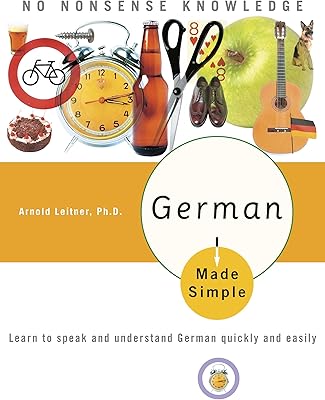
German Made Simple
Eugene Jackson
A complete beginner's guide covering grammar, vocabulary, and conversation essentials.
Check Price on Amazon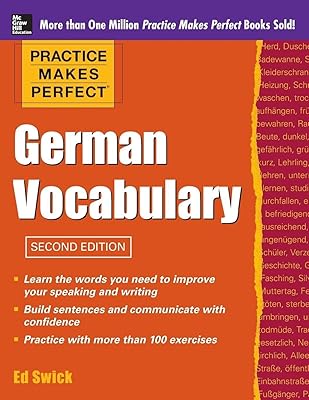
Practice Makes Perfect: German Vocabulary
Ed Swick
Targeted exercises and drills for mastering essential German words and phrases.
Check Price on AmazonAs an Amazon Associate, we earn from qualifying purchases.