Essential German Travel Phrases You'll Actually Use
By LangPodTools Team, Language Learning Content Specialist

You've booked the flight. You've downloaded the apps. Now comes the part that actually matters: knowing what to say when a Berliner stares back at you expectantly.
Good news — you don't need to be fluent to have a great trip through Germany, Austria, or Switzerland. You need maybe 60 phrases, used with confidence and a bit of cultural awareness. This guide gives you exactly that.
Greetings and Polite Phrases That Open Doors
Germans appreciate directness, but they also appreciate politeness. Walking into a shop and saying nothing is considered rude. A simple greeting changes everything.
The Must-Know Greetings
| German | Pronunciation | English |
|---|---|---|
| Guten Morgen | GOO-ten MOR-gen | Good morning |
| Guten Tag | GOO-ten TAHK | Good day / Hello |
| Guten Abend | GOO-ten AH-bent | Good evening |
| Hallo | HAH-lo | Hi (informal) |
| Tschüss | CHOOS | Bye (informal) |
| Auf Wiedersehen | owf VEE-der-zayn | Goodbye (formal) |
Want to go deeper on greetings? Check out our full guide on how to say hello in German and our breakdown of German goodbye phrases.
Polite Essentials
- Bitte (BIT-teh) — Please / You're welcome
- Danke (DAHN-keh) — Thank you
- Danke schön (DAHN-keh SHERN) — Thank you very much
- Entschuldigung (ent-SHOOL-dee-goong) — Excuse me / Sorry
- Es tut mir leid (es toot meer lyt) — I'm sorry
- Sprechen Sie Englisch? (SHPREH-khen zee ENG-lish) — Do you speak English?
Study Tip: Record yourself saying Entschuldigung five times right now. It's a long word but you'll need it constantly — for getting attention, squeezing past people on the U-Bahn, and apologizing when you bump into someone.
The Du vs. Sie Distinction
This is one of the most important cultural rules for travelers. German has two ways to say "you":
Sie (zee) is the formal form — use it with strangers, shop staff, hotel receptionists, and anyone older than you. Du (doo) is informal — use it with people your age in casual settings, or when someone explicitly invites you to use it.
As a tourist, default to Sie in every professional interaction. It signals respect and Germans will appreciate it immediately.
Getting Around: Directions, Transport, and Taxis
Navigation is where phrase books fail you — they give you perfect sentences no one actually uses. Here's the real-world version.
Asking for Directions
| German | Pronunciation | English |
|---|---|---|
| Wo ist...? | voh ist | Where is...? |
| Wie komme ich zu...? | vee KOM-eh ikh tsoo | How do I get to...? |
| Links | LINKS | Left |
| Rechts | REKHTS | Right |
| Geradeaus | geh-RAH-deh-owss | Straight ahead |
| Die Haltestelle | dee HAHL-teh-shtel-eh | The stop (bus/tram) |
| Der Bahnhof | dair BAHN-hof | The train station |
A reliable opener: "Entschuldigung, wo ist der Bahnhof?" — Excuse me, where is the train station?
Public Transport Phrases
- Eine Fahrkarte nach [city], bitte. — One ticket to [city], please.
- Wann fährt der nächste Zug? — When does the next train leave?
- Ist dieser Platz frei? — Is this seat free?
- Wo muss ich umsteigen? — Where do I change trains?
Study Tip: Use the LangPodTools flashcard tool to drill transport phrases before your trip. Create a deck called "Travel Day" and quiz yourself until the answers come instantly — not after a two-second mental translation delay.
Taking a Taxi or Rideshare
- Können Sie mich zu [address] fahren? — Can you take me to [address]?
- Wie viel kostet das? — How much does it cost?
- Halten Sie hier bitte an. — Please stop here.
- Stimmt so. — Keep the change.
For German numbers (essential for understanding prices and platform numbers), see our German numbers guide.
At the Restaurant and Café
Eating out in Germany is a pleasure — but the etiquette is different from what many travelers expect. Here's how to navigate it without awkward silences.
Ordering and Seating
In Germany, you typically wait to be seated at restaurants but seat yourself at cafés. When staff approach, they'll often say "Was darf es sein?" (vahs darf es zyn) — What can it be? (What would you like?)
| German | English |
|---|---|
| Einen Tisch für zwei, bitte. | A table for two, please. |
| Die Speisekarte, bitte. | The menu, please. |
| Ich hätte gern... | I would like... |
| Was empfehlen Sie? | What do you recommend? |
| Ohne Fleisch, bitte. | Without meat, please. |
| Ich bin Vegetarier/Vegetarierin. | I'm vegetarian. (m/f) |
Paying the Bill
This is where many tourists get confused. In Germany, splitting bills by person (getrennt) is completely normal and accepted — even encouraged. Just say:
- Getrennt, bitte. — Separately, please.
- Zusammen, bitte. — Together, please.
- Die Rechnung, bitte. — The bill, please.
- Kann ich mit Karte zahlen? — Can I pay by card?
Tipping Culture in Germany
Tipping is not mandatory in Germany, but it is appreciated. The standard is to round up or add 5–10%. You tip directly to the server — not by leaving cash on the table. When you hand over your card or cash, say the amount you want to pay:
"Stimmt so" (SHTIMT zoh) means "keep the change" and is the most natural way to tip. If the bill is €18.50 and you want to pay €20, just say "Zwanzig Euro" when handing over the money.
Shopping: Prices, Sizes, and Fitting Rooms
The Basics
- Wie viel kostet das? — How much does this cost?
- Das ist zu teuer. — That's too expensive.
- Haben Sie das in einer anderen Größe? — Do you have this in another size?
- Kann ich das anprobieren? — Can I try this on?
- Wo ist die Umkleidekabine? — Where is the fitting room?
- Ich nehme es. — I'll take it.
- Ich schaue nur. — I'm just looking.
Study Tip: "Ich schaue nur" is one of the most useful shopping phrases you'll learn. German shop assistants often approach customers, and this polite response lets you browse without pressure — no flustered silence required.
Bakery Etiquette (A Special Note)
German bakeries (Bäckereien) are a national institution. You'll find one on almost every block, and they're a perfect place to practice your German in a low-stakes environment.
- Ein Brötchen, bitte. — One bread roll, please.
- Zwei Croissants, bitte. — Two croissants, please.
- Mit oder ohne Butter? — With or without butter? (they'll ask)
- Zum Mitnehmen, bitte. — To take away, please.
Note: In many bakeries and small shops, cash is still king. Have coins ready.
Hotel and Accommodation Phrases
Check-In and Check-Out
| German | English |
|---|---|
| Ich habe eine Reservierung. | I have a reservation. |
| Auf den Namen [name]. | Under the name [name]. |
| Wann ist der Check-out? | When is check-out? |
| Kann ich mein Gepäck hier lassen? | Can I leave my luggage here? |
| Das Zimmer ist nicht sauber. | The room is not clean. |
| Die Heizung funktioniert nicht. | The heating doesn't work. |
Requesting Things
- Können Sie mir ein Taxi rufen? — Can you call me a taxi?
- Haben Sie WLAN? — Do you have Wi-Fi? (pronounced: VAY-lahn)
- Was ist das Passwort? — What is the password?
Emergency Phrases and Asking for Help
Hopefully you'll never need these — but knowing them turns a potential crisis into a manageable situation.
Essential Emergency Phrases
- Hilfe! (HIL-feh) — Help!
- Rufen Sie die Polizei! — Call the police!
- Rufen Sie einen Arzt! — Call a doctor!
- Ich brauche einen Krankenwagen. — I need an ambulance.
- Es gibt einen Notfall. — There is an emergency.
- Ich habe meine Tasche verloren. — I lost my bag.
- Ich bin krank. — I am sick.
- Wo ist das nächste Krankenhaus? — Where is the nearest hospital?
For situations where you need to decline something or set a boundary, our guide on how to say no in German is worth bookmarking before you travel.
Pronunciation Tips for Key Travel Words
German pronunciation is more consistent than English — once you learn the rules, you can sound out almost anything. Here are the patterns that matter most for travelers:
Key Sounds to Master
- ch — After a, o, u: pronounced like clearing your throat (Bach, Nacht). After e, i: softer, like a breathy "sh" (ich, nicht).
- ie — Always sounds like "ee" (bitte, wie, nie)
- ei — Always sounds like "eye" (nein, Stein, drei)
- eu / äu — Sounds like "oy" (Deutsch, heute)
- w — Pronounced like English "v" (Wasser = VAH-ser, Wie = VEE)
- v — Usually pronounced like English "f" (viel = feel)
- ß (Eszett) — A sharp "ss" sound (Straße = SHTRAH-seh)
Study Tip: The single biggest pronunciation win for German travelers is mastering the w → v rule. Say "Wie viel?" out loud right now: "Vee feel?" — not "Wee veel." That one shift makes a huge difference to German ears.
The Umlauts (ä, ö, ü)
These modified vowels trip up many learners. A practical cheat:
- ä — Like the "a" in "air"
- ö — Purse your lips to say "o" but try to say "e" — like the French "eu"
- ü — Purse your lips to say "oo" but try to say "ee"
For a deeper dive into German vocabulary fundamentals, our essential German words guide covers the 100 highest-frequency terms with audio mnemonics.
Building Your Travel Phrase Practice Routine
Knowing phrases on paper is not the same as having them ready when a Deutsche Bahn conductor asks for your ticket and the train is moving. You need active recall, not passive recognition.
A 10-Minute Pre-Trip Routine
- Days 1–3: Learn greetings and restaurant phrases. Use LangPodTools flashcards for spaced repetition.
- Days 4–6: Add transport and shopping phrases. Practice saying them aloud — speaking matters as much as reading.
- Days 7–10: Drill the full list with a focus on pronunciation. Listen to native audio for each phrase.
- Day before: Do one full review pass of emergency phrases. You won't regret it.
For podcast-based learning that reinforces these exact phrases in context, our learn German with podcasts guide recommends the best shows for A1–B2 learners. The DW Learn German platform is also free and structured specifically for self-study.
For a broader overview of the German language including grammar context, the Goethe Institut's learning resources are considered the gold standard.
Quick Reference: Your 30-Phrase Travel Card
Print this or screenshot it before you go:
| Situation | German | English |
|---|---|---|
| Greeting | Guten Tag | Hello |
| Thanks | Danke schön | Thank you |
| Sorry | Entschuldigung | Excuse me |
| Where is? | Wo ist...? | Where is...? |
| Train station | Der Bahnhof | Train station |
| Ticket | Eine Fahrkarte | One ticket |
| Menu | Die Speisekarte | The menu |
| I'd like | Ich hätte gern | I would like |
| The bill | Die Rechnung | The bill |
| How much? | Wie viel kostet das? | How much? |
| Fitting room | Umkleidekabine | Fitting room |
| Just looking | Ich schaue nur | Just looking |
| Wi-Fi | WLAN | Wi-Fi |
| Help! | Hilfe! | Help! |
| Doctor | Rufen Sie einen Arzt! | Call a doctor! |
For a structured path from these travel basics into real conversational German, start with our German language learning hub.
Final Thought
The goal isn't perfection — it's connection. Germans are not expecting flawless grammar from tourists. What they notice is effort: someone who walked in and said Guten Tag instead of diving straight into English. That small gesture of respect opens more doors than any phrasebook ever will.
Learn the phrases. Practice the sounds. Show up willing to be imperfect. That's the whole strategy.
Start building your travel vocabulary deck today with the LangPodTools flashcard tool — it's free and takes less than five minutes to set up.
Frequently Asked Questions
What are the most important German phrases for first-time tourists?▾
Is it rude to speak English in Germany?▾
How does tipping work in German restaurants?▾
How difficult is German pronunciation for English speakers?▾
Recommended Study Material
The Complete German Grammar Cheat Sheet
A1–B2 Reference PDF
27 pages of color-coded tables, mnemonics, and shortcuts — every rule you need from Cases to Subjunctive.
Recommended German Books
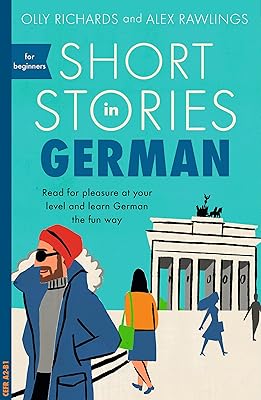
Short Stories in German for Beginners
Olly Richards
Learn German with 8 captivating stories. Perfect for A2-B1 learners who want to build vocabulary naturally.
Check Price on Amazon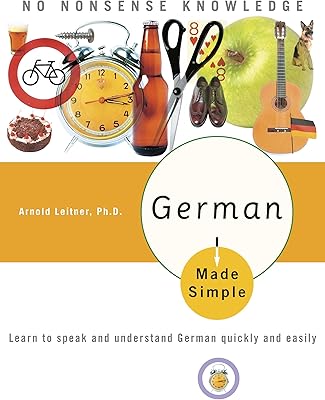
German Made Simple
Eugene Jackson
A complete beginner's guide covering grammar, vocabulary, and conversation essentials.
Check Price on Amazon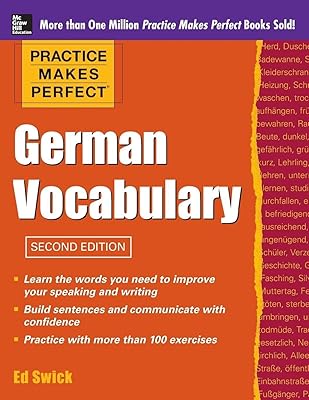
Practice Makes Perfect: German Vocabulary
Ed Swick
Targeted exercises and drills for mastering essential German words and phrases.
Check Price on AmazonAs an Amazon Associate, we earn from qualifying purchases.