Telling Time in German: A Simple Guide with Examples
By LangPodTools Team, Language Learning Content Specialist

Time comes up in every German conversation. Train schedules, meeting times, dinner reservations, store hours — you cannot get through a single day without it. The good news: German time-telling follows clear rules. The bad news: one of those rules is the exact opposite of what English speakers expect.
This guide covers every way Germans express time, from the formal 24-hour clock to casual phrases you will hear on the street. Pay special attention to the halb section — it is the single biggest source of confusion for learners.
How to Ask "What Time Is It?" in German
There are two standard ways to ask for the time. Both are correct and interchangeable.
| German | Pronunciation | English |
|---|---|---|
| Wie spät ist es? | vee SHPAYT ist es | What time is it? (literally: "How late is it?") |
| Wie viel Uhr ist es? | vee feel OOR ist es | What time is it? (literally: "How many o'clock is it?") |
Wie spät ist es? is the more common version in everyday speech. You will hear it far more often than the second form. Both are perfectly polite and work in any situation — with strangers, at shops, or with friends.
To answer, the basic structure is: Es ist [time].
Study Tip: Practice asking Wie spät ist es? out loud every time you check your phone. Within a few days, it will come out automatically.
Telling Time on the Hour
The simplest case. The pattern is Es ist [number] Uhr — it's [number] o'clock.
| Time | German | Pronunciation |
|---|---|---|
| 1:00 | Es ist ein Uhr | es ist EYN oor |
| 2:00 | Es ist zwei Uhr | es ist TSVYE oor |
| 3:00 | Es ist drei Uhr | es ist DRY oor |
| 6:00 | Es ist sechs Uhr | es ist ZEKS oor |
| 10:00 | Es ist zehn Uhr | es ist TSAYN oor |
| 12:00 | Es ist zwölf Uhr | es ist TSVUELF oor |
Notice: at 1:00 it is ein Uhr, not eins Uhr. The -s drops when Uhr follows. This is the same pattern you see with German numbers in compounds.
For noon and midnight, Germans say:
- Es ist Mittag — It is noon
- Es ist Mitternacht — It is midnight
The Halb System: The #1 Mistake
This is the section you came for. Read it twice.
In English, "half past two" means 2:30 — half past the hour that just went by. In German, halb refers to half toward the next hour. So:
Halb drei = 2:30 (NOT 3:30)
Let that sink in. Halb drei literally means "half (of the way to) three." The clock is halfway to 3:00, which puts it at 2:30.
| German | Actual time | How to think about it |
|---|---|---|
| halb zwei | 1:30 | Halfway to 2 |
| halb drei | 2:30 | Halfway to 3 |
| halb vier | 3:30 | Halfway to 4 |
| halb fünf | 4:30 | Halfway to 5 |
| halb sechs | 5:30 | Halfway to 6 |
| halb sieben | 6:30 | Halfway to 7 |
| halb acht | 7:30 | Halfway to 8 |
| halb neun | 8:30 | Halfway to 9 |
| halb zehn | 9:30 | Halfway to 10 |
| halb elf | 10:30 | Halfway to 11 |
| halb zwölf | 11:30 | Halfway to 12 |
| halb eins | 12:30 | Halfway to 1 |
Every single English speaker gets this wrong at first. If a German friend says "Treffen wir uns um halb drei" (Let's meet at halb drei), they mean 2:30. Show up at 3:30 and you will be an hour late.
The mental trick: when you hear halb [number], subtract one from the number and add :30. Halb sieben → 7 minus 1 = 6 → 6:30. Done.
Study Tip: For one week, every time you see a clock showing :30, say the German halb form out loud. See 4:30 → say halb fünf. See 9:30 → say halb zehn. Repetition rewires the instinct.
Viertel nach and Viertel vor: Quarter Past and Quarter To
These work exactly like English — no reversal trick here.
| German | English | Example |
|---|---|---|
| Viertel nach [hour] | Quarter past [hour] | Viertel nach zwei = 2:15 |
| Viertel vor [hour] | Quarter to [hour] | Viertel vor drei = 2:45 |
Full table for one hour cycle:
| Time | German (colloquial) |
|---|---|
| 2:00 | zwei Uhr |
| 2:15 | Viertel nach zwei |
| 2:30 | halb drei |
| 2:45 | Viertel vor drei |
| 3:00 | drei Uhr |
Notice the pattern: nach (after/past) and vor (before/to) work relative to the nearest hour, just like English. The only twist is halb drei at 2:30, which jumps ahead to the next hour as described above.
Minutes Past and Before the Hour
For times that are not exactly on the quarter or half, use nach (past) and vor (to) with minute counts.
| Time | German |
|---|---|
| 2:05 | fünf nach zwei |
| 2:10 | zehn nach zwei |
| 2:20 | zwanzig nach zwei |
| 2:25 | fünf vor halb drei |
| 2:35 | fünf nach halb drei |
| 2:40 | zwanzig vor drei |
| 2:50 | zehn vor drei |
| 2:55 | fünf vor drei |
The key insight: times near :30 are expressed relative to halb, not the hour. So 2:25 is fünf vor halb drei (five before half-three, i.e., five minutes before 2:30). And 2:35 is fünf nach halb drei (five past half-three, i.e., five minutes after 2:30).
In practice, most Germans simplify anything outside the standard quarter/half marks. You will more often hear "kurz nach halb" (shortly after half) or "fast drei" (almost three) than precise minute counts.
The 24-Hour Clock: Standard in Germany
Unlike the US and UK, Germany uses the 24-hour clock as the default for anything official: train schedules, TV listings, business hours, appointments, and written communication.
| 24-hour | 12-hour equivalent | German |
|---|---|---|
| 0:00 | 12:00 AM (midnight) | null Uhr |
| 6:00 | 6:00 AM | sechs Uhr |
| 12:00 | 12:00 PM (noon) | zwölf Uhr |
| 13:00 | 1:00 PM | dreizehn Uhr |
| 15:30 | 3:30 PM | fünfzehn Uhr dreißig |
| 18:45 | 6:45 PM | achtzehn Uhr fünfundvierzig |
| 20:00 | 8:00 PM | zwanzig Uhr |
| 23:15 | 11:15 PM | dreiundzwanzig Uhr fünfzehn |
The 24-hour format is straightforward: [hour] Uhr [minutes]. No AM/PM. No ambiguity. When the train display says 14:22, you say vierzehn Uhr zweiundzwanzig.
In casual conversation, Germans switch to the 12-hour system with halb, Viertel, and time-of-day markers (morgens, abends, etc.). But anything written — schedules, invitations, opening hours — uses 24-hour format.
Study Tip: Change your phone clock to 24-hour format for one month. Every time you check the time, read it out loud in German. This builds the mental connection between the number and the spoken form.
Regional Variations: Viertel Drei and Dreiviertel
German time-telling has regional dialects that can confuse even native speakers from other parts of the country.
Standard (Western/Northern Germany)
- 2:15 → Viertel nach zwei (quarter past two)
- 2:45 → Viertel vor drei (quarter to three)
Eastern/Southern Germany, Austria, Parts of Switzerland
- 2:15 → Viertel drei (quarter three — meaning one quarter of the way to three)
- 2:45 → Dreiviertel drei (three-quarters three — meaning three quarters of the way to three)
The eastern/southern system is internally consistent: it counts quarters toward the next hour, just like halb.
| Fraction of the way to 3:00 | Time | Eastern/Southern | Standard |
|---|---|---|---|
| ¼ | 2:15 | Viertel drei | Viertel nach zwei |
| ½ | 2:30 | halb drei | halb drei |
| ¾ | 2:45 | Dreiviertel drei | Viertel vor drei |
Notice that halb drei = 2:30 is the same in both systems. The disagreement only happens at :15 and :45.
If you are learning German, stick with the standard system (Viertel nach / Viertel vor). Everyone understands it. But be aware of the regional forms so you are not confused when you hear them.
Time-of-Day Vocabulary
Germans use specific words for parts of the day. These appear constantly in casual time expressions.
| German | English | Approximate hours |
|---|---|---|
| morgens | in the morning | ~6:00–10:00 |
| vormittags | in the late morning | ~10:00–12:00 |
| mittags | at midday | ~12:00–14:00 |
| nachmittags | in the afternoon | ~14:00–18:00 |
| abends | in the evening | ~18:00–22:00 |
| nachts | at night | ~22:00–6:00 |
These are used with 12-hour times to avoid ambiguity: drei Uhr nachmittags (3 PM), sieben Uhr morgens (7 AM). In the 24-hour system, these markers are unnecessary.
Related nouns: der Morgen (morning), der Vormittag (late morning), der Mittag (noon), der Nachmittag (afternoon), der Abend (evening), die Nacht (night).
Appointment and Schedule Vocabulary
Knowing how to tell time is only half the battle. You also need the prepositions and phrases for scheduling.
Key Prepositions
| German | English | Example |
|---|---|---|
| um | at (specific time) | um drei Uhr — at 3 o'clock |
| von ... bis | from ... to | von neun bis fünf — from 9 to 5 |
| gegen | around (approximate) | gegen halb vier — around 3:30 |
| ab | from (starting at) | ab acht Uhr — from 8 o'clock onwards |
| bis | until / by | bis Mittag — by noon |
Useful Schedule Phrases
- Wann fängt es an? — When does it start?
- Wann ist es vorbei? — When is it over?
- Hast du um drei Zeit? — Are you free at three?
- Lass uns um halb sechs treffen. — Let's meet at 5:30.
- Der Laden öffnet um neun. — The store opens at nine.
- Der Zug fährt um vierzehn Uhr zwölf. — The train departs at 14:12.
Example Dialogues
Real conversations to show how time works in practice.
Dialogue 1: Asking for the Time
You: Entschuldigung, wie spät ist es? Stranger: Es ist Viertel nach zehn. You: Danke schön!
(It is 10:15.)
Dialogue 2: Making an Appointment
You: Wann können wir uns treffen? Friend: Wie wäre es um halb drei? You: Perfekt, also um 14:30. Bis dann!
(They agreed on 2:30 PM. Notice the speaker confirms by restating in 24-hour format — a common pattern to avoid misunderstanding.)
Dialogue 3: Store Hours
You: Wann öffnet das Museum? Staff: Von zehn bis achtzehn Uhr, Montag bis Samstag. You: Und am Sonntag? Staff: Sonntag von elf bis sechzehn Uhr.
(Open 10 AM – 6 PM Monday–Saturday, 11 AM – 4 PM Sunday.)
Dialogue 4: Catching a Train
You: Wann fährt der nächste Zug nach München? Agent: Um fünfzehn Uhr zweiunddreißig, Gleis sieben. You: Und wann kommt er an? Agent: Um siebzehn Uhr fünfzig.
(Train at 15:32, arrives at 17:50. Station announcements always use 24-hour format.)
Common Mistakes to Avoid
1. Halb drei = 3:30. No. Halb drei = 2:30. The German halb points to the next hour, not the previous one. This single mistake has caused countless missed appointments.
2. Saying "eins Uhr" instead of "ein Uhr." At 1:00, the -s drops: it is ein Uhr, not eins Uhr. See our German numbers guide for more on how eins behaves in compounds.
3. Using AM/PM. Germans do not use AM and PM. Use the 24-hour clock for anything written or formal. In casual speech, add the time-of-day word: drei Uhr nachmittags (3 PM), drei Uhr morgens (3 AM).
4. Confusing Viertel drei with Viertel nach drei. In eastern/southern Germany, Viertel drei = 2:15 (one quarter toward three). In standard German, Viertel nach drei = 3:15 (quarter past three). Completely different times. If you are unsure which system someone is using, ask: "Also um 14:15?" — confirm in 24-hour format.
5. Forgetting um for "at." In English you can say "Let's meet three o'clock." In German, you need the preposition: um drei Uhr, not just drei Uhr in a scheduling context.
Quick Reference: Time Cheat Sheet
Bookmark or screenshot this table.
| Time | Formal (24h) | Casual |
|---|---|---|
| 1:00 PM | dreizehn Uhr | ein Uhr / eins |
| 2:15 PM | vierzehn Uhr fünfzehn | Viertel nach zwei |
| 2:30 PM | vierzehn Uhr dreißig | halb drei |
| 2:45 PM | vierzehn Uhr fünfundvierzig | Viertel vor drei |
| 3:00 PM | fünfzehn Uhr | drei Uhr |
| 6:30 PM | achtzehn Uhr dreißig | halb sieben |
| 8:00 AM | acht Uhr | acht Uhr morgens |
| 11:45 PM | dreiundzwanzig Uhr fünfundvierzig | Viertel vor zwölf nachts |
| 12:00 PM | zwölf Uhr | Mittag |
| 12:00 AM | null Uhr / vierundzwanzig Uhr | Mitternacht |
How to Practice Telling Time in German
Narrate your day. Every time you glance at a clock, say the time in German. This is the single most effective practice method because it happens dozens of times daily without dedicated study time.
Use German audio input. Listen to German podcast episodes and pay attention to every time reference. Pause, repeat it, and confirm you understood the correct time. The Learn German with Podcasts guide explains how to structure listening practice for maximum retention.
Drill with flashcards. Use the Flashcard Tool to create a deck of times. Put "2:30" on one side and halb drei on the other. Focus heavily on the halb forms until the reflex is instant.
Set German alarms. Label your phone alarms in German: halb sieben — aufstehen (6:30 — wake up), Viertel nach acht — losgehen (8:15 — leave). Every notification reinforces the pattern.
For foundational number vocabulary that supports time-telling, review our German numbers guide. For broader daily vocabulary, see common German phrases and German travel phrases.
Study Tip: The halb system only feels hard for the first week. After that, the mental subtraction (halb sieben → 6:30) becomes automatic. Do not avoid it — lean into it. Every German speaker uses it multiple times daily.
Recommended Resources
- German Time and Daily Routines Workbook — Structured exercises for telling time, scheduling, and describing daily routines in German. Includes clock-face practice pages and real-world scenarios.
- German Grammar and Vocabulary Practice Book — Covers time expressions, prepositions, and everyday vocabulary in a workbook format with answer key. Good for self-study at A1-B1 level.
- German Flashcards for Everyday Situations — Physical flashcard set covering time, appointments, directions, and daily phrases. Ideal for drilling away from screens.
Conclusion
German time-telling has exactly one hard part: the halb system. Once you internalize that halb drei = 2:30 (not 3:30), everything else follows logically. The 24-hour clock removes all AM/PM ambiguity. Viertel nach and Viertel vor work just like English.
Start today: every time you check the time, say it in German. Within two weeks, the patterns become reflexive. And when a German friend says "Treffen wir uns um halb sieben," you will know to show up at 6:30 — not 7:30.
For more German vocabulary foundations, explore our German numbers guide, common German phrases, or browse real conversations in the German episodes hub.
Frequently Asked Questions
What does halb drei mean in German?▾
How do you ask what time it is in German?▾
Does Germany use a 24-hour clock?▾
What is the difference between Viertel drei and Viertel nach drei?▾
How do you say AM and PM in German?▾
Recommended Study Material
The Complete German Grammar Cheat Sheet
A1–B2 Reference PDF
27 pages of color-coded tables, mnemonics, and shortcuts — every rule you need from Cases to Subjunctive.
Recommended German Books

Short Stories in German for Beginners
Olly Richards
Learn German with 8 captivating stories. Perfect for A2-B1 learners who want to build vocabulary naturally.
Check Price on Amazon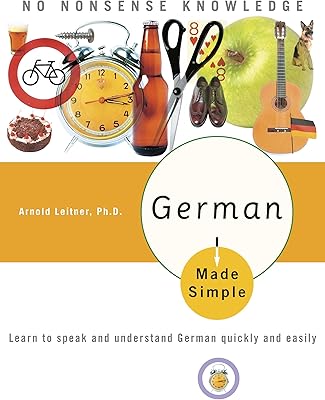
German Made Simple
Eugene Jackson
A complete beginner's guide covering grammar, vocabulary, and conversation essentials.
Check Price on Amazon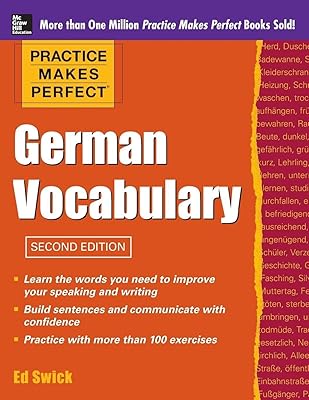
Practice Makes Perfect: German Vocabulary
Ed Swick
Targeted exercises and drills for mastering essential German words and phrases.
Check Price on AmazonAs an Amazon Associate, we earn from qualifying purchases.