Best German Books for Beginners: Textbooks, Stories, and Study Guides
By LangPodTools Team, Language Learning Content Specialist

Books remain one of the most effective ways to learn German. A good textbook gives you structure. A graded reader gives you confidence. Together, they build the foundation that apps and flashcards alone cannot provide.
This guide covers the best German books for beginners across every category — textbooks, grammar references, graded readers, and workbooks. Every recommendation is tested and suited for A1 to B1 learners.
Best German Textbooks for Beginners
A textbook is your roadmap. It introduces grammar, vocabulary, and culture in a logical sequence. Here are the top picks for self-study learners.
Menschen (Hueber Verlag)
Menschen is the gold standard for German language courses worldwide. Most German language schools use it.
- Levels available: A1.1, A1.2, A2.1, A2.2, B1.1, B1.2
- Strength: Natural dialogues, clear grammar explanations, and beautiful layout
- Best for: Learners who want a structured, classroom-style experience
Each chapter follows a story with recurring characters. This keeps you engaged and builds vocabulary in context. The grammar progression is gentle — you will not feel overwhelmed.
Study Tip: Buy the Arbeitsbuch (workbook) alongside the Kursbuch (textbook). The exercises reinforce what you learn in each chapter. Passive reading is not enough — you need active practice.
Netzwerk Neu (Klett Verlag)
Netzwerk Neu is the modern alternative to Menschen. It focuses heavily on digital integration and real-world communication.
- Levels available: A1, A2, B1
- Strength: Video content, online exercises, and contemporary topics
- Best for: Tech-savvy learners who want multimedia support
The book includes QR codes linking to audio and video clips. Grammar explanations use color coding that makes patterns easy to spot.
German Made Simple (Eugene Jackson)
German Made Simple is a classic self-study textbook. It has been helping English speakers learn German for decades.
- Strength: Clear English explanations, affordable price
- Best for: Complete beginners who want everything explained in English
- Limitation: Older style, less multimedia
This book works best as a supplement. Pair it with a more modern resource for listening practice. For free audio input, see our guide on learning German with podcasts.
Best German Grammar Books
Grammar books are reference tools. You do not read them cover to cover — you look up what you need when you need it.
Hammer's German Grammar and Usage
Hammer's is the definitive English-language reference for German grammar. It covers everything from basic articles to advanced subjunctive constructions.
- Best for: A2+ learners who want thorough explanations
- Strength: Comprehensive coverage with clear examples
- Pairs well with: Any textbook or self-study program
This is not a beginner book in the traditional sense. But having it on your shelf means you always have answers. When German cases confuse you, Hammer's will clarify.
Study Tip: Do not try to memorize grammar tables. Instead, look up rules as questions arise during reading or conversation. Grammar sticks better when you learn it in context.
Essential German Grammar (Klett)
If Hammer's feels too dense, Essential German Grammar by Klett is a lighter alternative. It covers A1-B1 grammar with simple charts and practice exercises.
- Visual layout with color-coded tables
- Short explanations with immediate practice
- Covers all topics from German tenses to word order
Practice Makes Perfect: German Grammar
The Practice Makes Perfect series is exercise-focused. Each grammar topic gets a short explanation followed by dozens of drills.
- Best for: Learners who learn by doing, not reading
- 200+ exercises per book
- Answer key included for self-study
Best Graded Readers for German Beginners
Graded readers are short books written for language learners. They use limited vocabulary and simple grammar so you can actually enjoy reading.
Café in Berlin (André Klein)
The Learn German with Stories series by André Klein is the most popular graded reader series for German. Café in Berlin is the first book.
- Level: A1-A2
- Format: Short stories about a newcomer in Berlin
- Includes: Vocabulary lists, comprehension questions, and answer keys
Each chapter is 3-5 pages long. The stories are lighthearted and genuinely entertaining. You follow the main character through everyday situations — ordering coffee, navigating the U-Bahn, meeting neighbors.
Study Tip: Read each story twice. First time: read for the gist without stopping. Second time: look up unknown words and study the grammar. This two-pass method builds both fluency and accuracy.
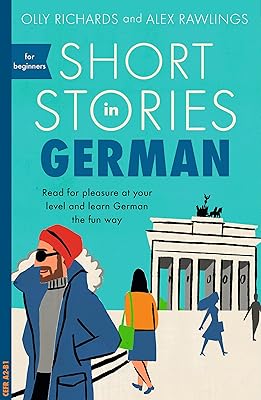
Short Stories in German (Olly Richards)
Short Stories in German for Beginners by Olly Richards uses a similar approach — engaging fiction at a controlled language level.
- Level: A2-B1
- 8 stories with diverse genres (mystery, sci-fi, history)
- Vocabulary highlighted and defined in margins
The stories are slightly more challenging than André Klein's series. This makes it a great next step after Café in Berlin.
Der Struwwelpeter (Heinrich Hoffmann)
For something authentically German, Der Struwwelpeter is a classic children's book from 1845. The language is simple but real — not simplified for learners.
- Level: A2+
- Cultural value: Every German knows these stories
- Caveat: The morality tales are dark by modern standards
Reading children's literature is one of the fastest ways to build vocabulary. The sentences are short, the plots are clear, and repetition is built in naturally.
Best German Workbooks
Workbooks give you structured practice. They are especially useful for grammar, writing, and vocabulary building.
Schritte Übungsgrammatik (Hueber)
Schritte Übungsgrammatik provides progressive grammar exercises from A1 to B1. Each unit targets one grammar point with clear examples and varied practice types.
- Fill-in-the-blank, sentence building, and translation exercises
- Organized by grammar topic, not textbook chapter
- Works alongside any textbook
German Vocabulary Drills (David Stillman)
This workbook focuses purely on vocabulary building through themed exercises.
- Topics: family, food, travel, emotions, daily life
- 200+ exercises organized by theme
- Includes answer key
Combine this with our flashcard tool to review the words you learn. Active recall beats passive review every time.
Comparison Table: Top Picks at a Glance
| Book | Type | Level | Best For | Price Range |
|---|---|---|---|---|
| Menschen | Textbook | A1-B1 | Structured course learners | $$$ |
| Netzwerk Neu | Textbook | A1-B1 | Digital-first learners | $$$ |
| German Made Simple | Textbook | A1-A2 | Budget self-study | $ |
| Hammer's Grammar | Reference | A2-C2 | Grammar deep dives | $$ |
| Café in Berlin | Graded Reader | A1-A2 | Fun reading practice | $ |
| Short Stories in German | Graded Reader | A2-B1 | Intermediate reading | $ |
| Practice Makes Perfect | Workbook | A1-B1 | Exercise lovers | $ |
How to Choose the Right Book
With so many options, the right book depends on your learning style and current level.
For Complete Beginners (A1)
Start with one textbook and one graded reader. The textbook gives you grammar and structure. The graded reader gives you enjoyable practice.
Recommended combo: Menschen A1 + Café in Berlin.
For Elementary Learners (A2)
At A2, add a grammar reference. You will start encountering German cases, separable verbs, and the Perfekt tense. Having a reference book saves time.
Recommended combo: Netzwerk Neu A2 + Short Stories in German + Essential German Grammar.
For Pre-Intermediate Learners (B1)
At B1, your main goal is exposure. Read more, listen more, write more. A workbook keeps your grammar sharp while you focus on fluency.
Recommended combo: Hammer's Grammar (reference) + authentic German books + a writing workbook.
Study Tip: No single book will teach you German. The best approach combines a textbook for structure, a reader for input, and active tools like our conjugation tool for practice. Mix your resources.
Beyond Books: Combining Resources
Books work best when paired with other learning methods. Here is how to build a complete study routine.
- Morning: 20 minutes of textbook study (new grammar or vocabulary)
- Commute: Listen to a German podcast
- Evening: Read 1-2 chapters of a graded reader
- Anytime: Review vocabulary with flashcards
This combination covers all four skills: reading, writing, listening, and speaking. If you are wondering whether German is the right language for you, read our honest assessment of whether German is hard to learn.
For a complete list of free digital resources to supplement your books, see our guide on the best free tools to learn German.
Frequently Asked Questions
Conclusion
The best German book for beginners is the one you will actually open every day. Start with a structured textbook like Menschen or Netzwerk Neu for your grammar foundation. Add a graded reader like Café in Berlin for enjoyable practice. Keep a grammar reference nearby for when questions arise.
Do not buy five books at once. Pick one textbook and one reader. Finish them. Then add more. Consistency beats variety every time.
Ready to start? Browse our German episodes for free listening practice, or build a vocabulary deck with our flashcard tool.
Frequently Asked Questions
What is the best German textbook for self-study beginners?▾
Can I learn German just by reading books?▾
What are the best easy German books to read as a beginner?▾
Do I need a grammar book to learn German?▾
How many German books should I study at once?▾
Recommended Study Material
The Complete German Grammar Cheat Sheet
A1–B2 Reference PDF
27 pages of color-coded tables, mnemonics, and shortcuts — every rule you need from Cases to Subjunctive.
Recommended German Books
Short Stories in German for Beginners
Olly Richards
Learn German with 8 captivating stories. Perfect for A2-B1 learners who want to build vocabulary naturally.
Check Price on Amazon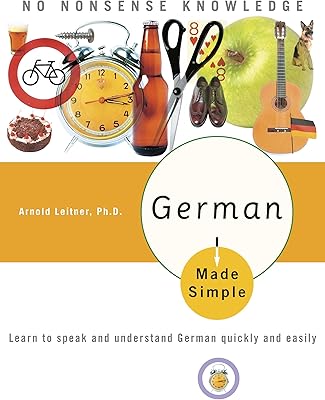
German Made Simple
Eugene Jackson
A complete beginner's guide covering grammar, vocabulary, and conversation essentials.
Check Price on Amazon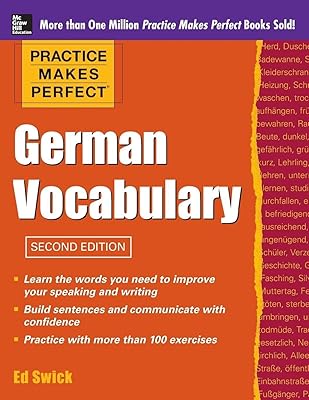
Practice Makes Perfect: German Vocabulary
Ed Swick
Targeted exercises and drills for mastering essential German words and phrases.
Check Price on AmazonAs an Amazon Associate, we earn from qualifying purchases.