You in German: Du vs. Sie (and When to Use Each)
By LangPodTools Team, Language Learning Content Specialist

German has two words for "you" — du (informal) and Sie (formal) — and using the wrong one can make a conversation awkward fast. English dropped its formal "thou" centuries ago, but German kept the distinction alive, and it matters every single day.
This guide covers exactly when to use du vs. Sie, the cultural rules behind Duzen and Siezen, verb conjugation changes, and what to do when you are not sure which one fits.
Du: The Informal "You"
Du (pronounced: doo) is the informal, singular "you" in German. It signals closeness, familiarity, and equality. When you say du to someone, you are treating them as a peer.
When to Use Du
Use du with:
- Friends and family — always, no exceptions
- Children and teenagers — adults always use du with anyone under about 16
- Fellow students — university students automatically use du with each other
- Close colleagues — once someone offers the du, you switch permanently
- Online communication — forums, social media, and most websites default to du
- Pets — yes, you address your dog with du, never Sie
The key insight: du is the default among equals. If you and the other person are roughly the same age, in the same social setting, and neither of you has authority over the other, du is natural.
Study Tip: When listening to German podcast episodes, notice how hosts address their audience. Most use du because podcasts create an intimate, peer-to-peer feeling. Hear it in action on our German episodes hub.
Sie: The Formal "You"
Sie (pronounced: zee) is the formal "you" in German. It is always capitalized when it means "you" (lowercase sie means "she" or "they"). Sie signals respect, professional distance, and social boundaries.
When to Use Sie
Use Sie with:
- Strangers — anyone you have never met before, as a default
- In the workplace — traditional offices, client meetings, formal emails
- Authorities — police officers, judges, government officials
- Service encounters — waiters, shop clerks, bank tellers (they will use Sie with you too)
- Elderly people — unless they specifically invite you to use du
- Doctors and professors — in professional contexts
Sie is the safe default. When in doubt, start with Sie. Nobody has ever been offended by being addressed too formally. The reverse — using du with someone who expects Sie — can genuinely irritate people.
The Capitalization Rule
In writing, the formal Sie ("you") is always capitalized, even in the middle of a sentence. This distinguishes it from lowercase sie, which means "she" or "they." The same applies to all its forms: Ihnen (to you), Ihr (your), Ihre (your).
| Written Form | Meaning | Example |
|---|---|---|
| Sie | you (formal) | Können Sie mir helfen? (Can you help me?) |
| sie | she | sie ist nett (she is nice) |
| sie | they | sie sind da (they are here) |
This capitalization rule exists only in writing. In spoken German, context makes the meaning clear.
Ihr: The Informal Plural "You"
Ihr (pronounced: eer) is the informal plural "you" — used when addressing two or more people you are on du terms with individually. Think of it as the plural of du.
If you walk into a room with three friends, you say Wie geht's euch? (How are you all?), using the ihr form. If those three people were your bosses, you would say Wie geht es Ihnen? — using Sie, which conveniently works for both singular and plural formal.
| Pronoun | Number | Formality | Example |
|---|---|---|---|
| du | singular | informal | Du bist nett. (You are nice.) |
| ihr | plural | informal | Ihr seid nett. (You all are nice.) |
| Sie | singular or plural | formal | Sie sind nett. (You are nice.) |
Study Tip: A common beginner mistake is using Sie for plural informal situations. If you are talking to your friends, use ihr — even if there are ten of them. Sie is for formal, not for "more than one person." For more on German grammar foundations, see our German cases guide.
Verb Conjugation Changes with Du, Ihr, and Sie
The pronoun you choose changes the verb ending. This is non-negotiable — you cannot say du with a Sie verb form. Here are the patterns for three common verbs.
Regular Verb: kommen (to come)
| Pronoun | Conjugation | Example |
|---|---|---|
| du | kommst | Du kommst morgen. (You are coming tomorrow.) |
| ihr | kommt | Ihr kommt morgen. (You all are coming tomorrow.) |
| Sie | kommen | Sie kommen morgen. (You are coming tomorrow.) |
Irregular Verb: sein (to be)
| Pronoun | Conjugation | Example |
|---|---|---|
| du | bist | Du bist müde. (You are tired.) |
| ihr | seid | Ihr seid müde. (You all are tired.) |
| Sie | sind | Sie sind müde. (You are tired.) |
Irregular Verb: haben (to have)
| Pronoun | Conjugation | Example |
|---|---|---|
| du | hast | Du hast recht. (You are right.) |
| ihr | habt | Ihr habt recht. (You all are right.) |
| Sie | haben | Sie haben recht. (You are right.) |
Notice the pattern: Sie always takes the same form as the infinitive (the dictionary form). That makes formal conjugation easy — you just use the base verb. The du form is the trickiest because it often involves stem changes in irregular verbs.
For full conjugation tables and practice, try our conjugation tool.
Duzen vs. Siezen: The Cultural Rules
Germans have actual verbs for this distinction. Duzen means "to address someone with du" and Siezen means "to address someone with Sie." The switch from Siezen to Duzen is a social event — it has rules, and they matter.
Who Offers the Du First?
This is the most important cultural rule: the person with higher status offers the du. Always.
- Age difference — the older person offers
- Workplace hierarchy — the boss offers
- Social setting — the host or established member offers
- Gender — traditionally, women offered first, but this rule is fading in modern Germany
The offer usually sounds like: "Wir können uns gerne duzen" (We can use du with each other) or simply "Sag ruhig du zu mir" (Feel free to say du to me).
Never offer the du to someone who is older, higher-ranking, or in a position of authority over you. Wait for them. This is not optional etiquette — violating it feels presumptuous.
The Du Is Permanent
Once two people switch to du, they never go back. There is no "taking it back." This is why the offer is treated as meaningful — it is a one-way door.
If your boss offers you the du on Friday night at a company dinner and you accept, you use du on Monday morning in the office too. The context does not matter anymore. Du is du, permanently.
The "Brüderschaft Trinken" Tradition
In traditional settings, the switch to du can be ceremonially sealed by Brüderschaft trinken — literally "drinking brotherhood." Two people link arms, drink together, and then address each other with du from that point on. You will still see this at company parties and celebrations, though younger generations often skip the ritual.
Modern Trends: Where Germany Is Headed
The du/Sie landscape is shifting. Germany in 2026 is not the Germany of 1990. Here is what is changing and what is not.
Startups and Tech: Du Is Default
Almost every German startup uses du across the board — from intern to CEO. Companies like Zalando, FlixBus, and N26 explicitly communicate this in job postings. The reasoning: du flattens hierarchy and creates a collaborative atmosphere.
IKEA famously duzt its customers in all German advertising and in-store signage. So does Apple in its German website copy. This corporate Duzen trend has accelerated since the 2010s.
Traditional Industries: Sie Holds Strong
Law firms, banks, insurance companies, government offices, and medical practices overwhelmingly stick with Sie. If you work at Deutsche Bank or Allianz, expect Sie with most colleagues until someone explicitly offers otherwise.
The rule of thumb: the older the industry and the higher the stakes, the more likely Sie is the norm.
Regional Differences
- Berlin — famously casual. Du is common even between strangers in shops and restaurants. Berlin is the most du-friendly major city in Germany.
- Hamburg — traditionally more formal, though the startup scene has shifted this
- Munich / Bavaria — more conservative with Sie, especially in professional contexts. The Bavarian dialect uses du more freely in casual speech, but formal contexts stay formal.
- Rhineland (Cologne, Düsseldorf) — the Rhineland culture is naturally warm and open, so du comes more quickly than in northern Germany
- Austria — slightly more formal than Germany overall. The academic title culture (Herr Doktor, Frau Professor) reinforces Sie usage.
- Switzerland — varies by region. The German-speaking Swiss can be quite formal with Sie initially, but workplace culture has relaxed significantly.
The "Hamburger Sie" Phenomenon
Hamburger Sie is a hybrid form where people use Sie with someone's first name: "Anna, können Sie mir den Bericht schicken?" (Anna, can you send me the report?)
This is a compromise — more personal than full Sie + Herr/Frau Lastname, but not as intimate as du. You find it in workplaces where the full formal form feels stiff but the du has not been offered. It originated in Hamburg (hence the name) but has spread throughout German corporate culture.
Some people love it as a comfortable middle ground. Others find it awkward — neither fully formal nor fully informal. There is no consensus, which is part of why it is interesting.
Study Tip: Pay attention to how different German media address their audience. Newspapers use Sie, podcasts use du, and corporate websites are increasingly split. For a feel of casual, du-based German conversation, listen to our German podcast episodes where hosts naturally use informal address.
What Happens When You Use the Wrong One?
Here is the good news: using the wrong pronoun is awkward, not offensive. Nobody will yell at you or refuse to speak with you. But the reactions differ depending on the direction of the mistake.
Using Du When Sie Was Expected
This is the more common mistake for foreigners. If you say du to a German who expects Sie, the typical reaction is a brief pause, a slightly raised eyebrow, and then they continue the conversation. Most Germans will mentally file you under "foreigner who does not know the rules" and not hold it against you.
In a professional setting, it can come across as presumptuous or immature. A job interview where you say du to the interviewer will leave a poor impression — not because they are offended, but because it signals that you do not understand professional norms.
Using Sie When Du Was Expected
This creates a different kind of awkwardness. If someone has offered you the du and you keep using Sie, it feels like you are maintaining distance on purpose — as if you are rejecting the closeness they offered.
Among younger Germans (under 30), using Sie in casual settings can feel comically stiff. If you Sie a 22-year-old at a party, expect them to laugh and say "Du kannst du sagen!" (You can say du!).
The Safest Strategy for Learners
Start with Sie everywhere except with children and people your own age in clearly casual settings. Wait for the other person to offer du or to use du with you first. Mirror what they do. This strategy will never get you into trouble.
Example Dialogues
Dialogue 1: Formal — At a Business Meeting
Herr Weber: Guten Tag, Frau Schneider. Wie geht es Ihnen? Frau Schneider: Gut, danke. Und Ihnen? Herr Weber: Auch gut, danke. Können Sie mir die Unterlagen schicken? Frau Schneider: Natürlich. Sie bekommen sie heute Nachmittag.
Translation:
Mr. Weber: Good day, Ms. Schneider. How are you? Ms. Schneider: Well, thank you. And you? Mr. Weber: Also well, thanks. Can you send me the documents? Ms. Schneider: Of course. You will receive them this afternoon.
Notice: Sie, last names, Guten Tag. Everything signals formal register.
Dialogue 2: Informal — Friends Planning a Trip
Lena: Hey! Hast du am Wochenende Zeit? Max: Ja, was hast du vor? Lena: Ich will nach Hamburg fahren. Kommst du mit? Max: Klar! Wann fahren wir?
Translation:
Lena: Hey! Do you have time this weekend? Max: Yeah, what are you planning? Lena: I want to go to Hamburg. Are you coming? Max: Sure! When do we leave?
Notice: du, first names, Hey. Everything is relaxed and direct.
Dialogue 3: The Du Offer — Boss to Employee
Chef: Frau Müller, wir arbeiten jetzt schon zwei Jahre zusammen. Ich denke, wir können uns duzen. Ich bin Thomas. Frau Müller: Oh, sehr gerne! Ich bin Julia. Chef: Super, Julia. Also — hast du die Präsentation fertig? Julia: Fast! Du bekommst sie bis morgen.
Translation:
Boss: Ms. Müller, we have been working together for two years now. I think we can use du with each other. I'm Thomas. Ms. Müller: Oh, gladly! I'm Julia. Boss: Great, Julia. So — do you have the presentation ready? Julia: Almost! You will get it by tomorrow.
Notice the shift: Frau Müller becomes Julia, Sie becomes du, and the verb forms change immediately. The boss initiates — as the higher-status person always does.
Dialogue 4: Addressing a Group (Ihr)
Lehrer: Guten Morgen! Habt ihr die Hausaufgaben gemacht? Schüler: Ja, wir haben sie gemacht! Lehrer: Sehr gut. Dann zeigt mir eure Hefte.
Translation:
Teacher: Good morning! Did you all do the homework? Students: Yes, we did it! Teacher: Very good. Then show me your notebooks.
Notice: the teacher uses ihr (informal plural) because students are addressed with du individually, which becomes ihr for the group.
Quick Reference: Du vs. Sie at a Glance
| Situation | Use | Example |
|---|---|---|
| Friends and family | du | Kommst du mit? |
| Children under 16 | du | Wie heißt du? |
| Fellow students | du | Hast du das verstanden? |
| Online / social media | du | Was meinst du? |
| Strangers (adults) | Sie | Entschuldigen Sie bitte. |
| Job interviews | Sie | Können Sie mir mehr erzählen? |
| Doctors / lawyers | Sie | Haben Sie einen Termin? |
| Police / officials | Sie | Können Sie mir Ihren Ausweis zeigen? |
| Group of friends | ihr | Wollt ihr mitkommen? |
| Group (formal) | Sie | Möchten Sie etwas trinken? |
For more ways to greet people in German — from Hallo to Moin — see our hello in German guide. And for the full range of everyday expressions, check our common German phrases guide.
Frequently Asked Questions
How do you say "you" in German?
German has three words for "you": du (informal singular), ihr (informal plural), and Sie (formal, both singular and plural). Du is for friends, family, and peers. Sie is for strangers, professionals, and anyone you want to show respect to. Ihr is simply the plural of du — used when talking to multiple people you are on informal terms with.
What is the difference between du and Sie in German?
Du is informal and signals closeness or equality — use it with friends, family, children, and peers. Sie is formal and signals respect or professional distance — use it with strangers, in the workplace, and with authority figures. The verbs conjugate differently with each: du kommst vs. Sie kommen. When in doubt, default to Sie — being too formal is never rude in German.
What is Duzen vs. Siezen?
Duzen means addressing someone with du (informal) and Siezen means addressing someone with Sie (formal). The switch from Siezen to Duzen is a meaningful social moment in German culture. The person with higher status — older, higher-ranking, or more established — always offers the du first. Once offered and accepted, the du is permanent.
What is the Hamburger Sie?
The Hamburger Sie is a hybrid form of address where you combine Sie (formal pronoun) with someone's first name — for example, "Anna, können Sie mir helfen?" It originated in Hamburg and is used in workplaces where full formality feels stiff but the du has not been offered. It is a comfortable middle ground that has spread throughout German corporate culture.
Is it rude to use du instead of Sie in German?
Using du when Sie is expected is not rude in the sense of being insulting — it is more awkward and presumptuous. Most Germans will assume you are a foreigner who does not know the rules and move on. However, in job interviews or formal professional settings, using du can leave a poor impression. The safest strategy: start with Sie and wait for the other person to offer the du.
Conclusion
The du/Sie distinction is one of those German features that seems complicated on paper but becomes intuitive with practice. Start with Sie as your default, switch to du when invited, and use ihr when talking to a group of friends.
The cultural rule that matters most: the higher-status person offers the du. If you remember nothing else, remember that. It will save you from every awkward situation.
German formality is evolving — startups and young people are pushing toward du, while traditional industries hold firm with Sie. But the core logic has not changed in centuries: du means closeness, Sie means respect.
To hear these pronouns in natural conversation, explore our German episodes hub. For the greetings and phrases that go alongside du and Sie, read our hello in German guide and how are you in German guide. And to see how these pronouns interact with German grammar, our German cases guide covers the full picture.
Pick one rule to practice today: use Sie with the next stranger you encounter in German. The rest will follow.
Frequently Asked Questions
How do you say "you" in German?▾
What is the difference between du and Sie in German?▾
What is Duzen vs. Siezen?▾
What is the Hamburger Sie?▾
Is it rude to use du instead of Sie in German?▾
Recommended Study Material
The Complete German Grammar Cheat Sheet
A1–B2 Reference PDF
27 pages of color-coded tables, mnemonics, and shortcuts — every rule you need from Cases to Subjunctive.
Recommended German Books

Short Stories in German for Beginners
Olly Richards
Learn German with 8 captivating stories. Perfect for A2-B1 learners who want to build vocabulary naturally.
Check Price on Amazon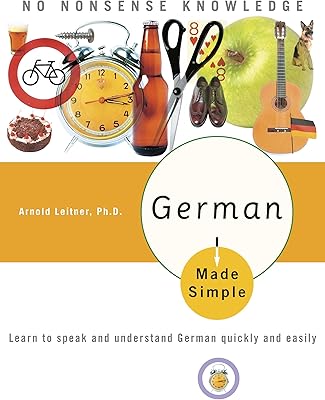
German Made Simple
Eugene Jackson
A complete beginner's guide covering grammar, vocabulary, and conversation essentials.
Check Price on Amazon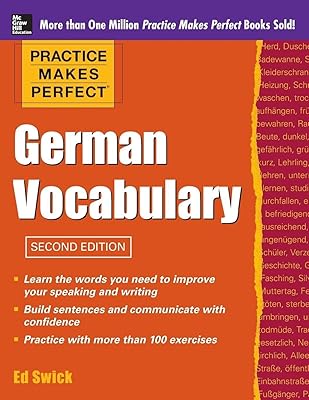
Practice Makes Perfect: German Vocabulary
Ed Swick
Targeted exercises and drills for mastering essential German words and phrases.
Check Price on AmazonAs an Amazon Associate, we earn from qualifying purchases.