How to Say Merry Christmas in German (Frohe Weihnachten + Holiday Greetings)
By LangPodTools Team, Language Learning Content Specialist

Christmas in Germany is more than a holiday. It is a season woven into language, tradition, and daily life for weeks. Knowing how to say Merry Christmas in German — and understanding the customs behind the words — will help you connect with native speakers on a deeper level.
Whether you are writing a card, toasting at a Christmas market, or simply texting a German friend in December, this guide gives you every phrase, tradition, and vocabulary word you need.
The Standard Greeting: Frohe Weihnachten
Frohe Weihnachten (pronounced: FRO-uh VY-nahk-ten) is the most common way to say Merry Christmas in German. It translates directly to "Happy Christmas" and works in every context — casual, formal, written, or spoken.
You will hear this phrase everywhere in December: on the street, in shops, on TV, and in text messages. It is universally understood across Germany, Austria, and Switzerland.
If you learn only one Christmas phrase in German, make it this one.
Fröhliche Weihnachten — Equally Common
Fröhliche Weihnachten (FREH-lih-khuh VY-nahk-ten) means the same thing and is used just as frequently. The difference is subtle: fröhlich carries a slightly more cheerful, lively tone compared to froh, which is warmer and calmer.
Both are interchangeable. Germans do not distinguish between them in practice. Use whichever rolls off your tongue more easily.
Shorter Alternatives for Holiday Greetings
Not every situation calls for a full "Merry Christmas." German has several shorter, versatile holiday greetings that work well in casual conversation or when the specific holiday is already understood from context.
| German Phrase | English Equivalent | When to Use |
|---|---|---|
| Frohes Fest | Happy holidays / Happy festivities | Casual, all-purpose |
| Schöne Feiertage | Nice holidays | Generic, works for any holiday period |
| Schöne Weihnachten | Nice Christmas | Warm, slightly informal |
| Gesegnete Weihnachten | Blessed Christmas | Religious contexts |
| Besinnliche Weihnachten | Peaceful / reflective Christmas | Cards, formal wishes |
Frohes Fest is particularly useful because it avoids specifying which holiday. It works the same way "Happy holidays" does in English — friendly and inclusive.
Schöne Feiertage is the go-to phrase when you want to wish someone well for the entire holiday period without picking a specific occasion. You will hear it constantly from shop assistants and colleagues in the last week before Christmas.
Study Tip: Practice these greetings with the flashcard tool. Create a deck with the German phrase on one side and the context (formal, casual, religious) on the other. Drilling the context alongside the phrase helps you choose the right one instinctively.
Einen guten Rutsch ins neue Jahr — Happy New Year
Once Christmas passes, Germans immediately shift to New Year greetings. The most distinctly German phrase is Einen guten Rutsch ins neue Jahr (EYE-nen GOO-ten ROOTSH ins NOY-uh YAR), which literally translates to "a good slide into the new year."
This phrase is used in the days before New Year's Eve — not after midnight. It likely comes from a Yiddish word meaning "beginning" rather than the German word for "slide," but the playful image has stuck. Once the clock strikes twelve, you switch to Frohes Neues Jahr! (Happy New Year) or the casual Prost Neujahr! (Cheers to the New Year).
For a deeper dive into German New Year traditions and Silvester vocabulary, check out our German holidays guide.
Christmas Card Phrases and Written Greetings
Writing a Christmas card in German is a wonderful way to practice the language. Here are ready-to-use phrases organized by tone.
Standard card openers:
- Frohe Weihnachten und ein glückliches neues Jahr! — Merry Christmas and a happy new year!
- Fröhliche Weihnachten und alles Gute für das neue Jahr! — Happy Christmas and all the best for the new year!
- Wir wünschen euch frohe Weihnachten. — We wish you (plural, informal) a Merry Christmas.
Warm and personal:
- Ich wünsche dir eine wundervolle Weihnachtszeit. — I wish you a wonderful Christmas season.
- Möge die Weihnachtszeit dir Freude und Frieden bringen. — May the Christmas season bring you joy and peace.
- Genießt die Feiertage im Kreise eurer Lieben. — Enjoy the holidays with your loved ones.
Formal (colleagues, business contacts):
- Wir wünschen Ihnen frohe Weihnachten und ein erfolgreiches neues Jahr. — We wish you a Merry Christmas and a successful new year.
- Mit den besten Wünschen für ein frohes Fest und ein gesundes neues Jahr. — With best wishes for a happy holiday and a healthy new year.
Notice the switch between dir/euch (informal) and Ihnen (formal). When in doubt, use Ihnen for professional contacts. For more on formal vs. informal address in German, see our guide on common German phrases.
Study Tip: Copy one of these phrases into a real card or message this December. Writing by hand — not just reading — activates deeper memory encoding. Even sending a short WhatsApp message in German counts as practice.
German Christmas Traditions Every Learner Should Know
German Christmas traditions are rich, distinct, and deeply tied to the vocabulary you are learning. Understanding the customs makes the words stick.
Advent — The Four Weeks Before Christmas
The Christmas season in Germany begins with der Advent, the four Sundays before Christmas. Two traditions mark this period:
Der Adventskalender (Advent calendar) counts down the 24 days until Christmas Eve. Children open one door each day to find chocolate, small toys, or treats. Adults increasingly have their own versions filled with tea, cosmetics, or craft beer.
Der Adventskranz (Advent wreath) is a wreath with four candles — one lit on each of the four Advent Sundays. Families gather around it, and the growing light symbolizes the approach of Christmas. You will see Adventskränze in homes, churches, and public spaces throughout December.
Nikolaustag — December 6
Der Nikolaustag (St. Nicholas Day) on December 6 is a separate event from Christmas. On the evening of December 5, children place their polished boots (Stiefel) outside their bedroom doors. Der Nikolaus fills them overnight with sweets, nuts, and small gifts.
In some regions, Nikolaus is accompanied by Knecht Ruprecht or Krampus — a fearsome figure who warns naughty children. This dual tradition of reward and warning is central to German-speaking Christmas culture.
Heiligabend — The Main Event
Heiligabend (Christmas Eve, December 24) is when the real celebration happens in Germany — not Christmas Day. Families gather in the afternoon or evening, attend church services, and then comes die Bescherung — the gift-giving ceremony.
The Christmas tree (der Weihnachtsbaum) is often decorated on December 23 or 24 and revealed to children just before the gifts are opened. Real candles on the tree (echte Kerzen) are still common in many households, though electric lights are gaining ground.
Who brings the gifts? That depends on where you are. In northern Germany, der Weihnachtsmann (Father Christmas / Santa Claus) delivers presents. In southern Germany, Austria, and parts of Switzerland, it is das Christkind (the Christ Child) — an angel-like figure rather than a bearded man in red.
Weihnachtsmärkte — Christmas Markets
German Weihnachtsmärkte (Christmas markets) run throughout December and are the heart of the holiday atmosphere. Every city and town has at least one. The most famous include Nuremberg's Christkindlesmarkt, Dresden's Striezelmarkt, and Cologne's market at the cathedral.
They are perfect immersion environments for language learners. You will hear German spoken naturally while surrounded by Glühwein (mulled wine), gebrannte Mandeln (roasted almonds), and Lebkuchen (gingerbread).
Essential Christmas Vocabulary
Here is the core vocabulary set every German learner should know for the Christmas season.
| German | English |
|---|---|
| der Weihnachtsbaum | Christmas tree |
| die Kerze (pl. die Kerzen) | candle(s) |
| der Weihnachtsstern | poinsettia / Christmas star |
| der Stollen | Christmas fruitcake (traditional) |
| der Glühwein | mulled wine |
| das Geschenk (pl. die Geschenke) | gift(s) |
| die Bescherung | gift-giving ceremony |
| das Plätzchen | Christmas cookie |
| die Krippe | nativity scene / manger |
| der Nussknacker | nutcracker |
| der Lebkuchen | gingerbread |
| die Lichterkette | string of lights |
| der Weihnachtsmann | Father Christmas / Santa |
| das Christkind | the Christ Child |
Many of these are compound words — a hallmark of German. Once you recognize the building blocks (Weihnachts- = Christmas, Baum = tree, Stern = star, Mann = man), new compounds become immediately transparent.
For more on German food and drink vocabulary that overlaps with Christmas, see our German food and drink guide.
German Christmas Songs
German Christmas songs (Weihnachtslieder) are excellent listening practice. The lyrics use simple vocabulary and repeat key phrases, making them ideal for A1-B1 learners.
Stille Nacht, Heilige Nacht (Silent Night) — Originally written in Austria in 1818, this is the most famous Christmas song in the world. The German lyrics are beautiful listening practice: Stille Nacht, heilige Nacht, alles schläft, einsam wacht...
O Tannenbaum (O Christmas Tree) — A celebration of the evergreen tree as a symbol of faithfulness. The melody is widely known, and the vocabulary is beginner-friendly: O Tannenbaum, o Tannenbaum, wie treu sind deine Blätter...
Leise rieselt der Schnee (Softly Falls the Snow) — A gentle, slower song perfect for beginners. The imagery is simple and vivid: Leise rieselt der Schnee, still und starr ruht der See...
Searching for these songs on YouTube with German subtitles is one of the most enjoyable ways to build seasonal vocabulary. DW (Deutsche Welle) also covers German Christmas music traditions with learner-friendly context.
Regional Differences: Austria and Switzerland
While Frohe Weihnachten is understood everywhere, Austrian and Swiss German have their own flavors.
In Austria, Christmas traditions are very similar to southern Germany. The Christkind brings gifts, Adventkränze (note: no s in Austrian usage) are standard, and Krampus plays a much more prominent role than in northern Germany. The Krampuslauf (Krampus run) on December 5 is a major event in Austrian towns, with costumed figures parading through the streets.
In Switzerland, Christmas is called Weihnachten in German-speaking cantons, but the gift-bringer is the Christkind or Samichlaus (the Swiss version of St. Nicholas, who visits on December 6). Swiss German pronunciation differs significantly — Fröhliche Wienachte is how you might hear it in Zurich dialect.
Both countries share the core traditions of Advent, Christmas markets, and family gatherings on December 24. The vocabulary in this guide applies across all three countries.
Study Tip: If you are learning German for travel, focus on the traditions of the specific region you plan to visit. A Christmas market in Vienna feels different from one in Hamburg. Listen to regional podcasts or YouTube channels to train your ear — our German episodes hub features content from multiple German-speaking contexts.
How to Celebrate Christmas Like a German Speaker
Want to practice your German through Christmas traditions? Here is a simple plan:
- Buy or make an Adventskalender. Open one door a day and learn the German word for whatever is inside.
- Light an Adventskranz. Count the Sundays in German: erster Advent, zweiter Advent, dritter Advent, vierter Advent.
- Visit a Weihnachtsmarkt (or explore one virtually). Practice ordering einen Glühwein and gebrannte Mandeln in German.
- Write a Christmas card in German using the phrases from this article.
- Sing along to Stille Nacht with the German lyrics. Even imperfect singing builds pronunciation.
- Watch a German Christmas film. Classics like Drei Haselnüsse für Aschenbrödel (Three Hazelnuts for Cinderella) are holiday staples on German TV.
For broader birthday and holiday greetings in German, see our Happy Birthday in German guide, and for everyday greeting vocabulary, start with our common German phrases.
Recommended Resources
Building Christmas vocabulary is most effective when paired with structured study. A German-English visual dictionary connects words to images — especially useful for concrete nouns like Weihnachtsbaum, Kerze, and Lebkuchen that benefit from visual association.
For grammar support as you write your own Christmas messages, German Grammar in Context is a workbook that teaches through real-world texts rather than abstract rules — a natural fit for seasonal language practice.
Conclusion
Saying Frohe Weihnachten is just the beginning. German Christmas is a season full of traditions, vocabulary, and cultural moments that bring the language to life. From the first Advent candle to the last toast of Prost Neujahr, every tradition is a chance to practice.
Start with the five core greetings in this guide, then layer in the vocabulary and traditions that interest you most. Write a card, sing a carol, or order a Glühwein in German — every small act of practice builds real fluency.
For your next step, explore our German holidays guide for the full calendar of celebrations, or build a seasonal flashcard deck with our flashcard tool.
Frequently Asked Questions
How do you say Merry Christmas in German?▾
What is the difference between Frohe Weihnachten and Fröhliche Weihnachten?▾
How do you say Happy New Year in German?▾
When do Germans celebrate Christmas — December 24 or 25?▾
What is the difference between Christkind and Weihnachtsmann?▾
Recommended Study Material
The Complete German Grammar Cheat Sheet
A1–B2 Reference PDF
27 pages of color-coded tables, mnemonics, and shortcuts — every rule you need from Cases to Subjunctive.
Recommended German Books
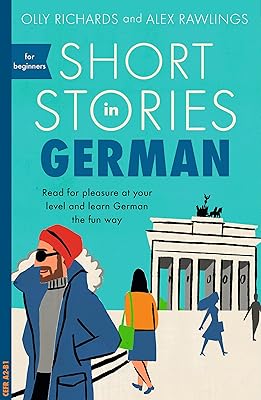
Short Stories in German for Beginners
Olly Richards
Learn German with 8 captivating stories. Perfect for A2-B1 learners who want to build vocabulary naturally.
Check Price on Amazon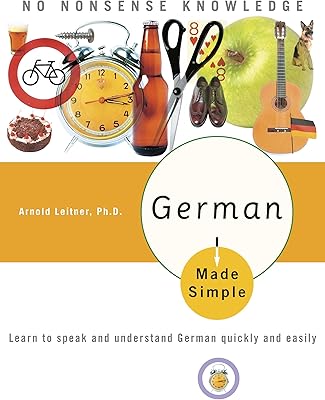
German Made Simple
Eugene Jackson
A complete beginner's guide covering grammar, vocabulary, and conversation essentials.
Check Price on Amazon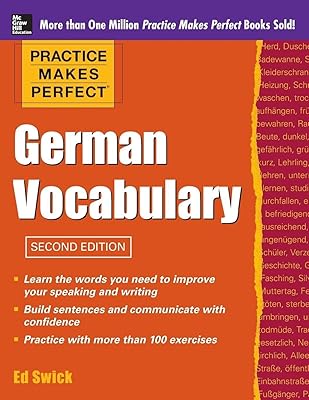
Practice Makes Perfect: German Vocabulary
Ed Swick
Targeted exercises and drills for mastering essential German words and phrases.
Check Price on AmazonAs an Amazon Associate, we earn from qualifying purchases.