German Umlauts (ä, ö, ü): How to Pronounce, Type, and Use Them
By LangPodTools Team, Language Learning Content Specialist

German umlauts are three letters that trip up nearly every beginner — but once you crack the code, they become second nature faster than you'd expect. Whether you're tackling your first podcast episode or prepping for a trip to Berlin, mastering ä, ö, and ü is one of the highest-leverage moves you can make as a German learner.
This guide gives you pronunciation shortcuts, typing tricks for every device, and the grammar rules you actually need — all without the dry textbook energy.
What Are German Umlauts and Why Do They Matter?
The word Umlaut literally means "sound change" in German (um = around/changed, Laut = sound). An umlaut is a vowel that has been modified — those two little dots above a letter aren't just decoration, they signal a completely different sound.
German has three umlaut vowels:
- ä (modified a)
- ö (modified o)
- ü (modified u)
Why do they matter? Because swapping an umlauted vowel for a regular one can completely change the meaning of a word. Schon means "already" — schön means "beautiful." Mix those up in conversation and you'll get a very confused look.
Umlauts also appear constantly in German grammar: plural forms, verb conjugations, and comparatives all rely on them. If you're working through essential German words or sorting out German cases, you'll bump into umlauts at every turn.
Study Tip: Don't think of ä, ö, ü as "a, o, u with dots." Train your brain to treat them as completely separate letters with their own sounds. This small mindset shift makes a huge difference.
How to Pronounce ä, ö, and ü
Pronouncing ä
ä sounds like the e in the English word "bed" or "set" — a short, open sound in the front of your mouth. Some speakers pronounce a long ä more like the a in "fair" or "care."
Practice words:
- Bär (bear) — sounds like "bear" in English, actually
- Mädchen (girl) — "med-khen"
- kämpfen (to fight) — "kemp-fen"
Pronouncing ö
ö is the trickiest one for English speakers because English doesn't have this sound at all. Here's the shortcut: say the English word "bird" or "her" — that vowel sound in the middle is very close to German ö.
Alternatively, round your lips as if to say "o" but then try to say "e" without moving your lips. That tension in your mouth? That's ö.
Practice words:
- schön (beautiful) — "shern" (with rounded lips)
- können (can/to be able to) — "kun-nen"
- Wörter (words) — "ver-ter"
Pronouncing ü
ü uses the same trick: round your lips for "oo" (like in "moon") but try to say "ee" (like in "see"). The result is a tight, forward sound that doesn't exist in standard English, though French learners will recognize it as the French u in tu.
Practice words:
- über (over/above) — you've probably heard this one
- grün (green) — "groon" but with tighter, more forward lips
- Glück (luck/happiness) — "glook" but again, more forward
Study Tip: Record yourself saying umlaut words, then compare with a native speaker on a podcast or YouTube clip. Your ear will catch the difference faster than any written description can.
Umlaut vs. Non-Umlaut Minimal Pairs
One of the best ways to train your ear — and your mouth — is to practice minimal pairs: words that differ by only the umlaut. Here are the most useful ones:
| Without Umlaut | Meaning | With Umlaut | Meaning |
|---|---|---|---|
| schon | already | schön | beautiful |
| Mutter | mother | Mütter | mothers |
| Bruder | brother | Brüder | brothers |
| konnen | — | können | can (verb) |
| Apfel | apple | Äpfel | apples |
| schwul | gay | schwül | humid/muggy |
| Hof | courtyard | Höfe | courtyards |
Spend five minutes drilling these pairs and you'll start hearing the difference clearly in real speech.
How to Type Umlauts on Any Device
This is the practical question everyone searches for. Here's the full breakdown.
Typing Umlauts on Windows
Option 1 — Alt codes (works in most apps):
- ä = Alt + 0228
- ö = Alt + 0246
- ü = Alt + 0252
- Ä = Alt + 0196
- Ö = Alt + 0214
- Ü = Alt + 0220
Hold Alt, type the number on the numeric keypad, then release Alt.
Option 2 — Add a German keyboard layout in Windows Settings → Time & Language → Language → Add German. Then toggle between layouts with Win + Space.
Option 3 — Use the ae/oe/ue substitution (more on this below) when typing speed matters more than accuracy.
Typing Umlauts on Mac
Option 1 — Hold the base vowel key: Hold a, o, or u on your keyboard and a pop-up menu appears. Press 1 for ä, 2 for ö/ü variants.
Option 2 — Option key shortcuts:
- ä = Option + u, then a
- ö = Option + u, then o
- ü = Option + u, then u
Option 3 — Add German keyboard in System Settings → Keyboard → Input Sources.
Typing Umlauts on iPhone and Android
The easiest method on both platforms: long-press the base vowel. Hold your finger on a, o, or u and a row of accented variants pops up — slide to the umlaut.
If you type in German regularly, add the German keyboard in your phone settings. Autocorrect alone will save you significant time once it's trained to your vocabulary.
Study Tip: If you're using flashcard apps to study vocabulary, always type the correct umlaut rather than substituting ae/oe/ue. Your muscle memory and spelling will both benefit. Try our flashcard tool to practice umlaut words.
The ae/oe/ue Substitution Rule
When you genuinely can't type umlauts — older systems, certain email clients, usernames that don't accept special characters — German has an official fallback:
- ä → ae
- ö → oe
- ü → ue
- ß → ss (the eszett, a related letter)
So Müller becomes Mueller, Schröder becomes Schroeder, and über becomes ueber. This substitution is standardized and universally understood by German speakers.
Important rule: The substitution goes in one direction only. You can write ae when you mean ä, but you can't assume every ae in German means ä. The word Maestro uses a genuine ae — no umlaut involved.
Looking to build your German vocabulary systematically? Check out our guide to essential German words and start with the highest-frequency terms first.
Umlauts in German Grammar
This is where umlauts go from pronunciation curiosity to genuine grammar tool. Understanding this section will make a lot of German grammar patterns click into place.
Umlauts in Plural Forms
Many German nouns form their plural by adding an umlaut — sometimes with a suffix, sometimes the umlaut alone does the job. This is called Umlautplurale.
Common examples:
- Vater (father) → Väter (fathers)
- Bruder (brother) → Brüder (brothers)
- Mutter (mother) → Mütter (mothers)
- Apfel (apple) → Äpfel (apples)
- Haus (house) → Häuser (houses)
- Gast (guest) → Gäste (guests)
There's no shortcut rule for which nouns do this — you learn each one as you go. Flashcards that show singular and plural together make this much faster.
Umlauts in Strong Verb Conjugation
Many common German verbs change their stem vowel in the du (you-singular) and er/sie/es (he/she/it) forms in the present tense. This vowel change often involves an umlaut:
| Infinitive | Ich | Du | Er/Sie/Es |
|---|---|---|---|
| fahren (drive) | fahre | fährst | fährt |
| schlafen (sleep) | schlafe | schläfst | schläft |
| laufen (run) | laufe | läufst | läuft |
| stoßen (push) | stoße | stößt | stößt |
Our conjugation tool handles all these irregular forms so you can practice them interactively rather than memorizing tables by brute force.
Umlauts in Comparatives
Many common adjectives use an umlaut when forming the comparative (-er) and superlative (-st) forms:
- alt (old) → älter (older) → älteste (oldest)
- jung (young) → jünger → jüngste
- groß (tall/big) → größer → größte
- kurz (short) → kürzer → kürzeste
- warm (warm) → wärmer → wärmste
This is another case where memorizing the adjective alone isn't enough — learn the comparative form at the same time.
Study Tip: When you encounter a new noun or adjective, look up its plural or comparative immediately and write both forms on your flashcard. One lookup now saves five confused moments later.
Common Mistakes with German Umlauts
Here are the errors that come up again and again — knowing them ahead of time puts you ahead of most learners:
-
Ignoring the umlaut entirely — Writing schon when you mean schön, or mochte when you mean möchte (would like). This changes the meaning completely, not just the spelling.
-
Pronouncing ü as plain "oo" — grün pronounced like "groon" sounds noticeably foreign. Spend extra time on this sound.
-
Forgetting umlaut plurals — Saying die Bruder instead of die Brüder. Plurals are already a challenge in German; the umlaut layer adds one more thing to track.
-
Misusing the ae/oe/ue substitution — Using it in formal writing or when umlauts are available. Reserve the substitution for when you genuinely can't access the characters.
-
Treating ä like a plain a — Especially in verb forms like fährt — if you say fahrt, you're saying something grammatically different.
Learning Umlauts Through Podcasts and Audio
Reading about pronunciation only takes you so far. Your ear needs real input — ideally, lots of it. German-language podcasts are one of the best tools for internalizing umlaut sounds because you hear the same words repeated across different speakers and contexts.
Our German episodes hub curates the best German learning podcasts by level, from A1 beginner content to B2 immersion material. If you want the full strategy for using podcasts as your primary learning tool, read our guide on how to learn German with podcasts.
Here are the habits that make audio learning stick:
- Shadowing — Listen to a sentence, pause, repeat it aloud immediately. Focus on matching the vowel sounds exactly.
- Minimal pair drills — Find a podcast episode, pick out every umlaut word, and practice contrasting it with the non-umlaut version.
- Active transcription — Transcribe 2-3 minutes of audio, paying close attention to whether you hear a plain vowel or an umlauted one.
Ready to build your full German vocabulary foundation? Our guide to essential German words pairs perfectly with umlaut practice — most of the highest-frequency German words contain at least one umlaut form.
Recommended Resources for Umlaut Practice
If you want to go deeper with structured practice, these resources are worth your time and money:
- A solid German pronunciation guide walks you through every sound systematically, not just umlauts
- Spaced repetition flashcard decks specifically for German vocabulary with audio pronunciation
- A German grammar reference book for looking up umlaut patterns in verb tables and noun declensions
Conclusion: Small Letters, Big Payoff
German umlauts look intimidating at first, but the reality is straightforward: three sounds to learn, a few typing shortcuts to memorize, and some grammar patterns to recognize. The payoff is immediate — your German starts sounding more natural, your reading comprehension jumps, and a whole category of "confusing" words suddenly makes sense.
Combine the pronunciation drills in this guide with consistent audio exposure through German podcasts, and you'll have umlauts locked in faster than you expect. From there, the next logical step is German word order — another area where a few core rules unlock a huge amount of the language.
You've got this. Now go practice those minimal pairs.
Frequently Asked Questions
What is the easiest way to remember how to pronounce ö?▾
Can I just skip umlauts and use ae, oe, ue instead?▾
Do umlauts affect alphabetical sorting in German?▾
Why do so many German plurals change the vowel to an umlaut?▾
Recommended Study Material
The Complete German Grammar Cheat Sheet
A1–B2 Reference PDF
27 pages of color-coded tables, mnemonics, and shortcuts — every rule you need from Cases to Subjunctive.
Recommended German Books
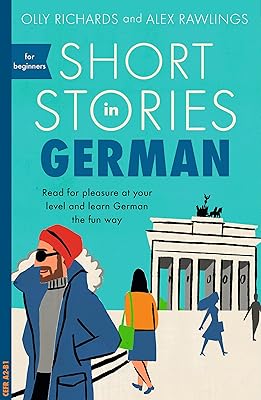
Short Stories in German for Beginners
Olly Richards
Learn German with 8 captivating stories. Perfect for A2-B1 learners who want to build vocabulary naturally.
Check Price on Amazon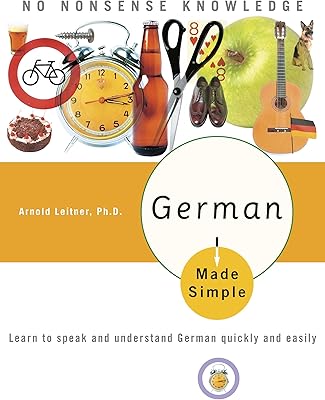
German Made Simple
Eugene Jackson
A complete beginner's guide covering grammar, vocabulary, and conversation essentials.
Check Price on Amazon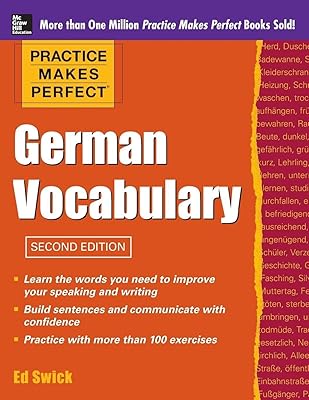
Practice Makes Perfect: German Vocabulary
Ed Swick
Targeted exercises and drills for mastering essential German words and phrases.
Check Price on AmazonAs an Amazon Associate, we earn from qualifying purchases.