The German Alphabet: All 30 Letters with Pronunciation Guide
By LangPodTools Team, Language Learning Content Specialist

The German alphabet has 30 letters — the same 26 as English plus four extra characters: Ä, Ö, Ü, and ß. If you can say the English alphabet, you are already halfway there. The challenge is learning the letters that sound different from what you expect.
This guide walks you through every letter with pronunciation, example words, and practical tips. By the end, you will be able to spell your name in German and read unfamiliar words with confidence.
The Standard 26 Letters
The core German alphabet uses the same Latin letters as English. However, many letters have different pronunciations. Here is the complete list with how each letter is pronounced when you say the alphabet.
| Letter | German Name | Pronounced Like | Example Word |
|---|---|---|---|
| A | ah | "ah" in father | Apfel (apple) |
| B | beh | "bay" | Buch (book) |
| C | tseh | "tsay" | Cafe (café) |
| D | deh | "day" | Danke (thanks) |
| E | eh | "ay" in say | Essen (food/eating) |
| F | eff | "eff" (same as English) | Freund (friend) |
| G | geh | "gay" (hard g) | Garten (garden) |
| H | hah | "hah" | Haus (house) |
| I | ih | "ee" in see | Ich (I) |
| J | yot | "yot" | Ja (yes) |
| K | kah | "kah" | Kinder (children) |
| L | ell | "ell" (same as English) | Liebe (love) |
| M | emm | "emm" (same as English) | Mutter (mother) |
| N | enn | "enn" (same as English) | Nacht (night) |
| O | oh | "oh" | Oma (grandma) |
| P | peh | "pay" | Papa (dad) |
| Q | kuh | "koo" | Quelle (source) |
| R | err | guttural "err" | Rot (red) |
| S | ess | "ess" | Sonne (sun) |
| T | teh | "tay" | Tag (day) |
| U | uh | "oo" in moon | Uhr (clock) |
| V | fau | "fow" (like "cow") | Vogel (bird) |
| W | veh | "vay" | Wasser (water) |
| X | iks | "iks" | Xylophon (xylophone) |
| Y | üpsilon | "oopsilon" | Yoga (yoga) |
| Z | tsett | "tsett" | Zeit (time) |
Study Tip: The biggest traps for English speakers are J (sounds like English Y), V (sounds like English F), W (sounds like English V), and Z (sounds like "ts"). Drill these four until they become automatic. Practice by spelling German words aloud.
Letters That Trick English Speakers
These are the letters where English habits will mislead you:
J = "yot" — German J always sounds like English Y. Ja (yes) sounds like "yah," not "jah." Januar sounds like "Yanuar."
V = "fau" — German V usually sounds like English F. Vogel (bird) sounds like "Fogel." Vater (father) sounds like "Fater." In some loanwords, V sounds like English V: Vase, Violine.
W = "veh" — German W always sounds like English V. Wasser (water) sounds like "Vasser." Wein (wine) sounds like "Vine."
Z = "tsett" — German Z always sounds like "ts." Zeit (time) sounds like "Tsait." Zimmer (room) sounds like "Tsimmer."
This means the English name "Volkswagen" is pronounced "Folksvagen" in German — not "Volkswagen" as Americans say it.
The Four Extra Characters: Ä, Ö, Ü, and ß
These four characters are what make the German alphabet unique. They are not decorative — they represent distinct sounds that change word meanings.
Ä — A-Umlaut
Ä / ä (pronounced "ah-Umlaut" or "eh") sounds like the "e" in English "bed" or "head."
| With Ä | Without Ä | Meaning Changes |
|---|---|---|
| Äpfel (apples) | Apfel (apple) | Plural marker |
| Bär (bear) | Bar (bar/cash) | Completely different word |
| Männer (men) | Mann (man) | Plural marker |
| wählen (to choose) | — | — |
The umlaut dots are not optional. Schwule (gay people) and Schwüle (humidity) are very different words. Always include the dots.
Ö — O-Umlaut
Ö / ö (pronounced "oh-Umlaut") has no direct English equivalent. Round your lips as if saying "oh" but try to say "ay" — the resulting sound is Ö.
| Example | Pronunciation Hint | Meaning |
|---|---|---|
| schön | like "shurn" without the r | beautiful |
| können | like "kunnen" with rounded lips | to be able to |
| Österreich | "Usterreich" | Austria |
| böse | "burse" with rounded lips | angry, evil |
Ü — U-Umlaut
Ü / ü (pronounced "uh-Umlaut") is made by rounding your lips as if saying "oo" but trying to say "ee." Think of the French "u" in "tu."
| Example | Pronunciation Hint | Meaning |
|---|---|---|
| über | "oober" with pursed lips | over, above |
| grün | "groon" with pursed lips | green |
| Tür | "toor" with pursed lips | door |
| fünf | "foonf" with pursed lips | five |
Study Tip: Practice umlauts in front of a mirror. Your lip position is the key. For Ö, make an O shape and say E. For Ü, make a U shape and say I. It feels strange at first but becomes natural within a few days of practice. For a deep dive, see our complete guide on German umlauts.
ß — Eszett (Sharp S)
ß (called Eszett or scharfes S) is a uniquely German letter. It represents a sharp "ss" sound and appears after long vowels and diphthongs.
| With ß | Meaning | Note |
|---|---|---|
| Straße | street | Long "a" before ß |
| groß | big, tall | Long "o" before ß |
| heißen | to be called | Diphthong "ei" before ß |
| Fuß | foot | Long "u" before ß |
Important: ß only exists in lowercase. When writing in ALL CAPS, ß becomes SS: STRASSE. In Switzerland, ß is not used at all — Swiss German always writes ss instead.
If your keyboard does not have ß, you can write ss as a substitute. Germans will understand, though it looks slightly informal.
How to Spell Your Name in German
Spelling your name over the phone or at a hotel desk is one of the first practical uses of the alphabet. Germans use a spelling alphabet (Buchstabiertafel) similar to NATO's phonetic alphabet.
The most common system uses city names:
| Letter | Spelling Word | Letter | Spelling Word |
|---|---|---|---|
| A | Anton | N | Nordpol |
| B | Berta | O | Otto |
| C | Cäsar | P | Paula |
| D | Dora | Q | Quelle |
| E | Emil | R | Richard |
| F | Friedrich | S | Samuel |
| G | Gustav | T | Theodor |
| H | Heinrich | U | Ulrich |
| I | Ida | V | Viktor |
| J | Julius | W | Wilhelm |
| K | Kaufmann | X | Xanthippe |
| L | Ludwig | Y | Ypsilon |
| M | Martha | Z | Zacharias |
To spell "SMITH," you would say: Samuel, Martha, Ida, Theodor, Heinrich.
For umlauts, say the letter name plus "Umlaut": Ä = "A-Umlaut," Ö = "O-Umlaut," Ü = "U-Umlaut."
Study Tip: Practice spelling your own name, your city, and your street address using the German spelling alphabet. This is one of the most practical skills for real-world German use — you will need it at hotels, banks, and doctor's offices.
German Letter Combinations
Beyond individual letters, German has letter combinations that produce specific sounds. These are essential for reading German correctly.
Consonant Combinations
| Combo | Sound | Example |
|---|---|---|
| ch | soft "h" (after e, i) or guttural (after a, o, u) | ich (I), Buch (book) |
| sch | "sh" | Schule (school) |
| sp | "shp" (at start of word) | Sprache (language) |
| st | "sht" (at start of word) | Straße (street) |
| pf | both sounds together | Pferd (horse) |
| qu | "kv" | Quelle (source) |
| ck | "k" (short vowel before it) | Rücken (back) |
| th | just "t" (no English "th" sound) | Theater (theater) |
Vowel Combinations
| Combo | Sound | Example |
|---|---|---|
| ei | "eye" | Wein (wine) |
| ie | "ee" | Liebe (love) |
| eu / äu | "oy" | Freund (friend), Häuser (houses) |
| au | "ow" | Haus (house) |
The ei vs. ie distinction is critical: ei = "eye," ie = "ee." Wein (wine) rhymes with "vine." Wien (Vienna) rhymes with "keen."
Common Pronunciation Mistakes
These are the errors almost every English speaker makes when starting German:
- Pronouncing W as English W — It is always V. "Wie" = "Vee," not "Wee"
- Pronouncing V as English V — It is usually F. "Viel" = "Feel," not "Veel"
- Saying English "th" — German has no "th" sound. "Theater" = "Tay-AH-ter"
- Ignoring umlauts — Ä, Ö, Ü are distinct sounds, not decorations
- Pronouncing Z as English Z — It is always "ts." "Zoo" = "Tso"
- Missing the guttural R — German R is pronounced in the throat, not with the tongue tip
For more pronunciation guidance, see our guide on German umlauts and practice with native speakers in our German podcast episodes.
Tips for Learning the German Alphabet Fast
Here are proven strategies to master the alphabet quickly:
- Sing it. The German alphabet song uses the same melody as the English one but with different letter pronunciations. Search "deutsches Alphabet Lied" on YouTube.
- Spell everything. For one week, spell every German word you encounter aloud. This builds the letter-sound connection.
- Focus on the differences. You already know most letters. Drill the 8-10 that differ from English (J, V, W, Z, Ä, Ö, Ü, ß, ch, sch).
- Use flashcards. Create a deck with our flashcard tool — one card per tricky letter with example words.
- Listen and repeat. Use our German episodes to hear native pronunciation in context.
For a solid foundation in essential German words, combine alphabet practice with basic vocabulary building.
Frequently Asked Questions
Conclusion
The German alphabet is your gateway to reading, spelling, and pronouncing German correctly. With 26 familiar letters and only 4 new characters to learn, the barrier is lower than most people expect.
Focus your energy on the letters that differ from English — especially J, V, W, Z, and the umlauts. Practice spelling your name and common words aloud. Within a week of daily practice, the German alphabet will feel as natural as the English one.
For your next step, dive into German umlauts for detailed pronunciation practice, or start building vocabulary with our essential German words guide and flashcard tool.
Frequently Asked Questions
How many letters are in the German alphabet?▾
What is the ß character in German?▾
Is the German alphabet hard to learn?▾
How do you type German umlauts on an English keyboard?▾
What is the difference between ei and ie in German?▾
Recommended Study Material
The Complete German Grammar Cheat Sheet
A1–B2 Reference PDF
27 pages of color-coded tables, mnemonics, and shortcuts — every rule you need from Cases to Subjunctive.
Recommended German Books
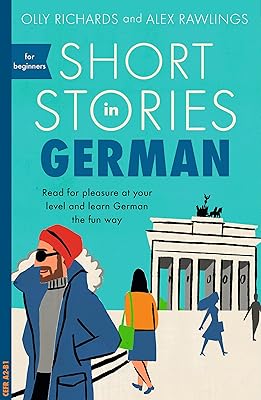
Short Stories in German for Beginners
Olly Richards
Learn German with 8 captivating stories. Perfect for A2-B1 learners who want to build vocabulary naturally.
Check Price on Amazon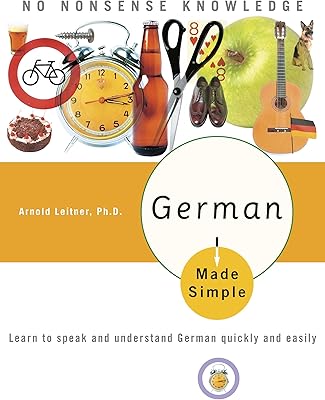
German Made Simple
Eugene Jackson
A complete beginner's guide covering grammar, vocabulary, and conversation essentials.
Check Price on Amazon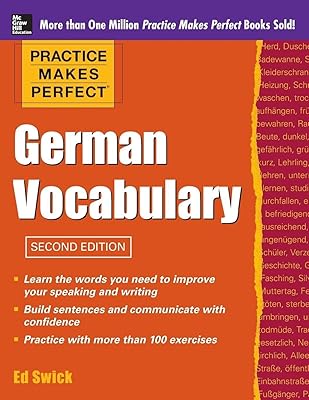
Practice Makes Perfect: German Vocabulary
Ed Swick
Targeted exercises and drills for mastering essential German words and phrases.
Check Price on AmazonAs an Amazon Associate, we earn from qualifying purchases.