German Adjectives: The Complete Guide to Declension and Usage
By LangPodTools Team, Language Learning Content Specialist

German adjective endings are the grammar topic that frustrates learners the most. The good news: the system is logical, and 90% of everyday speech uses just a handful of patterns. Once you learn those, the rest falls into place.
This guide breaks down German adjective declension into clear, learnable steps. You will get tables, examples, and practical tips — no unnecessary theory.
How German Adjectives Work: The Basics
In English, adjectives never change form. "Big" stays "big" whether you say "a big house," "the big dog," or "big problems." German is different.
German adjectives change their endings based on three factors:
- Gender — masculine, feminine, or neuter
- Case — nominative, accusative, dative, or genitive
- Article type — definite (der/die/das), indefinite (ein/eine), or no article
This sounds overwhelming. It is not. There are patterns, and they repeat.
Study Tip: Do not try to memorize all the tables at once. Learn one article type at a time — start with definite articles (der/die/das), which have the simplest endings. Then add indefinite articles (ein/eine) once the first pattern feels natural.
Two Positions: Before the Noun vs. After the Verb
Adjectives behave differently depending on where they appear in the sentence.
After sein (to be) — no ending:
- Das Haus ist groß. — The house is big.
- Der Mann ist alt. — The man is old.
- Die Blume ist schön. — The flower is beautiful.
Before a noun — ending required:
- das große Haus — the big house
- der alte Mann — the old man
- die schöne Blume — the beautiful flower
If the adjective comes after sein, werden, or bleiben, it stays in base form. No endings. Easy.
The endings only matter when the adjective sits directly before a noun. This is called attributive position.
Adjective Endings After Definite Articles (der/die/das)
This is the easiest pattern. After der, die, das (and their case forms), adjectives get either -e or -en.
| Masculine | Feminine | Neuter | Plural | |
|---|---|---|---|---|
| Nominative | der alte Mann | die alte Frau | das alte Haus | die alten Häuser |
| Accusative | den alten Mann | die alte Frau | das alte Haus | die alten Häuser |
| Dative | dem alten Mann | der alten Frau | dem alten Haus | den alten Häusern |
| Genitive | des alten Mannes | der alten Frau | des alten Hauses | der alten Häuser |
The Pattern
Look at the table. Notice something?
- Nominative: mostly -e (except plural: -en)
- Everything else: -en
That is the entire rule. Nominative singular gets -e. Accusative feminine and neuter also get -e (because they match nominative). Everything else is -en.
Simplified: five boxes get -e, everything else gets -en.
The five -e boxes are:
- der alte Mann (masc. nom.)
- die alte Frau (fem. nom.)
- das alte Haus (neut. nom.)
- die alte Frau (fem. acc.)
- das alte Haus (neut. acc.)
Study Tip: Think of it as the "lazy" pattern. The definite article already shows gender and case, so the adjective does not need to work hard. It just adds -e or -en. For a full review of German cases, see German cases explained.
Adjective Endings After Indefinite Articles (ein/eine)
After ein, eine, kein, mein, dein, etc., the adjective sometimes needs to carry more information because ein does not always show gender clearly.
| Masculine | Feminine | Neuter | Plural (keine) | |
|---|---|---|---|---|
| Nominative | ein alter Mann | eine alte Frau | ein altes Haus | keine alten Häuser |
| Accusative | einen alten Mann | eine alte Frau | ein altes Haus | keine alten Häuser |
| Dative | einem alten Mann | einer alten Frau | einem alten Haus | keinen alten Häusern |
| Genitive | eines alten Mannes | einer alten Frau | eines alten Hauses | keiner alten Häuser |
The Pattern
Compare this to the definite article table. Most endings are -en — same as before. The only difference is three boxes in the nominative and accusative:
- ein alter Mann — masculine nominative gets -er (because "ein" does not show masculine)
- ein altes Haus — neuter nominative gets -es (because "ein" does not show neuter)
- ein altes Haus — neuter accusative also gets -es
These three endings (-er, -e, -es) mirror the definite article endings (der, die, das). The adjective is filling in the gender information that "ein" cannot provide.
Study Tip: Remember the rule: "If the article doesn't show gender, the adjective must." This one principle explains the entire indefinite article pattern.
Adjective Endings With No Article
When there is no article at all, the adjective must do all the work. It takes strong endings that look like the definite article endings.
| Masculine | Feminine | Neuter | Plural | |
|---|---|---|---|---|
| Nominative | alter Mann | alte Frau | altes Haus | alte Häuser |
| Accusative | alten Mann | alte Frau | altes Haus | alte Häuser |
| Dative | altem Mann | alter Frau | altem Haus | alten Häusern |
| Genitive | alten Mannes | alter Frau | alten Hauses | alter Häuser |
This pattern is most common with:
- Plural nouns without articles: alte Häuser (old houses)
- After numbers: zwei kleine Kinder (two small children)
- After viel, wenig, einige, mehrere
You will encounter this pattern less often than the other two. Focus on definite and indefinite patterns first.
The 50 Most Useful German Adjectives
Here are the adjectives you will use and hear most often. Learn these first.
Describing Size and Amount
| German | English | Example |
|---|---|---|
| groß | big / tall | ein großer Baum (a big tree) |
| klein | small / short | eine kleine Katze (a small cat) |
| lang | long | ein langer Weg (a long path) |
| kurz | short (length) | ein kurzer Film (a short film) |
| breit | wide | eine breite Straße (a wide street) |
| dick | thick / fat | ein dickes Buch (a thick book) |
| dünn | thin | eine dünne Scheibe (a thin slice) |
| viel | much / many | |
| wenig | few / little |
Describing Quality
| German | English | Example |
|---|---|---|
| gut | good | ein guter Lehrer (a good teacher) |
| schlecht | bad | schlechtes Wetter (bad weather) |
| schön | beautiful / nice | ein schöner Tag (a nice day) |
| hässlich | ugly | |
| neu | new | ein neues Auto (a new car) |
| alt | old | ein altes Haus (an old house) |
| schnell | fast | ein schnelles Auto (a fast car) |
| langsam | slow | |
| einfach | easy / simple | |
| schwer | hard / heavy | |
| wichtig | important | eine wichtige Frage (an important question) |
Describing People
| German | English | Example |
|---|---|---|
| jung | young | ein junger Mann (a young man) |
| nett | nice / kind | eine nette Frau (a nice woman) |
| freundlich | friendly | |
| lustig | funny | |
| klug | smart / clever | |
| dumm | stupid | |
| stark | strong | |
| schwach | weak | |
| müde | tired | |
| krank | sick | |
| gesund | healthy |
For more about expressing feelings with adjectives, see feelings and emotions in German.
Comparative and Superlative Forms
German comparatives and superlatives follow patterns similar to English.
Comparative: Add -er
- schnell → schneller (fast → faster)
- klein → kleiner (small → smaller)
- billig → billiger (cheap → cheaper)
Many common adjectives also add an umlaut:
- alt → älter (old → older)
- groß → größer (big → bigger)
- jung → jünger (young → younger)
- lang → länger (long → longer)
- kalt → kälter (cold → colder)
- warm → wärmer (warm → warmer)
Superlative: Add -(e)sten
- schnell → am schnellsten (fastest)
- klein → am kleinsten (smallest)
- alt → am ältesten (oldest)
Before a noun, the superlative takes a regular adjective ending:
- der schnellste Zug — the fastest train
- die schönste Stadt — the most beautiful city
Irregular Forms
Three adjectives have completely irregular comparatives — just like English.
| Base | Comparative | Superlative |
|---|---|---|
| gut (good) | besser (better) | am besten (best) |
| viel (much) | mehr (more) | am meisten (most) |
| gern (gladly) | lieber (rather) | am liebsten (most gladly) |
Study Tip: Practice comparatives by comparing things around you. "Mein Kaffee ist heißer als dein Tee." (My coffee is hotter than your tea.) "Berlin ist größer als München." (Berlin is bigger than Munich.) The pattern "A ist [comparative] als B" covers most comparison sentences.
Common Mistakes and How to Avoid Them
Here are the adjective errors learners make most often.
Mistake 1: Adding Endings After Sein
- Wrong: Das Haus ist große. ✗
- Right: Das Haus ist groß. ✓
After sein, werden, bleiben — no endings. Ever.
Mistake 2: Forgetting Endings Before Nouns
- Wrong: Ich sehe ein schön Haus. ✗
- Right: Ich sehe ein schönes Haus. ✓
Before a noun, the ending is always required.
Mistake 3: Using the Wrong Pattern
- Wrong: der gutes Wein ✗
- Right: der gute Wein ✓
After a definite article, use the weak ending (-e or -en), not the strong ending (-er, -es).
Practice Sentences
Use these to drill adjective endings in context.
- Der kleine Hund spielt im Garten. — The small dog plays in the garden.
- Ich kaufe ein neues Buch. — I am buying a new book.
- Sie wohnt in einer schönen Stadt. — She lives in a beautiful city.
- Alte Häuser haben viel Charme. — Old houses have a lot of charm.
- Er trinkt kalten Kaffee. — He drinks cold coffee.
- Das ist der beste Film des Jahres. — That is the best film of the year.
- Wir brauchen frisches Brot. — We need fresh bread.
- Mit einem guten Freund ist alles leichter. — With a good friend, everything is easier.
Practice these patterns with our flashcard tool — create cards with full phrases rather than isolated adjectives.
Frequently Asked Questions
Conclusion
German adjective declension has one core principle: the gender and case information must appear somewhere — either on the article or on the adjective. When the article shows it clearly (der, die, das), the adjective relaxes with -e or -en. When the article is vague (ein) or absent, the adjective steps up with stronger endings.
Start with the definite article pattern — it covers most situations. Then learn the three exceptions for indefinite articles. Practice with real sentences, not isolated tables.
For more German grammar guides, explore German cases explained, German tenses, or German word order rules.
Frequently Asked Questions
Do German adjectives always change their endings?▾
What is the easiest way to remember German adjective endings?▾
How many adjective ending patterns are there in German?▾
Do German adjectives get umlauts in comparative form?▾
What are the most common German adjectives to learn first?▾
Recommended Study Material
The Complete German Grammar Cheat Sheet
A1–B2 Reference PDF
27 pages of color-coded tables, mnemonics, and shortcuts — every rule you need from Cases to Subjunctive.
Recommended German Books
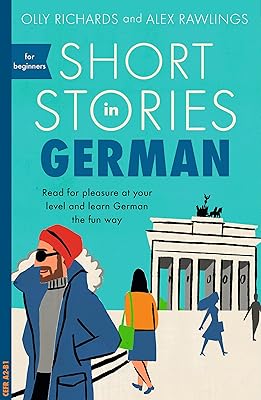
Short Stories in German for Beginners
Olly Richards
Learn German with 8 captivating stories. Perfect for A2-B1 learners who want to build vocabulary naturally.
Check Price on Amazon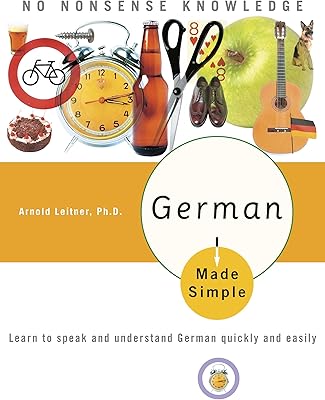
German Made Simple
Eugene Jackson
A complete beginner's guide covering grammar, vocabulary, and conversation essentials.
Check Price on Amazon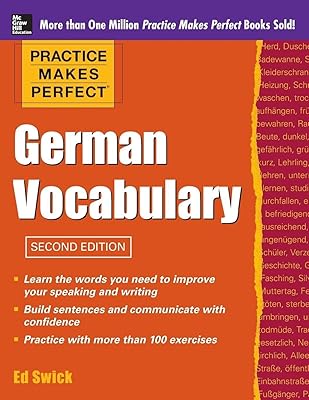
Practice Makes Perfect: German Vocabulary
Ed Swick
Targeted exercises and drills for mastering essential German words and phrases.
Check Price on AmazonAs an Amazon Associate, we earn from qualifying purchases.