How to Say Thank You in German: Danke & 8 More Ways
By LangPodTools Editorial Team, Language Learning Content Specialist

You're three episodes into a German podcast, and the host rattles off "danke" so fast you almost miss it. Then a guest says "vielen herzlichen Dank," and you freeze — is that normal, or way too formal for casual chat? Most learners memorize one word for "thank you" and stop there, which is exactly why real conversations catch them off guard.
Quick Answer: The most common way to say thank you in German is "Danke" (pronounced DAHN-kuh), and it works in almost any casual situation. For extra warmth, use "Danke schön" or "Vielen Dank" — both are safe in formal and informal settings. When someone thanks you, respond with "Bitte" or "Bitte schön."
How Do You Say Thank You in German?
The single most useful word is "Danke" — that's it, full stop. It's short, it's safe, and Germans use it constantly, in shops, on trains, and with friends. You'll hear it far more often per hour of conversation than English speakers say "thanks" [1].
"Danke" comes from the same root as the English word "thank," so the connection is easy to remember. Say it after almost any small favor — someone holds a door, passes the salt, or answers a question.
Here's the deal: one word won't cover every situation. As of August 2026, German language coaches still teach "Danke" as the starting point, then layer in stronger versions for bigger favors or formal settings [2].
Pro Tip: Listen for "Danke" in every podcast episode you play this week. Once your ear catches it automatically, you're ready to add the stronger versions below.
If you want structured listening practice, the Common German Phrases guide pairs well with this one — it covers everyday expressions you'll hear right alongside "Danke."
Formal vs. Informal Thank You in German
The short answer: match your phrase to who you're talking to, not just how thankful you feel. German has a stronger formal/informal split than English, especially with the words "dir" (informal you) and "Ihnen" (formal you).
Picking the wrong register isn't a huge mistake, but it can sound off to a native ear — like showing up to a job interview in flip-flops.
| Situation | Best Phrase | Why It Fits |
|---|---|---|
| Friends, family, casual chats | Danke | Simple and natural, no formality needed |
| Strangers, service staff, older adults | Danke schön / Vielen Dank | Adds polite warmth without sounding stiff |
| Business emails, formal letters | Ich danke Ihnen | Shows respect and professional distance |
| Big favors, emotional moments | Tausend Dank / Herzlichen Dank | Signals real, heartfelt gratitude |
Bottom line: when in doubt, "Vielen Dank" is the safest all-purpose upgrade from plain "Danke." It works in nearly every formal and semi-formal situation without sounding overdone.
8 Ways to Say Thank You in German
Once "Danke" feels automatic, these variations add nuance. Each one signals a slightly different level of warmth or formality, and native speakers switch between them constantly.
- Danke – "Thanks." The default, everyday version.
- Danke schön – "Thanks kindly." Common with waitstaff, cashiers, and strangers.
- Danke sehr – "Thank you very much." A close cousin of "Danke schön," slightly more neutral.
- Vielen Dank – "Many thanks." The most versatile upgrade — safe for emails, letters, and speech.
- Herzlichen Dank – "Heartfelt thanks." Used for genuine, emotional gratitude.
- Besten Dank – "Best thanks." Especially common in Switzerland and Austria [3].
- Tausend Dank – "A thousand thanks." Casual but intense, like "thanks a million."
- Ich danke dir / Ich danke Ihnen – "I thank you," informal and formal. Adds a personal touch that "Danke" alone lacks.
Pro Tip: Don't try to memorize all eight at once. Pick three — Danke, Vielen Dank, and Danke schön — and use them until they feel automatic before adding the rest.
If pronunciation and daily audio drills are your priority, Pimsleur German Level 1 builds these exact phrases into short listening sessions, which fits well for podcast-based learners.
How to Pronounce Danke and Its Variations
Danke is pronounced "DAHN-kuh," with a hard "D" and a short second syllable. Getting the "a" sound right matters — it should sound like the "a" in "father," not the "a" in "cat."
The tricky part for most learners is the "ch" sound hiding inside longer phrases like "Ich danke dir." That guttural sound doesn't exist in English, so it takes deliberate practice.
Breaking Down the Sounds
- Danke → DAHN-kuh
- Vielen Dank → FEE-len dahnk
- Herzlichen Dank → HERTS-lish-en dahnk
- Tausend Dank → TOW-zent dahnk (rhymes with "how")
The Goethe Institut, Germany's official language and culture organization, offers free pronunciation resources built by native-speaking instructors [4]. Because podcasts move fast, pause and repeat unfamiliar words out loud rather than just listening passively.
Pro Tip: Record yourself saying "Danke schön" and compare it to a native audio clip. This single habit fixes pronunciation faster than reading rules ever will.
For structured audio drills between podcast episodes, Fluent Forever by Gabriel Wyner teaches a phonetics-first method that's especially useful for German's trickier sounds.
How to Say You're Welcome in German
The most common reply to "Danke" is simply "Bitte." It works the same way "you're welcome" does in English — short, universal, and appropriate almost everywhere.
For more warmth, Germans often add "schön" to make it "Bitte schön," mirroring the thank-you version. Some speakers instead say "Gerne" (gladly) or "Keine Ursache" (no problem), especially in southern Germany and Austria.
- Bitte – "You're welcome," the default reply
- Bitte schön – "You're very welcome," slightly warmer
- Gerne – "Gladly," casual and common among younger speakers
- Keine Ursache – "No problem," used mostly in the south
Swiss German speakers sometimes swap in regional variants entirely, since Swiss German differs enough from standard German to confuse even fluent learners [5]. If you're mixing German-learning with a French or English track, the Cheers in German guide covers a related set of social phrases worth learning together.
Common Mistakes Language Learners Make
The biggest mistake is treating "Danke" and "Bitte" as a rigid, one-size-fits-all script. Real German conversation is flexible, and over-formality can sound just as odd as under-formality.
Mistake 1: Overusing Formal Phrases in Text Messages
Texting a friend "Ich danke Ihnen vielmals" sounds like a corporate email, not a casual reply. Save "Ihnen" for people you'd address with a title and last name.
Mistake 2: Forgetting Regional Variants Exist
Learners who only study standard German get thrown off by "Merci" — yes, borrowed from French — which some Swiss German speakers use casually instead of "Danke" [5]. Because this shows up in real conversation but rarely in textbooks, podcast exposure catches it faster than app-based study alone.
Mistake 3: Mispronouncing the "ch" Sound
Many English speakers substitute a hard "k" sound for the German "ch," turning "Ich danke dir" into something noticeably off. This one small sound is worth isolated drilling before you move on.
Pro Tip: Check out our Common German Phrases guide for more everyday expressions that follow this same formal/informal pattern.
How Podcasts and Apps Can Help You Master These Phrases
Podcasts train your ear for natural speed, while apps drill spelling and grammar — you need both. Relying on just one leaves a gap: app-only learners often can't understand fast native speech, while podcast-only learners sometimes can't spell what they hear.
Building a Simple Routine
- Listen to a 10-15 minute podcast episode daily, focused on real conversation
- Pause on any "Danke" variant you hear and repeat it out loud
- Log new phrases in a spaced-repetition app the same day you hear them
- Re-listen to the same episode after one week to measure retention
Because spaced repetition research consistently shows better long-term recall than single-exposure study, revisiting episodes matters more than collecting new ones [6]. Anki-compatible flashcard decks for German basics pair well with podcast listening, since you can log new "Danke" variants the moment you hear them.
(Estimates only — actual prices on Amazon may vary.) Most German phrasebooks and flashcard sets run $10-20, while full audio courses like Pimsleur typically run $20-100 depending on the level bundle.
We recommend combining one podcast, one flashcard app, and one grammar reference — that three-part combo covers listening, memory, and structure without overwhelming a beginner's schedule.
Final Thoughts
"Danke" gets you through almost any situation, but the eight variations above make you sound like a real speaker, not a phrasebook. Start with Danke, Vielen Dank, and Bitte, then layer in the rest as you listen more.
Ready to upgrade your setup? Pair consistent podcast listening with a simple flashcard habit, and these phrases will feel automatic within a few weeks.
Sources
Frequently Asked Questions
Do Germans say "danke schön"?▾
How do you say thank you in German politely?▾
How is "danke" pronounced correctly?▾
What do Germans say in response to "danke"?▾
Does "thank you in German" change when speaking to a girl or woman?▾
Is there a different word for thank you in Swiss German?▾
What's the difference between "Danke sehr" and "Danke schön"?▾
Recommended Study Material
The Complete German Grammar Cheat Sheet
A1–B2 Reference PDF
27 pages of color-coded tables, mnemonics, and shortcuts — every rule you need from Cases to Subjunctive.
Recommended German Books

Short Stories in German for Beginners
Olly Richards
Learn German with 8 captivating stories. Perfect for A2-B1 learners who want to build vocabulary naturally.
Check Price on Amazon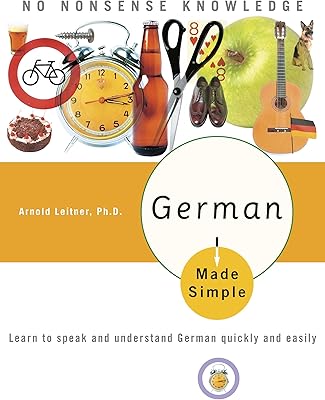
German Made Simple
Eugene Jackson
A complete beginner's guide covering grammar, vocabulary, and conversation essentials.
Check Price on Amazon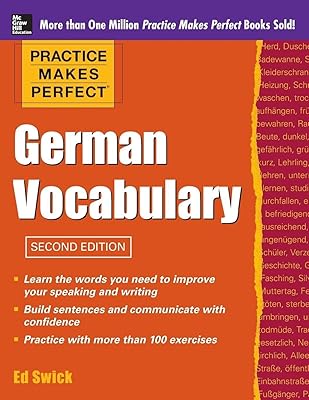
Practice Makes Perfect: German Vocabulary
Ed Swick
Targeted exercises and drills for mastering essential German words and phrases.
Check Price on AmazonAs an Amazon Associate, we earn from qualifying purchases.