Daily Podcast Immersion Routine: How to Learn a Language in 30 Minutes a Day
By Sophie Brennan, Language Learning Content Specialist

Thirty minutes a day sounds modest. But language acquisition research consistently shows that daily contact with the target language — even in small doses — produces more retention than longer, irregular sessions. The key is what you do with those 30 minutes.
This guide breaks down a podcast-based immersion routine that works across Spanish, Japanese, French, and German — structured to maximize the three core activities that drive real progress: active listening, shadowing, and vocabulary review.
Why 30 Minutes Works (When Used Correctly)
Many learners assume that more hours always means more progress. Research from the European Centre for Modern Languages and independent studies on spaced repetition suggest otherwise: short, consistent exposure outperforms sporadic long sessions for retention and pattern recognition.
The constraint of 30 minutes also forces prioritization. You cannot waste time on low-yield activities. Every segment of the routine below is chosen because the return-on-time is measurable.
The Forgetting Curve Argument
Hermann Ebbinghaus's forgetting curve shows that without reinforcement, up to 70% of new material is lost within 24 hours. A daily 30-minute routine hits the reinforcement window every single day. A 3-hour weekend session does not.
This is why podcast immersion — structured correctly — compounds. Each session builds on yesterday's input instead of starting from scratch.
Active Listening vs Passive Listening: What the Evidence Says
A common beginner strategy is to run foreign-language podcasts as background audio — during commutes, workouts, or household tasks. This is passive listening, and while it has some value, research from cognitive science is clear: passive listening alone does not produce language acquisition at meaningful rates.
What Passive Listening Does
- Builds familiarity with the sound system (phonology)
- Reinforces words you already know
- Increases comfort with the language's rhythm and intonation
These are real benefits. But passive listening requires almost no cognitive engagement, which means new vocabulary and grammar structures rarely stick.
What Active Listening Does
| Factor | Passive Listening | Active Listening |
|---|---|---|
| Vocabulary acquisition | Low | High |
| Grammar pattern recognition | Minimal | Significant |
| Pronunciation improvement | Slight | Strong (with shadowing) |
| Comprehension growth rate | Slow | 3–5x faster (per ACTFL guidelines) |
| Cognitive load required | Low | Medium–High |
Active listening means engaging deliberately: following a transcript, pausing to look up unfamiliar words, replaying segments, and testing comprehension. The American Council on the Teaching of Foreign Languages (ACTFL) identifies this type of focused input as the primary driver of listening proficiency gains.
The Practical Rule
Passive listening counts as a bonus — not a substitute. Build your 30-minute routine around active listening, then let passive exposure happen naturally during commutes.
The 30-Minute Daily Routine: Full Time Breakdown
This schedule is designed for intermediate learners (A2–B1). Adjust segment lengths for beginners (more active listening, less shadowing) or advanced learners (more shadowing at native speed, less vocab review).
Segment 1 — Active Listening (12 minutes)
Open a podcast episode at or slightly above your current level. Play it with a transcript visible.
What to do:
- Follow the transcript word by word while listening
- Mark any word or phrase you don't recognize (don't stop to look them up yet)
- When a sentence sounds unusual or unclear, replay it once
- Focus on understanding meaning in context, not perfect comprehension
Target comprehension rate: 70–85%. If you're below 70%, the episode is too difficult — drop a level. Above 90% means you're ready for harder content.
For Spanish learners: podcasts like Coffee Break Spanish or Español con Juan offer transcripts at A2–B1 level with clear enunciation.
For Japanese learners: Nihongo con Teppei for Beginners is spoken slowly and without transcripts but builds listening stamina. Pair with NHK World's Easy Japanese for transcript support.
For French learners: Français Authentique (intermediate) and Coffee Break French both offer transcript access and paced delivery.
For German learners: Slow German by Annik Rubens and Deutsche Welle's Deutsch – Warum Nicht? provide structured, transcript-supported episodes across A1–B1.
Segment 2 — Shadowing (10 minutes)
Shadowing is the technique most associated with hyperpolyglot Kató Lomb and later popularized by linguist Alexander Arguelles. The method: play a short clip and repeat it simultaneously or immediately after, mimicking the speaker's intonation, speed, and rhythm exactly.
Step-by-step:
- Select a 30–60 second clip from today's episode (or a dedicated shadowing resource)
- Listen once without repeating — just absorb
- Play it again and shadow aloud, matching pace and intonation
- Repeat the same clip 3–4 times until it flows naturally
- Move to the next clip
Why shadowing works across all four languages:
- Spanish: Trains linked speech — words blur together in spoken Spanish in ways that confuse readers of the written language
- Japanese: Builds pitch accent awareness and natural mora timing — critical distinctions that affect comprehension
- French: Develops liaison habits and the nasal vowel distinctions that learners consistently struggle with
- German: Reinforces sentence-final verb position and compound word stress patterns
Shadowing is not pronunciation drilling. The goal is to internalize natural speech patterns, not to recite vocabulary. Use authentic spoken content, not slow instructional audio.
A 2019 study published in Language Teaching Research found that learners who practiced shadowing for 10 minutes daily for 8 weeks showed significantly higher gains in both listening comprehension and speaking fluency compared to control groups using only traditional study methods.
Segment 3 — Vocabulary Review (8 minutes)
This segment works on spaced repetition: reviewing words you encountered in today's episode plus previously learned words due for review.
The process:
- After the active listening segment, look up the words you marked
- Add new words to a flashcard deck with the sentence context from the podcast
- Run your spaced repetition queue — review cards due today
- Aim for 10–15 new words maximum per session; quality of encoding beats quantity
Why context-sourced vocabulary outperforms word lists:
Vocabulary acquired in context — from content you heard and emotionally engaged with — is retained at significantly higher rates than vocabulary from frequency lists alone. A word heard in an interesting story is processed differently than a word seen in a table. Both matter, but context anchors the word to a memory trace.
For flashcard tools, Anki remains the most evidence-backed option for spaced repetition. LangPodTools' Flashcard tool allows deck creation directly from podcast vocabulary, keeping context attached to each entry.
Full 30-Minute Schedule at a Glance
| Segment | Activity | Duration | Goal |
|---|---|---|---|
| 1 | Active listening with transcript | 12 min | Comprehension + input |
| 2 | Shadowing (3–4 clips) | 10 min | Pronunciation + fluency patterns |
| 3 | Vocabulary review (spaced repetition) | 8 min | Retention + lexical growth |
| Total | 30 min |
On days when you have more time, extend Segment 1 with a second episode. On days when you have less, Segment 3 is the most compressible — drop to 5 minutes of review rather than skipping shadowing.
Language-Specific Notes: Adjusting the Routine
The core structure is the same across languages. These adjustments optimize the routine for each target language's specific challenges.
Spanish
Spanish has one of the highest densities of high-frequency vocabulary overlap with English (due to Latin roots). Learners typically reach A2 faster than German or Japanese learners. Shift the balance toward shadowing earlier — getting comfortable with connected speech and regional accents (Castilian vs Latin American) is often the bigger hurdle than vocabulary.
Recommended shadowing content: news broadcasts from RTVE (Spain) or CNN en Español — both use clear, moderately paced speech.
Japanese
Japanese requires the most adjustment to the standard routine. Vocabulary review should occupy more time at the beginner stage due to the need to acquire kanji alongside audio vocabulary. For the first 3–6 months, consider an 8/12/10 split (more vocab, less shadowing) until a 1,000-word foundation is established.
NHK World's Easy Japanese and Nihongo con Teppei for Beginners remain the most reliable beginner resources with appropriate speech pace.
French
Liaison and elision (sounds dropping or linking between words) mean that written French and spoken French can feel like different languages. Shadowing earns its 10 minutes here more than in any other language in this list. Prioritize authentic conversational content over scripted lesson podcasts once you reach A2.
German
German syntax places verbs at the end of subordinate clauses — a pattern that trips English listeners repeatedly. In shadowing sessions, focus on clauses that contain this structure. The brain internalizes word order patterns through repetition faster than through grammar rules alone.
Building the Habit: What Consistency Actually Requires
The routine above only produces results if it runs daily. Habit research from behavioral scientists like BJ Fogg identifies trigger stacking as the most reliable method for attaching a new behavior to an existing one.
Practical examples:
- Attach the routine to an existing daily anchor: morning coffee, lunch break, or evening wind-down
- Keep the podcast app and flashcard app on your phone's home screen — friction kills habits
- Set a consistent time rather than flexible "whenever I have time" scheduling
The first two weeks are the highest-risk period for dropout. Reduce the target if needed — even 15 minutes maintains the daily streak and keeps the habit alive during low-motivation periods. A shorter streak is better than a broken one.
Progress Benchmarks by Language
How long until the 30-minute routine produces noticeable results? Based on Foreign Service Institute (FSI) difficulty classifications and ACTFL proficiency research:
| Language | Estimated Hours to B1 | Daily 30-min Timeline |
|---|---|---|
| Spanish | 600–750 hrs | 3–4 years |
| French | 600–750 hrs | 3–4 years |
| German | 750–900 hrs | 4–5 years |
| Japanese | 2,200+ hrs | 12+ years |
These numbers assume active, quality study time — not background audio or unfocused listening. With the structured 30-minute routine described above, learners typically report meaningful comprehension gains within 60–90 days, regardless of language.
Japanese learners should set intermediate milestones (hiragana/katakana fluency, 500-word vocab, basic listening comprehension) rather than tracking toward B1 as a primary goal.
Frequently Overlooked: Podcast Selection Quality
The routine structure only works if the podcast content is appropriate. The single most common reason learners plateau despite consistent practice: their podcast content is too difficult for genuine comprehension.
The 70–85% comprehension threshold is not a suggestion — it is a functional requirement. Below that level, you are practicing tolerance of confusion, not acquiring language. If you genuinely cannot identify 70% of words in an episode, find easier content first.
LangPodTools' episode library organizes content by difficulty level across multiple languages — use it to find starting points that match your actual level, not the level you wish you were at.
Recommended Tools to Support the Routine
- Speed Player — fine-tune playback speed to 0.75x–0.85x for difficult episodes without pitch distortion
- Transcript Reader — read and listen simultaneously; marks unknown words for later review
- Flashcard tool — create context-sourced vocabulary decks from podcast content
- Word Frequency Analyzer — identify high-value vocabulary to prioritize in review sessions
Conclusion
The 30-minute daily podcast immersion routine works because it combines the three evidence-backed activities — active listening, shadowing, and spaced repetition vocabulary review — into a sustainable, time-constrained block. Passive listening has a role, but it cannot carry the load alone.
For Spanish, French, German, and Japanese learners alike, the structure is the same. The language changes; the discipline does not. Start with one episode this week, apply the three-segment split, and measure your comprehension rate at the end of the month against where you started.
Frequently Asked Questions
Can 30 minutes a day really produce language learning progress?▾
What is shadowing and does it actually work?▾
How is active listening different from just listening to a podcast?▾
Is this routine suitable for complete beginners?▾
Which podcast resources work best for Spanish, Japanese, French, and German learners?▾
Recommended English Books
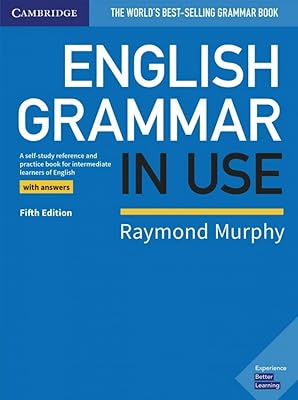
English Grammar in Use
Raymond Murphy
The world's best-selling grammar book. Clear explanations with practice exercises for every unit.
Check Price on Amazon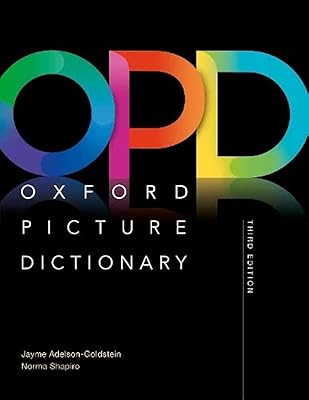
Oxford Picture Dictionary
3rd Edition
4,000+ words with full-color illustrations. Perfect for visual learners building everyday vocabulary.
Check Price on Amazon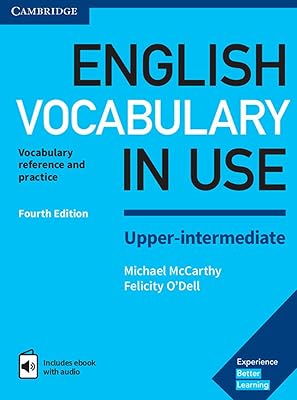
English Vocabulary in Use
McCarthy & O'Dell
Learn and practise the words you need at every level, from elementary to advanced.
Check Price on AmazonAs an Amazon Associate, we earn from qualifying purchases.