Best Podcasts for Advanced Language Learners: Native Content That Actually Teaches
By Sophie Brennan, Language Learning Content Specialist

At some point, every advanced language learner hits the same wall.
The graded podcasts that carried you through A2 and B1 start to feel slow. The sentence structures are predictable. The vocabulary is familiar. Progress — once measurable in new words per episode — stalls. This is not a motivation problem. It is a content problem.
Research on comprehensible input theory (Krashen, 1985; updated by Nation & Newton, 2009) consistently finds that learners require input at or just slightly above their current level to acquire new language. Once graded content falls below that threshold, the input stops generating acquisition. The learner is maintaining — not advancing.
The solution is native content. The obstacle is knowing which native content is structured enough to teach, rather than simply expose.
This guide covers the best podcasts for advanced language learners across four languages — Spanish, Japanese, French, and German — with a CEFR-level reference table, a clear framework for timing the transition from graded to authentic content, and honest assessments of what each show actually delivers.
The Graded vs. Authentic Content Decision
The central question for B2+ learners is not whether to use native content — the research is clear that authentic input is essential for reaching C1 and above. The question is when the switch is appropriate, and which native content is most pedagogically productive.
What Graded Content Does Well
Graded podcasts — Slow German, Easy German Podcast at beginner levels, Journal en français facile — are engineered for comprehension. Hosts speak at reduced pace, limit vocabulary to high-frequency words, and explicitly repeat key structures. For learners below B2, this scaffolding is not a shortcut; it is the mechanism that allows comprehension to occur at all.
The 2016 study by Vanderplank on incidental vocabulary acquisition found that learners acquire approximately 8–15 new words per hour of heavily scaffolded listening, compared to 3–8 words per hour of fully authentic listening at an inappropriate level. At the wrong level, authentic content produces confusion more efficiently than it produces acquisition.
Where Graded Content Fails Advanced Learners
The same scaffolding that helps beginners becomes a ceiling at B2. Graded content removes:
- Reduced speech phenomena: native speakers elide sounds, blend words, and drop unstressed syllables in ways that graded content eliminates
- Authentic pragmatics: turn-taking patterns, hedging language, filler expressions, and discourse markers that signal meaning in real conversation
- Register variation: the difference between formal, informal, and colloquial language — a gap that graded content does not train
- Cultural density: references, humor, allusions, and contextual knowledge that native content assumes and graded content avoids
C1 listening comprehension — as assessed by DELF/DALF, JLPT N2–N1, DELE C1, or Goethe C1 — requires exactly these capacities. No graded podcast can build what it systematically removes.
The Transition Threshold
The practical threshold for switching to native content is not a CEFR band — it is a comprehension rate. Language acquisition research (Nation, 2001) suggests that learners need to understand approximately 95–98% of running words in a text for acquisition of the remaining 2–5% to occur efficiently. Below 95%, the cognitive load of handling unknowns interferes with acquisition.
A useful self-test: listen to three minutes of a target native podcast without transcript support. If you can identify the main topic, follow the logical thread, and understand roughly 8 out of 10 sentences, you are at the threshold. If the content sounds like a fast blur of isolated words, you are not ready — and pushing through will produce frustration rather than learning.
CEFR Level Reference Table
The table below maps specific podcasts to the CEFR levels at which they produce effective acquisition — not the level at which they are technically accessible.
| Language | Podcast | Effective CEFR Range | Content Type | Transcript Available |
|---|---|---|---|---|
| Spanish | Radio Ambulante | B2–C2 | Narrative journalism | Yes (free, full) |
| Spanish | Duolingo Spanish Podcast | B1–B2 | Bilingual narrative | Yes (free, full) |
| Japanese | NHK World Radio Japan | B2–C1 | News broadcast | Yes (partial, free) |
| Japanese | ひいきびいき (Hiiking Biiki) | C1–C2 | Unscripted intellectual discussion | No |
| French | Journal en français facile | B1–B2 | Simplified news | Yes (paid full, free sample) |
| French | InnerFrench | B2–C1 | Essay-style monologue | No (episode notes only) |
| German | Slow German | A2–B2 | Scripted cultural topics | Yes (paid) |
| German | Easy German Podcast | B1–C1 | Authentic street interviews + discussion | Yes (free sample, paid full) |
Note on using this table: The "effective range" reflects where the podcast generates acquisition, not just comprehension. A C2 learner can follow Slow German without difficulty — but they will not acquire new language from it. A B1 learner can probably decode some InnerFrench — but at too high a cognitive cost for efficient acquisition.
Spanish: Radio Ambulante and Duolingo Spanish Podcast
The Core Problem This Solves
Advanced Spanish learners consistently report the same comprehension gap: they can read newspaper Spanish without difficulty but struggle to follow unscripted native conversation at normal speed. The issue is not vocabulary — it is phonological reduction. Native Spanish reduces unstressed syllables aggressively, drops final consonants in fast speech, and links words across phrase boundaries in ways that graded content does not replicate.
Radio Ambulante — B2 to C2
Radio Ambulante is a Spanish-language journalism podcast produced by NPR, covering Latin America. Episodes are documentary-style narratives — 30 to 60 minutes — reported and produced to commercial radio standards. The Spanish is entirely authentic: multiple speakers, regional accents from Mexico to Argentina to Spain, and the natural connected speech that graded content removes.
What makes Radio Ambulante pedagogically useful rather than merely difficult is its scripted narrative structure. Unlike fully unscripted conversation (where topic drift and speaker overlap create comprehension chaos), Radio Ambulante uses professional narrative journalism: a clear throughline, deliberate pacing, and structured scene construction. Advanced learners get authentic phonology and vocabulary density while retaining enough structural predictability to maintain comprehension.
Full episode transcripts are freely available on the Radio Ambulante website — a rare and valuable feature for native-content podcasts. This enables the three-pass listening method: audio-first (identify comprehension gaps), audio-with-transcript (resolve unknowns), transcript-alone (consolidate).
Regional dialect coverage: Radio Ambulante deliberately covers multiple Latin American varieties. Over a season, listeners encounter Mexican, Colombian, Argentine, Chilean, Peruvian, and Caribbean Spanish — genuine dialect diversity that builds comprehensive listening ability.
Who should wait: B1 learners. The vocabulary density and speech rate will produce comprehension below 90%, making acquisition inefficient. Complete the Duolingo Spanish Podcast at B1–B2 first, then transition.
Duolingo Spanish Podcast — B1 to B2
The Duolingo Spanish Podcast functions as a bridge between graded content and fully authentic material. Stories are told by native Spanish speakers at authentic pace, but framed by English-language host narration that provides context and vocabulary scaffolding. This bilingual architecture gives B1 learners sufficient support to follow stories they would not yet manage without help.
Full free transcripts available at podcast.duolingo.com/spanish make this one of the most accessible bridge podcasts available.
Versus Radio Ambulante: Duolingo Spanish Podcast is the on-ramp; Radio Ambulante is the destination. Use Duolingo at B1–B2 to build tolerance for native speech patterns, then graduate to Radio Ambulante when English scaffolding feels unnecessary.
Japanese: NHK World Radio Japan and ひいきびいき
The Core Problem This Solves
Japanese presents a distinct challenge at advanced levels: the gap between formal written Japanese and spoken conversational Japanese is wider than in most European languages. Written Japanese — even journalistic Japanese — uses formal grammatical endings, explicit connectives, and standard pitch accent patterns. Spoken Japanese at natural speed uses contracted forms (ている → てる, ておく → とく), sentence-final particles that carry pragmatic meaning, and regional pitch accent variation that standardized learning materials eliminate.
NHK World Radio Japan — B2 to C1
NHK World Radio Japan's Japanese-language news service broadcasts standard Tokyo Japanese at near-native news-reading speed. This is formal register Japanese — the 標準語 (hyojungo) that serves as the prestige variety — read by professional broadcasters at approximately 200–250 characters per minute.
For advanced learners targeting formal comprehension (JLPT N2–N1, professional contexts, news media), NHK World provides the highest-quality authentic formal input available for free. The broadcaster's diction is precise, the vocabulary is current, and the topics are substantive.
Partial transcripts are available through the NHK World app and website for some programs. For news broadcast segments, learners can often cross-reference against NHK's written news service (www3.nhk.or.jp/news) to find the corresponding written text — functionally creating a self-generated transcript.
What it does not cover: Casual spoken Japanese, regional dialects, gendered speech patterns, or the informal language of everyday conversation. NHK Japanese is formal, standardized, and represents only one register of the full language.
ひいきびいき (Hiiking Biiki) — C1 to C2
ひいきびいき is an unscripted intellectual discussion podcast hosted by linguist Sekiya Tatsumaru and colleagues, covering topics in science, philosophy, language, and culture. It represents the opposite end of the formality spectrum from NHK: natural conversational Japanese between educated adults with no accommodation for non-native listeners.
The show demonstrates what native intellectual Japanese conversation actually sounds like: rapid topic-shifting, overlapping speech, metalinguistic commentary, and reference density that assumes a Japanese cultural education. For C1–C2 learners preparing for professional or academic Japanese contexts, ひいきびいき is one of the most challenging and productive authentic resources available.
No transcripts are available. This is not a show for learners who depend on text support. Comprehension must be built through repeated listening and vocabulary research after the fact.
Versus NHK World: NHK builds formal register comprehension; ひいきびいき builds informal intellectual discourse comprehension. Both are necessary for full-range Japanese listening ability — they train different registers of the same language.
Who should wait: Learners who have not yet passed JLPT N2 or its equivalent. Below that threshold, the absence of transcripts and the natural speech rate will produce comprehension below 90%.
French: Journal en français facile and InnerFrench
The Core Problem This Solves
French is notorious for the gap between its written and spoken forms. Liaison rules — the linking of word-final consonants to vowel-initial words — create a continuous phonetic flow that sounds nothing like the discrete words in a dictionary. Informal spoken French adds elision of the ne in negation (je ne sais pas → je sais pas), reduction of tu to t' before vowels, and vocabulary that textbook French simply does not include.
Journal en français facile — B1 to B2
Journal en français facile is a 10-minute daily news podcast produced by RFI (Radio France Internationale) specifically for French learners. Professional journalists present the day's news in simplified French — reduced vocabulary complexity and controlled speech rate — while covering authentic current events.
As a bridge podcast, Journal en français facile occupies the same pedagogical space as NHK's learner-oriented broadcasts: authentic enough to expose learners to real news French, scaffolded enough to remain comprehensible at B1–B2. Partial transcripts are available on the RFI website.
The ceiling: At B2+, the simplified vocabulary becomes a constraint rather than a scaffold. Advanced learners will recognize that the show avoids the register variation, idiom density, and liaison complexity of fully authentic French broadcast journalism. It is a valuable B1–B2 resource with a built-in expiration date.
InnerFrench — B2 to C1
InnerFrench, hosted by Hugo Cotton, is a monologue podcast conducted entirely in French at near-native speed, covering culture, psychology, history, and language learning itself. Hugo speaks in an educated, mid-register Parisian French — not the hyper-reduced casual speech of young native speakers, but authentic in vocabulary, liaison patterns, and discourse structure.
The pedagogical design is intentional: Hugo selects topics and structures his monologues specifically to maximize comprehensibility for advanced learners without artificially slowing or simplifying. The result is authentic French that advanced learners can follow, rather than the frustrating blur of fully unscripted native conversation.
Transcripts are not provided, but detailed episode notes are available on the InnerFrench website. For learners accustomed to transcript-dependent study, this requires a methodological adjustment: focus on overall comprehension and thematic vocabulary rather than line-by-line accuracy.
Versus Journal en français facile: Journal en français facile is the scaffold; InnerFrench is the transition to authentic. Use Journal en français facile to build news vocabulary and comfort with spoken French format, then move to InnerFrench when the simpler content feels insufficient.
What research says about monologue input: Studies on listening comprehension (Rost, 2011) suggest that monologue input — where the speaker controls pace and topic — is easier to process than dialogue for learners below C1. InnerFrench's monologue format exploits this: advanced learners get authentic French without the processing overhead of managing multiple speakers.
German: Slow German and Easy German Podcast
The Core Problem This Solves
German presents a specific listening challenge at advanced levels: the language's long compound words and verb-final clause structures mean that comprehension often requires holding partial information in working memory until the sentence resolves. This is cognitively demanding in graded content; at native speed, with natural reductions and overlapping speech, it can overwhelm learners who have not specifically trained for it.
Slow German — A2 to B2
Slow German, hosted by Annik Rubens, is one of the longest-running German learning podcasts — founded in 2007 — and occupies the graded-to-authentic transition space better than most. Annik reads scripted episodes about German culture, history, and current events at a slower-than-native pace, in clear High German with minimal regional accent.
At the B2 threshold, Slow German starts to function as maintenance rather than acquisition: the vocabulary and structures become predictable, and the deliberate pace removes the phonological complexity that advanced listening comprehension requires. The podcast remains genuinely useful at A2–B1, and at B2, is best used as warm-up or confidence-building rather than the primary input source.
Transcripts are available through a premium subscription. For learners using Slow German at A2–B1, the transcripts represent strong value — accurate, well-formatted, and aligned to the audio.
Easy German Podcast — B1 to C1
Easy German Podcast is the audio companion to the Easy German YouTube channel, known for its street interviews and authentic conversations with German speakers across Germany, Austria, and Switzerland. The podcast format brings in longer, more structured discussions — often between hosts Cari and Janusz — covering culture, politics, language, and society.
Unlike Slow German, Easy German Podcast regularly features natural speech patterns: the Berlin accent, Austrian dialect markers, and the informal register reductions (hab' instead of habe, 'n instead of ein) that native German speakers use in ordinary conversation. The content scales more effectively toward advanced levels because the hosts are not artificially constraining their speech.
Free sample transcripts are available; the full transcript archive is behind a Steady subscription.
Versus Slow German: Slow German is more appropriate at A2–B1; Easy German Podcast is more productive at B1–C1. The Easy German team deliberately pushes toward authentic speech while retaining enough structure for learners to follow — a balance Slow German does not attempt at higher levels.
The regional dialect question: Easy German's street interview format exposes learners to genuine German regional variation — Bavarian, Saxon, Hamburgisch, Viennese Austrian. This breadth is pedagogically valuable for learners preparing for professional or social contexts in German-speaking countries, where dialect comprehension matters.
When to Make the Switch: A Decision Framework
The transition from graded to native content is not a single event — it is a gradual shift in the proportion of each type of input. The following framework describes the stages:
Stage 1 — Graded primary (A1–B1): 80–90% graded content, 10–20% authentic (with transcripts and extensive pause-and-lookup). Focus on building vocabulary and grammar foundation.
Stage 2 — Mixed input (B1–B2): 50–60% graded, 40–50% carefully selected authentic content (narrative journalism, structured monologue). The podcasts listed in this guide as B1–B2 effective are appropriate here.
Stage 3 — Authentic primary (B2–C1): 20–30% graded (for confidence and speed), 70–80% authentic. At this stage, graded content functions as warm-up rather than primary acquisition vehicle.
Stage 4 — Native immersion (C1–C2): Graded content serves no acquisition function. Primary input is fully authentic — unscripted conversation, journalism, long-form discussion, podcasts not designed for learners.
The podcasts in this guide cover stages 2 through 4. Journal en français facile and Slow German sit at the stage 2 boundary; ひいきびいき and Radio Ambulante are stage 4 resources.
Maximizing Learning from Native Podcasts: Active Listening Strategies
Passive consumption of native content — letting episodes play in the background — produces significantly lower acquisition than active listening protocols. Three strategies produce the strongest results for advanced learners:
Shadowing: Repeat phrases immediately after the speaker, matching rhythm, speed, and intonation. This trains the phonological patterns that graded content removes. Effective with Radio Ambulante and InnerFrench episodes where pace is consistent enough to shadow.
Focused vocabulary extraction: After each episode, identify 5–10 new words or phrases and add them to a spaced repetition system. The LangPodTools Word Frequency Analyzer can identify high-frequency vocabulary from transcripts when available.
Comprehension gap targeting: Note the specific moments — not general impressions — where comprehension broke down. Was it a specific word? A speech speed increase? A regional accent feature? Targeting these specifically in follow-up listening sessions is more efficient than general re-listening.
For episodes with transcripts, the three-pass method (audio only → audio with transcript → transcript alone) remains the most effective protocol, adapted from language coaching programs that focus on dictation and close listening.
Building a Multi-Language Advanced Listening Stack
Advanced learners studying multiple languages simultaneously face a scheduling challenge: authentic input requires enough volume per language to maintain the 95%+ comprehension threshold. Research on multilingual learning (De Bot, 2004) suggests that below approximately 3–4 hours of weekly input per language, maintenance — rather than acquisition — becomes the realistic outcome.
A practical weekly allocation for dual-language advanced learners:
- Primary language (target for C1): 5–7 hours of authentic input (Radio Ambulante, NHK, InnerFrench, or Easy German Podcast as appropriate)
- Secondary language (maintaining B2): 2–3 hours of mixed content (graded for confidence, authentic for vocabulary expansion)
The LangPodTools Speed Player reduces the time cost of active listening by enabling targeted replay of specific sections — particularly useful for the focused comprehension gap targeting strategy described above.
Frequently Asked Questions
When should an advanced language learner stop using graded podcasts?▾
What is the best advanced Spanish podcast for native-level listening practice?▾
Are there good advanced Japanese podcasts for language learners?▾
Is InnerFrench good for advanced French learners?▾
What is the difference between Slow German and Easy German Podcast for advanced learners?▾
How many hours per week should advanced language learners spend on podcast listening?▾
Recommended English Books
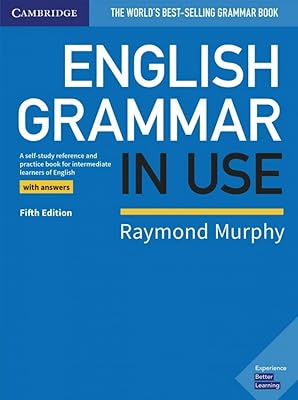
English Grammar in Use
Raymond Murphy
The world's best-selling grammar book. Clear explanations with practice exercises for every unit.
Check Price on Amazon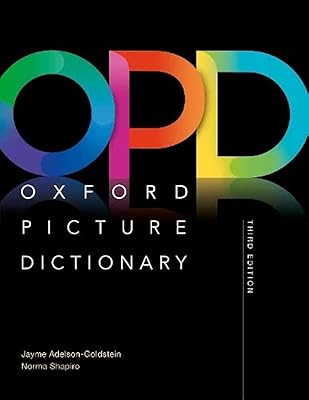
Oxford Picture Dictionary
3rd Edition
4,000+ words with full-color illustrations. Perfect for visual learners building everyday vocabulary.
Check Price on Amazon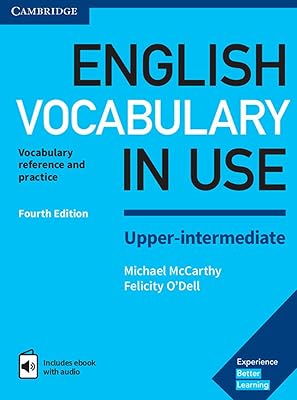
English Vocabulary in Use
McCarthy & O'Dell
Learn and practise the words you need at every level, from elementary to advanced.
Check Price on AmazonAs an Amazon Associate, we earn from qualifying purchases.